HTML
Kitchenware Parts CNC Machining: A Complete Guide to Precision, Safety, and Quality
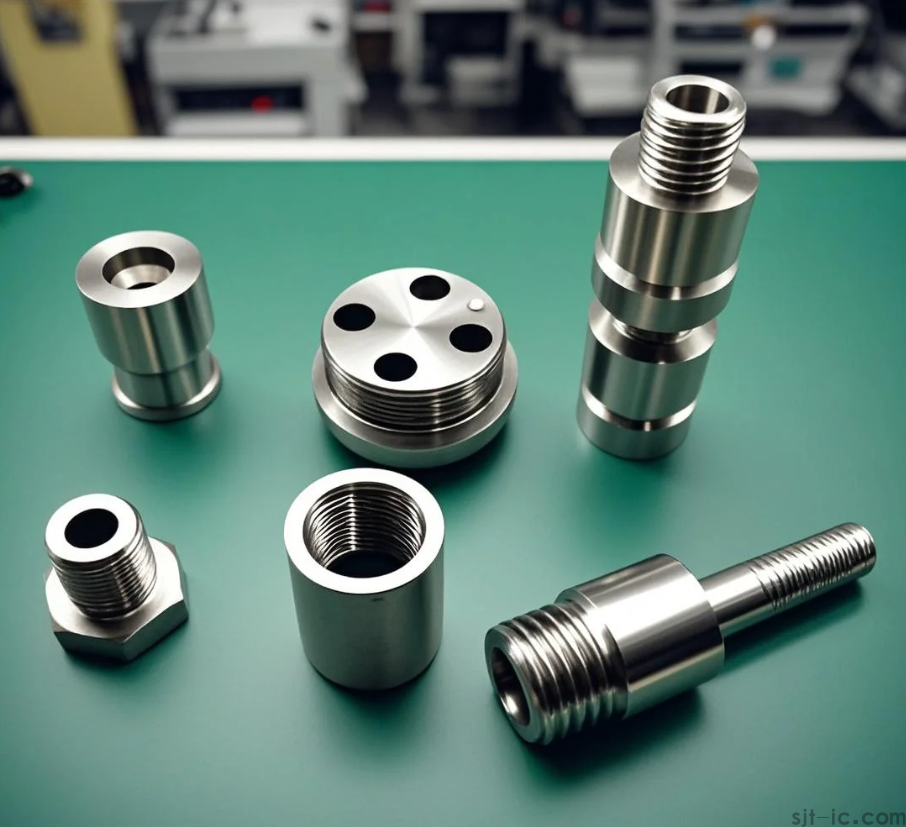
Kitchenware products must be safe, durable, easy to use, and attractive. From handles and connectors to cookware components and small accessories, every part needs accurate dimensions and reliable performance. Kitchenware Parts CNC Machining provides an efficient solution for producing high-quality kitchenware parts with excellent precision, consistent results, and flexible design options.
Many manufacturers face common challenges when making kitchenware parts. These include maintaining accurate assembly sizes, meeting food-contact safety requirements, achieving smooth surfaces for easy cleaning, and creating complex shapes that improve product appearance. CNC machining helps solve these problems by combining computer-controlled accuracy with advanced manufacturing processes.
Why CNC Machining Is Suitable for Kitchenware Parts
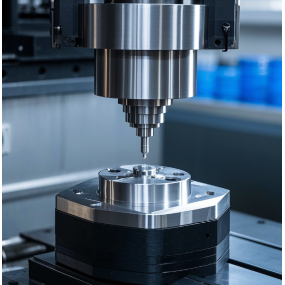
CNC machining is widely used for kitchenware parts because it can produce components with tight tolerances and stable quality. Kitchen products often contain multiple parts that must fit together correctly. Small dimensional errors can cause loose connections, poor operation, or safety risks. CNC machines can maintain high accuracy during both prototype production and large-volume manufacturing.
Another important advantage is material flexibility. CNC machining can process many food-safe materials, including stainless steel, aluminum, and approved engineering plastics. This allows manufacturers to select materials according to strength, heat resistance, corrosion resistance, and appearance requirements.
CNC machining also supports complex designs. Modern kitchenware often requires smooth curves, ergonomic shapes, decorative patterns, and lightweight structures. Multi-axis CNC machining can create these designs while maintaining consistent quality.
Design Considerations for Kitchenware Part CNC Machining
Good design is the foundation of successful CNC machining. Before production begins, engineers need to consider how the kitchenware part will be used and how it interacts with other components.
Design considerations for kitchenware part CNC machining include ergonomics, cleaning convenience, safety, and manufacturing efficiency. A well-designed part should not only look good but also provide a comfortable user experience.
- Ergonomics: Handles, grips, and touch surfaces should fit comfortably in the user's hand. Rounded edges and proper dimensions help improve safety and usability.
- Easy cleaning: Kitchenware parts should avoid unnecessary gaps, sharp corners, or complex areas where food particles can remain.
- Safety: Designs should reduce risks such as sharp edges, overheating, or loose connections.
- Assembly requirements: Holes, threads, and connection areas must be accurately designed to ensure proper fitting with other components.
- Manufacturing feasibility: Designers should consider tool access, machining direction, and achievable tolerances to control production costs.
Experienced CNC manufacturers such as EMAR can help customers optimize kitchenware part designs before machining. Their engineering support helps balance appearance, functionality, and manufacturing efficiency.
Food-Grade Material Selection in Kitchenware CNC Machining
Material selection directly affects kitchenware safety, durability, and performance. The chosen material must meet food-contact requirements while providing suitable mechanical properties.
Food-grade material selection in kitchenware CNC machining focuses on corrosion resistance, heat resistance, strength, and long-term reliability.
Stainless Steel
Stainless steel is one of the most popular materials for kitchenware parts. Grades such as food-safe stainless steel provide excellent corrosion resistance, durability, and hygiene performance.
- Strong resistance to rust and chemical corrosion
- Suitable for high-temperature applications
- Easy to clean and maintain
- Provides a premium appearance after polishing
Aluminum
Aluminum is commonly selected when lightweight construction is important. It offers good thermal conductivity and is easier to machine compared with many harder metals.
- Light weight for comfortable handling
- Good heat transfer performance
- Suitable for decorative and structural kitchenware components
- Can receive surface treatments for improved protection
Food-Safe Plastics
Certain engineering plastics are suitable for kitchenware applications, especially for handles, covers, and insulating components. These materials can provide heat resistance, impact resistance, and design flexibility.
- Good electrical and thermal insulation
- Lightweight and easy to shape
- Available in different colors and appearances
CNC Machining Process for Kitchenware Parts
The CNC machining process includes several important stages, from preparation to final inspection. Each step affects the quality, safety, and appearance of the finished product.
1. Product Design and CNC Programming
Engineers first create detailed 3D models based on the kitchenware design requirements. The model defines dimensions, tolerances, surface requirements, and assembly features.
During this stage, engineers review material selection, machining methods, and tool paths. Proper CNC programming helps reduce machining time and prevents unnecessary material waste.
2. Turning Operations in Kitchenware Part Production
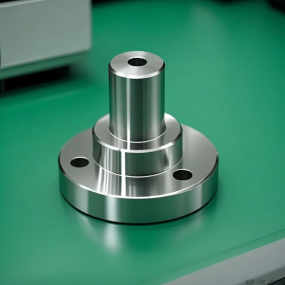
Turning operations in kitchenware part production are commonly used for round components such as shafts, knobs, rings, and cylindrical connectors.
During turning, the workpiece rotates while cutting tools remove material. Selecting suitable cutting parameters is important for maintaining accuracy and surface quality.
- Cutting speed: Adjusted according to material hardness and tool type.
- Feed rate: Controlled to balance machining efficiency and surface smoothness.
- Depth of cut: Selected based on rough machining or finishing requirements.
3. Milling Operations
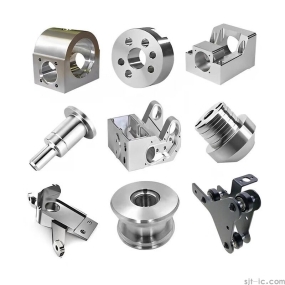
Milling is used for creating flat surfaces, slots, pockets, curved shapes, and decorative features. It is especially useful for kitchenware parts with complex geometries.
Multi-axis milling machines can produce smooth curves and detailed designs while reducing the need for multiple setups.
4. Drilling and Threading
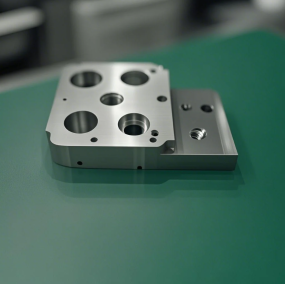
Drilling creates accurate holes for screws, assembly points, and functional features. Proper tool selection and machining parameters help prevent burrs and maintain hole accuracy.
For threaded parts, CNC machining ensures consistent thread dimensions so components can be assembled securely.
Solving Common Challenges in Kitchenware CNC Machining
Achieving Smooth Surface Finish
Surface finish requirements in kitchenware CNC machining are higher than in many industrial applications because kitchen products frequently contact food and must be easy to clean.
A rough surface may collect food particles or bacteria. Manufacturers use suitable cutting tools, finishing passes, optimized cutting parameters, and polishing processes to achieve smooth surfaces.
Preventing Contamination During Machining
Food-contact components require strict cleanliness control during manufacturing. CNC workshops should use proper machining practices, including:
- Using clean cutting fluids suitable for the application
- Preventing contact with harmful contaminants
- Separating materials when necessary
- Cleaning parts carefully after machining
Maintaining Dimensional Accuracy
Kitchenware parts often need to connect with other components. Incorrect dimensions can create assembly problems or affect product safety.
CNC manufacturers maintain accuracy through machine calibration, tool inspection, process monitoring, and precision measurement equipment.
Post-Machining Processes for Better Performance and Appearance
After machining, additional processes can improve the appearance, durability, and user experience of kitchenware parts.
- Polishing: Creates a smooth and attractive surface while improving cleanliness.
- Deburring: Removes sharp edges and improves safety during handling.
- Coating: Adds protective layers or improves non-stick properties for specific applications.
- Anodizing: Often used for aluminum parts to increase surface protection and appearance.
Quality Control in Kitchenware Part CNC Manufacturing
Quality control in kitchenware part CNC manufacturing is essential because these products directly affect consumer safety. Reliable manufacturers use strict inspection systems throughout the production process.
- Material inspection: Confirming that materials meet required food-contact standards.
- Dimensional inspection: Checking sizes, tolerances, holes, and assembly features.
- Surface inspection: Ensuring smoothness, cleanliness, and appearance quality.
- Functional testing: Confirming that parts perform correctly during use.
- Process control: Monitoring machining conditions to maintain consistent production quality.
Manufacturers with strong quality systems, such as EMAR, support customers with professional CNC machining capabilities, precision inspection processes, and experience producing components for demanding applications.
Choosing the Right Partner for Kitchenware Parts CNC Machining
Selecting the right CNC machining supplier can directly influence product quality, production cost, and delivery reliability. A capable manufacturer should have advanced CNC equipment, experienced engineers, strict quality management, and knowledge of food-related product requirements.
Kitchenware Parts CNC Machining requires more than simply removing material. It requires careful design analysis, correct material selection, precise machining, surface treatment, and reliable inspection. With the right manufacturing partner, companies can create kitchenware parts that are safe, functional, attractive, and ready for market demands.
 English
 » »
» »
 Spanish
 Arabic
 French
 Portuguese
 Belarusian
 Japanese
 Russian
 Malay
Malay Icelandic
 Bulgarian
 Azerbaijani
 Estonian
 Irish
Irish Polish
 Persian
 Boolean
 Danish
 German
 Filipino
 Finnish
 Korean
 Dutch
Dutch Galician
 Catalan
 Czech
Czech Croatian
 Latin
Latin Latvian
 Romanian
 Maltese
 Macedonian
 Norwegian
 Swedish
 Serbian
 Slovak
 Slovenian
 Swahili
 Thai
Thai Turkish
 Welsh
Welsh Urdu
Urdu Ukrainian
 Greek
Greek Hungarian
 Italian
 Yiddish
 Indonesian
 Vietnamese
 Haitian Creole
 Spanish Basque