HTML
CNC Titanium Steel Machining Process and Applications
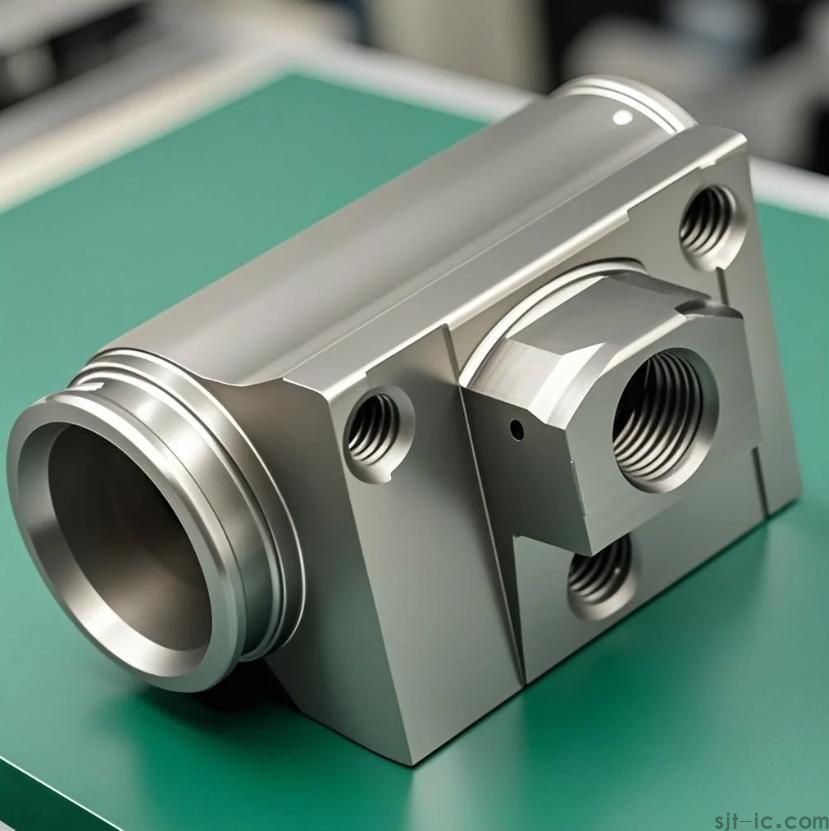
The CNC Titanium Steel Machining Process and Applications is widely used in industries that need strong, lightweight, and corrosion-resistant parts. Titanium steel is difficult to machine because it is hard and generates high heat during cutting. However, with advanced CNC technology, manufacturers can produce precise and reliable components for many critical uses.
This article explains the process in simple terms, highlights real-world applications, and helps you understand what to consider when working with titanium steel machining.
Why Titanium Steel Is Challenging but Valuable
Titanium steel is known for its excellent strength-to-weight ratio and resistance to corrosion and heat. These properties make it ideal for demanding environments, but they also create machining difficulties.
- It wears down cutting tools quickly
- It generates excessive heat during machining
- It requires stable and precise CNC control
Because of these challenges, only advanced CNC systems and skilled engineers can handle it effectively.
Steps in the CNC Titanium Steel Machining Process
The steps in the CNC titanium steel machining process must be carefully controlled to ensure accuracy and surface quality. A typical workflow includes:
- Material selection and inspection – Ensuring the titanium steel meets required standards.
- CAD design – Creating a precise digital model of the part.
- CNC programming – Converting the design into machine instructions.
- Rough machining – Removing excess material carefully to avoid heat buildup.
- Precision finishing – Achieving tight tolerances and smooth surfaces.
- Quality inspection – Measuring dimensions and checking performance standards.
Each step plays an important role in achieving stable and high-quality results.
Precision Requirements in CNC Titanium Steel Machining
The precision requirements in CNC titanium steel machining are extremely high, especially in industries like aerospace and medical devices. Even a small error can affect performance or safety.
Modern CNC machines can achieve micron-level accuracy, but success depends on:
- Stable machine structure
- Advanced cooling systems
- Proper cutting speed and feed control
- High-quality measuring equipment
Tooling for CNC Machining of Titanium Steel for Different Applications
The tooling for CNC machining of titanium steel for different applications is another key factor in production success. Because titanium is tough on tools, special materials and coatings are required.
- Carbide tools – Common for general machining
- Coated tools (TiAlN, AlTiN) – Improve heat resistance
- High-pressure cooling systems – Extend tool life
- Custom tool geometries – Improve chip removal and reduce vibration
Choosing the right tooling depends on the part design, industry requirements, and production volume.
Unique Applications of CNC-Machined Titanium Steel
The unique applications of CNC-machined titanium steel are expanding across many industries due to its strength and durability.
- Aerospace – Engine parts, structural components, and landing gear
- Medical – Surgical instruments and implants
- Automotive – High-performance engine parts
- Marine engineering – Corrosion-resistant components
- Energy industry – Equipment used in extreme environments
These applications require both reliability and long service life, which titanium steel provides.
Advantages of CNC Machining in Titanium Steel Applications
The advantages of CNC machining in titanium steel applications are clear when compared to traditional manufacturing methods.
- High precision and repeatability
- Ability to produce complex shapes
- Reduced material waste
- Consistent quality in mass production
- Faster turnaround for custom designs
These benefits make CNC machining the preferred choice for industries requiring strict quality control.
How EMAR Supports Titanium Steel CNC Machining Projects
EMAR specializes in advanced CNC machining solutions for difficult materials like titanium steel. With strong engineering experience and modern equipment, EMAR helps customers achieve stable production quality and efficient manufacturing results.
From prototype development to mass production, EMAR focuses on precision, consistency, and practical solutions for real industrial needs. This makes it a reliable partner for companies looking for high-performance CNC titanium steel parts.
Conclusion
The CNC Titanium Steel Machining Process and Applications require advanced technology, skilled operation, and strict quality control. Although titanium steel is difficult to machine, CNC systems make it possible to produce highly precise and durable parts for critical industries.
With proper tooling, accurate programming, and professional support from companies like EMAR, manufacturers can fully unlock the potential of titanium steel in modern engineering.
 English
 » »
» »
 Spanish
 Arabic
 French
 Portuguese
 Belarusian
 Japanese
 Russian
 Malay
Malay Icelandic
 Bulgarian
 Azerbaijani
 Estonian
 Irish
Irish Polish
 Persian
 Boolean
 Danish
 German
 Filipino
 Finnish
 Korean
 Dutch
Dutch Galician
 Catalan
 Czech
Czech Croatian
 Latin
Latin Latvian
 Romanian
 Maltese
 Macedonian
 Norwegian
 Swedish
 Serbian
 Slovak
 Slovenian
 Swahili
 Thai
Thai Turkish
 Welsh
Welsh Urdu
Urdu Ukrainian
 Greek
Greek Hungarian
 Italian
 Yiddish
 Indonesian
 Vietnamese
 Haitian Creole
 Spanish Basque