HTML
CNC Batch Machining of Aluminum Alloys: Reliable Production for Consistent Quality
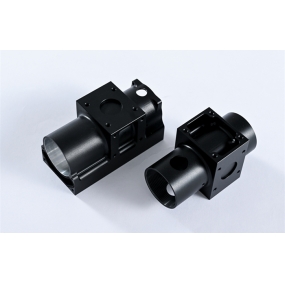
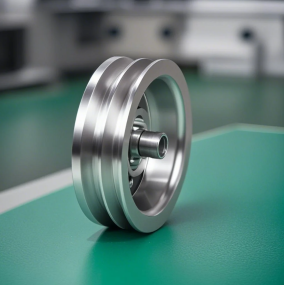
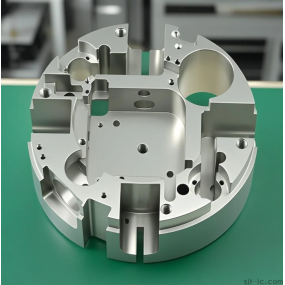
In modern manufacturing, CNC Batch Machining of Aluminum Alloys plays a key role in producing large quantities of precise and lightweight parts. Aluminum alloys are widely used in automotive, aerospace, electronics, and industrial equipment because they are strong, corrosion-resistant, and easy to machine. However, many manufacturers face challenges such as inconsistent quality, tool wear, and tight delivery schedules when producing in batches.
This article explains practical solutions to these problems in simple terms and helps you understand how batch production can be stable, efficient, and cost-effective.
Why CNC Batch Machining of Aluminum Alloys Matters
Aluminum alloys are soft compared to steel, but they can still cause machining problems if not handled correctly. In batch production, even small errors can multiply across thousands of parts. That is why stable processes are important.
With CNC Batch Machining of Aluminum Alloys, manufacturers can maintain consistent dimensions, smooth surface finishes, and fast production speed while reducing manual errors.
Common Pain Points in Batch Machining Aluminum Alloys
- Dimensional changes due to heat expansion during machining
- Burr formation on edges after cutting
- Tool wear leading to inconsistent surface finish
- Difficulties in maintaining uniform quality across large batches
- Long production time when processes are not optimized
These issues can increase cost and delay delivery if not controlled properly.
Steps in CNC Batch Machining of Aluminum Alloys
The steps in CNC batch machining of aluminum alloys are designed to ensure repeatability and stability from the first part to the last.
- Material preparation: Selecting the right aluminum alloy grade based on strength and application.
- Programming: Creating optimized CNC programs for consistent tool paths.
- Tool setup: Choosing suitable cutters and fixtures for batch stability.
- Trial machining: Producing sample parts to verify accuracy.
- Mass production: Running continuous machining with monitored parameters.
- Final inspection: Checking quality across random samples from the batch.
Tooling Selection for Aluminum Alloy CNC Batch Machining
The tooling selection for aluminum alloy CNC batch machining directly affects productivity and surface quality. Aluminum requires sharp and well-coated tools to prevent sticking and overheating.
- Use carbide tools for high durability
- Choose polished flutes to reduce chip sticking
- Apply coatings like DLC or TiAlN for better wear resistance
- Use high-speed cutting tools to improve efficiency
Proper tooling reduces downtime and ensures smoother batch production.
Precision Control in Batch Machining Aluminum Alloys via CNC
Maintaining accuracy is one of the biggest challenges in mass production. Precision control in batch machining aluminum alloys via CNC depends on stable machine calibration, temperature control, and tool compensation.
Advanced CNC systems can automatically adjust tool offsets, monitor wear, and maintain tight tolerances even during long production runs. This ensures every part stays within required specifications.
Advantages of CNC in Aluminum Alloy Batch Production
The advantages of CNC in aluminum alloy batch production make it the preferred method for many industries:
- High consistency across large production volumes
- Faster production speed compared to manual machining
- Lower labor cost and reduced human error
- Excellent repeatability for complex designs
- Improved surface finish and tighter tolerances
These benefits help manufacturers meet strict delivery and quality requirements.
Quality Assurance in CNC Batch Machining of Aluminum Alloys
Strong inspection systems are essential. quality assurance in CNC batch machining of aluminum alloys includes both in-process and final checks.
- First article inspection before mass production
- Real-time measurement during machining
- Random sampling from production batches
- Use of precision measuring tools like CMM machines
This ensures that defective parts are detected early, reducing waste and cost.
How EMAR Supports High-Quality CNC Batch Production
In the field of precision manufacturing, EMAR has built strong expertise in CNC Batch Machining of Aluminum Alloys. The company focuses on stable production processes, advanced tooling strategies, and strict quality control systems.
By combining experienced engineers with modern CNC equipment, EMAR helps customers achieve reliable mass production with consistent accuracy. Whether it is small or large batch orders, the goal is always the same: stable quality, fast delivery, and cost efficiency.
Conclusion
CNC batch machining of aluminum alloys is not just about cutting metal—it is about controlling every detail to ensure consistency at scale. From tooling selection to precision control and quality assurance, each step plays an important role in success.
With proper planning and a reliable manufacturing partner like EMAR, companies can overcome common machining challenges and achieve high-quality batch production efficiently.
 English
 » »
» »
 Spanish
 Arabic
 French
 Portuguese
 Belarusian
 Japanese
 Russian
 Malay
Malay Icelandic
 Bulgarian
 Azerbaijani
 Estonian
 Irish
Irish Polish
 Persian
 Boolean
 Danish
 German
 Filipino
 Finnish
 Korean
 Dutch
Dutch Galician
 Catalan
 Czech
Czech Croatian
 Latin
Latin Latvian
 Romanian
 Maltese
 Macedonian
 Norwegian
 Swedish
 Serbian
 Slovak
 Slovenian
 Swahili
 Thai
Thai Turkish
 Welsh
Welsh Urdu
Urdu Ukrainian
 Greek
Greek Hungarian
 Italian
 Yiddish
 Indonesian
 Vietnamese
 Haitian Creole
 Spanish Basque