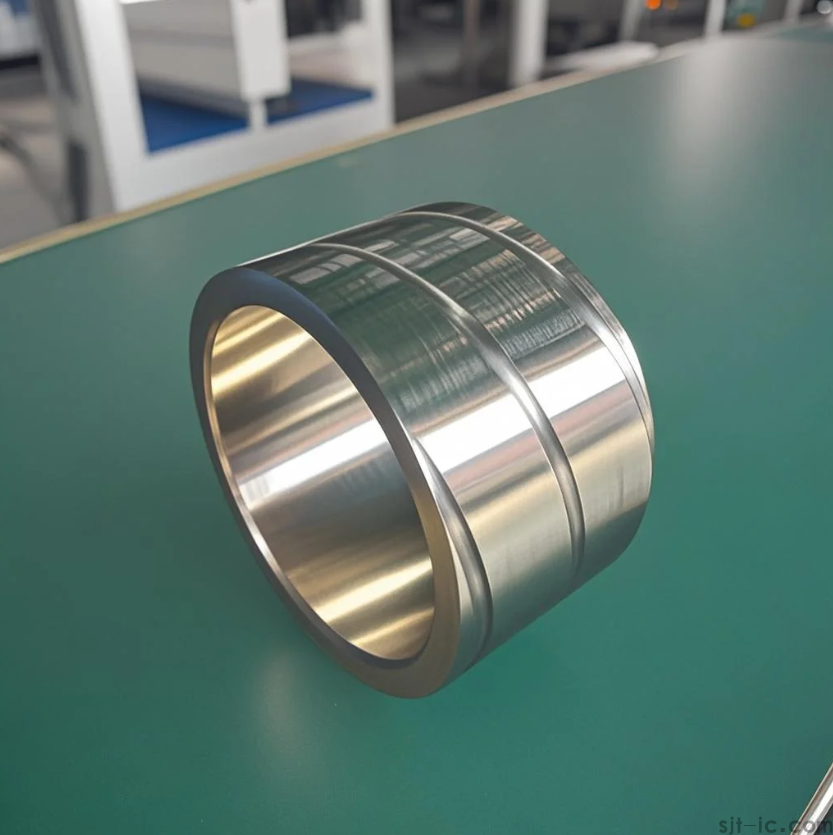
Bearings are small components, but they play a critical role in many machines. They reduce friction, support rotating parts, and help equipment operate smoothly. Because bearings often work under high loads and continuous movement, even a small manufacturing error can lead to noise, vibration, overheating, or early failure.
CNC Bearing Machining provides a reliable solution for producing high-precision bearings with consistent quality. By using computer-controlled machines, manufacturers can achieve strict tolerances, excellent surface finishes, and repeatable results. This makes CNC Machining an ideal choice for industries that require bearings with long service life and stable performance.
Traditional machining methods can have limitations when producing bearings that require extremely accurate dimensions. CNC machining uses programmed instructions to control cutting tools with high accuracy. This allows manufacturers to produce bearing components with precise inner diameters, outer diameters, widths, grooves, and other critical features.
The main advantages of CNC Bearing Machining include:
For companies needing custom or high-performance bearings, working with an experienced CNC machining supplier such as EMAR can help ensure accurate production, professional process control, and reliable delivery.
The design stage is one of the most important steps in CNC bearing production. A well-designed bearing must match the machine's operating conditions. Engineers need to consider several factors before selecting the bearing type and creating the final design.
The expected load directly affects bearing structure. Heavy loads require stronger designs that can handle greater pressure without deformation.
For example, roller bearings are often selected for applications with higher radial loads because their larger contact area provides better load support. Ball bearings are commonly used when lower friction and higher rotational speed are more important.
Speed is another key factor in design considerations for CNC-machined bearings. High-speed applications need bearings with excellent balance, smooth surfaces, and low friction performance.
Engineers also evaluate the operating environment, including:
These factors influence bearing type selection and design details, such as cage structure, sealing method, groove shape, and clearance level.
Different applications require different bearing designs. CNC machining allows manufacturers to produce various bearing types with accurate features.
The correct bearing type improves equipment efficiency and reduces maintenance costs. A detailed understanding of working conditions helps manufacturers create the right solution.
Material choice strongly affects bearing performance, durability, and resistance to wear. The material must withstand repeated contact, pressure, and movement during operation.
Material selection for bearing CNC machining usually focuses on strength, hardness, corrosion resistance, and temperature performance.
High-carbon chromium steel is one of the most common bearing materials. It offers:
This material is widely used for standard industrial bearings because it provides a good balance between performance and cost.
Some demanding environments require advanced materials. Stainless steel, ceramic materials, and special alloys may be selected for applications involving corrosion, extreme temperatures, or high-speed operation.
Professional CNC manufacturers evaluate the working conditions before recommending the most suitable material. This prevents unnecessary costs while ensuring the bearing meets performance requirements.
Producing a high-quality bearing requires multiple machining steps. Each process must be carefully controlled to maintain accuracy and surface quality.
Turning is usually one of the first machining operations. A CNC lathe removes excess material and creates the basic bearing shape, including the outer diameter, inner diameter, and general profile.
Proper cutting speed, feed rate, and depth of cut are selected based on the material and tool type. Incorrect settings may cause excessive heat, tool wear, or dimensional errors.
Grinding is essential for achieving the extremely smooth surfaces required for bearings. It improves roundness, reduces surface roughness, and creates accurate raceways.
Because bearings operate with continuous movement, even small surface irregularities can increase friction and shorten service life.
Milling is used when bearings require additional features, such as grooves, slots, or customized structures. CNC milling machines provide accurate control for complex designs.
Heat treatment improves hardness and wear resistance. The process changes the internal structure of the material, helping bearing components withstand repeated loads.
Manufacturers must carefully control heating and cooling conditions to avoid distortion or cracks.
Producing precision bearings requires careful attention to several common challenges.
Bearings require very accurate dimensions because improper clearance can cause vibration, noise, or overheating. CNC machines with advanced control systems help maintain consistent measurements throughout production.
Handling surface defects in bearing CNC machining is important for achieving long-lasting performance. Common problems include scratches, rough surfaces, grinding marks, and thermal damage.
Manufacturers reduce these risks by:
These steps help create smooth bearing surfaces that reduce friction and improve reliability.
After machining, additional treatments improve bearing performance. Post-machining processes for CNC-machined bearings may include polishing, cleaning, coating, and surface finishing.
These finishing processes help bearings operate more quietly and efficiently while extending service life.
Quality inspection is essential because bearing failures can affect the entire machine system. Reliable manufacturers use strict testing procedures before delivery.
Quality control in CNC bearing manufacturing includes:
Advanced inspection equipment and experienced technicians help identify problems early and maintain stable production quality.
High-quality bearings require more than accurate machines. They require professional engineering knowledge, suitable material selection, controlled machining processes, and strict inspection standards.
EMAR provides CNC machining expertise for precision components, including bearing parts that require high accuracy and dependable performance. With experience in machining different materials and handling complex production requirements, EMAR helps customers achieve efficient, cost-effective, and reliable bearing manufacturing solutions.
From initial design analysis to final inspection, a professional CNC machining partner can reduce production risks and ensure bearings meet demanding industrial requirements.
CNC Bearing Machining is a powerful manufacturing method for producing durable, accurate, and high-performance bearings. By combining advanced CNC technology with proper design planning, suitable materials, controlled machining operations, and strict quality inspection, manufacturers can create bearings that deliver smooth operation and long service life.
Whether the application requires high speed, heavy loads, or special environmental resistance, careful engineering and professional CNC machining processes are the foundation for reliable bearing performance.