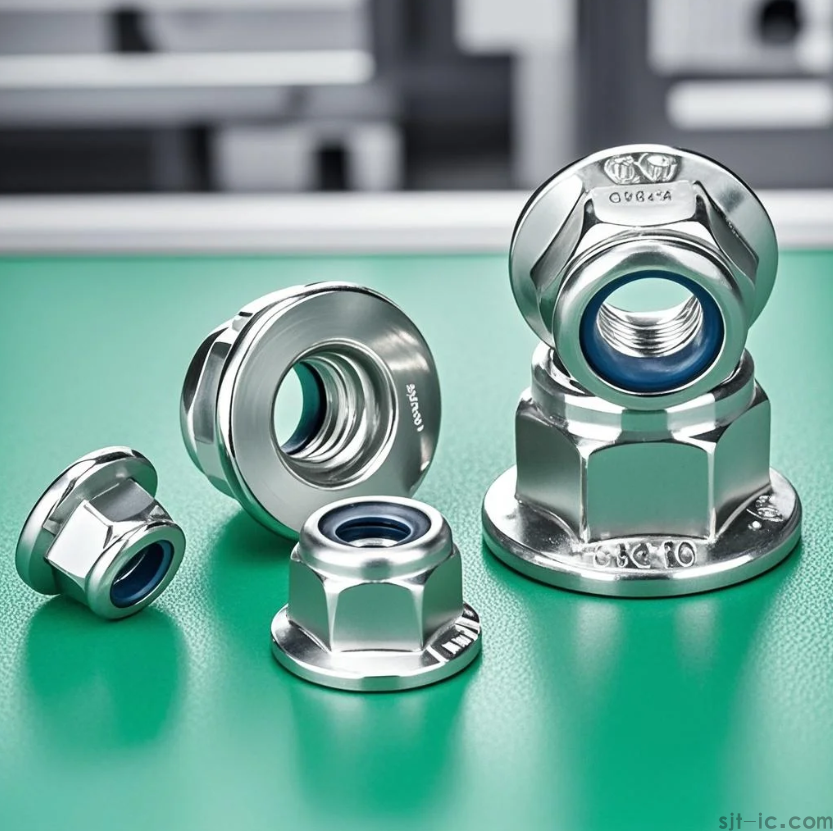
Anti - slip nuts are important fastening parts used in many industries where vibration, heavy loads, or safety requirements are concerns. A normal nut may become loose over time, but an anti - slip nut is designed to maintain a stronger connection and improve assembly reliability.
However, many customers have concerns when ordering these parts. Will the anti - slip design work effectively? Will the nut keep its strength after long-term use? Can the manufacturer produce consistent quality in large quantities? CNC Machining Anti - Slip Nuts provides an effective solution by combining advanced manufacturing technology, high accuracy, and flexible design capabilities.
With CNC machining, manufacturers can create customized anti - slip structures, achieve accurate thread dimensions, and produce both small batches and large production runs with stable quality. Companies like EMAR use modern CNC equipment, skilled technicians, and strict quality systems to help customers produce reliable anti - slip nuts for different applications.
CNC machining is one of the best manufacturing methods for anti - slip nuts because it provides the accuracy and flexibility required for these special fasteners. Unlike standard nuts, anti - slip nuts often require additional surface features, special thread designs, or customized shapes to prevent loosening.
Different applications need different anti - slip solutions. CNC machining allows manufacturers to create various designs, including:
This flexibility is especially useful for industries such as automotive, construction, aerospace, and industrial machinery, where standard nuts may not meet performance requirements.
Thread accuracy is critical for anti - slip nuts. A small error in thread pitch, diameter, or alignment can cause poor fitting, reduced strength, or assembly failure.
CNC machines can maintain tight dimensional control during production. They help ensure:
CNC machining is suitable for both prototype development and mass production. For small quantities, CNC machines allow quick design changes and customized production. For large quantities, automated machining processes provide stable output and lower production costs.
Good design is the foundation of a reliable anti - slip nut. Before machining begins, engineers must understand how and where the nut will be used. The application environment directly affects the design, material, and manufacturing process.
The first step in designing anti - slip nuts is analyzing the working conditions. Important factors include:
The anti - slip pattern must balance friction and durability. Too little friction may not prevent movement, while excessive surface damage may affect assembly.
Engineers consider:
Proper design considerations for CNC - machined anti - slip nuts help manufacturers create parts that provide reliable performance without unnecessary production costs.
The material directly affects strength, corrosion resistance, weight, and service life. Choosing the correct material is an important part of the manufacturing process.
Steel is widely used because it provides high strength and good wear resistance.
Stainless steel is a popular choice for applications requiring corrosion resistance.
Brass is useful when electrical conductivity and corrosion resistance are needed.
Nylon is suitable for lightweight applications where metal strength is not required.
Choosing the correct material depends on the application, and professional manufacturers can recommend suitable options based on operating conditions. Proper material selection for anti - slip nut CNC machining improves product reliability and reduces replacement costs.
The production of anti - slip nuts involves several machining operations. Each operation requires the correct tools and cutting parameters to maintain accuracy.
Turning is used to create the basic round shape of the nut and control the outer diameter.
Milling creates special external features, grooves, or customized anti - slip structures.
Drilling prepares the internal hole before threading.
Knurling operations in anti - slip nut production create textured patterns on the nut surface to improve grip and friction.
Incorrect knurling pressure can deform the nut surface or affect dimensional accuracy. Experienced technicians adjust machining parameters to achieve consistent anti - slip performance.
Knurling applies pressure to the material, which may slightly change the outer diameter. Manufacturers must carefully control the process to avoid size errors.
Thread problems can cause assembly failure. Common issues include incorrect pitch, damaged thread surfaces, and poor alignment.
Preventing thread defects in anti - slip nut CNC machining requires:
Large production orders require every nut to provide the same anti - slip effect. Stable machine settings, skilled operators, and strict inspection procedures help maintain consistency.
After machining, additional treatments can improve the strength, appearance, and service life of anti - slip nuts.
Heat treatment can increase hardness and mechanical strength, especially for steel anti - slip nuts used in high-load environments.
Surface treatments provide corrosion protection and can improve friction performance.
Cleaning removes machining oil, metal particles, and surface contamination. Clean nuts are easier to assemble and provide more reliable connections.
Reliable anti - slip nuts require strict quality control from raw material inspection to final testing. Quality control in anti - slip nut CNC manufacturing ensures that every product meets customer expectations.
During machining, manufacturers inspect important features such as:
Finished nuts are tested for:
Professional CNC machining suppliers follow recognized standards such as ISO, DIN, and ANSI/ASME requirements. These standards help ensure product safety, accuracy, and international compatibility.
Choosing the right machining partner is important for achieving reliable anti - slip nut performance. EMAR provides CNC machining services with advanced manufacturing equipment, experienced technicians, and strict quality management.
With modern CNC machines, professional engineering support, and careful inspection processes, EMAR can produce customized anti - slip nuts for different industries and applications. The company focuses on accurate machining, stable production, and consistent quality to help customers solve challenges related to strength, durability, and assembly reliability.
Whether customers need prototypes, small-batch production, or large-volume manufacturing, EMAR's CNC machining capabilities provide a dependable solution for high-quality anti - slip nuts.