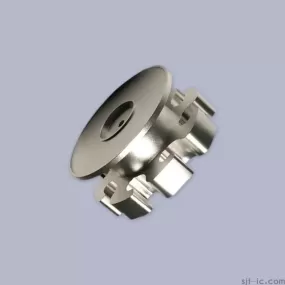
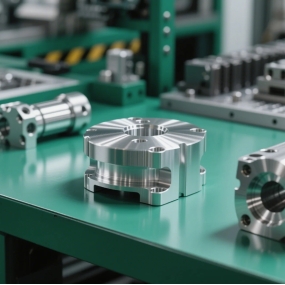
CNC Machining of Wheel Hubs is an important manufacturing method used to produce high-performance wheel hubs for automobiles, racing vehicles, electric vehicles, and industrial equipment. Wheel hubs must handle heavy loads, repeated impacts, high speeds, and changing temperatures. Because of these demanding requirements, manufacturers need a process that can deliver high precision, strong durability, and consistent quality.
Many customers have concerns when choosing CNC-machined wheel hubs. They want to know whether the parts can meet strict dimensional requirements, which materials are suitable, how production costs can be controlled, and how manufacturers ensure safety. CNC machining provides effective solutions because it can create complex wheel hub designs with excellent accuracy and repeatability.
Wheel hubs are safety-critical components. Even small errors in size, balance, or surface quality can affect vehicle performance. CNC machining is widely used because computer-controlled machines can produce each part according to precise digital designs.
The main advantages of CNC machining for wheel hubs include:
Professional CNC machining suppliers, such as EMAR, use advanced CNC equipment, experienced engineers, and strict inspection systems to support wheel hub projects from prototype development to large-scale production.
The material selection for wheel hub CNC directly affects strength, weight, heat resistance, and service life. Different vehicles and applications require different material properties. Engineers usually select materials based on load-bearing requirements, operating conditions, and production goals.
Aluminum alloys are popular choices for lightweight wheel hubs because they provide a good balance between strength and weight reduction. Lower weight helps improve fuel efficiency, acceleration, and vehicle handling.
Common aluminum alloys used in wheel hub CNC machining include:
Aluminum alloys also have good heat dissipation ability. This helps wheel hubs release heat generated from braking and continuous operation. However, aluminum wheel hubs must be carefully designed because excessive material removal can reduce structural strength.
Steel remains an important wheel hub material because of its excellent strength, durability, and load-bearing capability. Steel hubs are commonly used in heavy-duty vehicles, commercial vehicles, and applications where maximum strength is required.
The advantages of steel include:
The main disadvantage of steel is its higher weight compared with aluminum. Therefore, material choice depends on whether the priority is lightweight performance or maximum strength.
The machining operations in wheel hub CNC include several important steps. Each stage requires careful planning to achieve accurate dimensions and reliable performance.
The process begins with engineering design. Engineers use CAD/CAM software to create a detailed 3D model of the wheel hub. The design must consider important factors such as:
After the design is completed, CAM software generates machining paths. Engineers optimize tool movement to reduce machining time, prevent collisions, and improve surface quality.
Turning is usually one of the first machining operations. A CNC lathe rotates the wheel hub material while a cutting tool removes material from the workpiece.
The purpose of turning includes:
Suitable tools include carbide turning inserts because they provide good wear resistance and stable cutting performance.
Typical cutting parameters depend on the material and machine capability. For aluminum alloys, manufacturers often use higher cutting speeds, around 500–1500 m/min, with moderate feed rates of 0.1–0.5 mm/rev. Steel usually requires lower speeds, commonly around 100–300 m/min, with controlled feed rates to maintain tool life and surface quality.
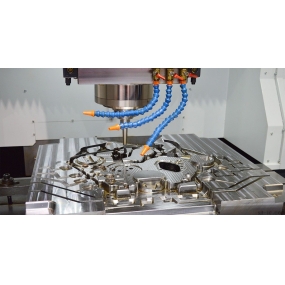
Milling shapes the wheel hub features that cannot be created by turning. CNC milling machines are used to produce spoke structures, hub faces, and lightweight design patterns.
Common milling tools include carbide end mills and high-performance aluminum cutting tools. The machining parameters should be adjusted according to the material:
Proper toolpath optimization helps reduce vibration and improves the appearance of machined surfaces.
Drilling creates bolt holes and mounting holes required for wheel installation. Hole accuracy is critical because incorrect bolt patterns can cause installation problems and safety risks.
Manufacturers usually use carbide drills or coated drills for stable performance. Proper drilling parameters, including cutting speed, feed rate, and coolant supply, help prevent hole deformation and improve accuracy.
Although CNC machining provides high accuracy, wheel hub production still involves technical challenges. Manufacturers must carefully control machining conditions to avoid quality problems.
Wheel hubs require precise dimensions because they connect with multiple vehicle systems. Temperature changes, machine vibration, and improper tool settings can affect accuracy.
Solutions include:
Handling distortion in wheel hub CNC is important, especially when machining lightweight aluminum components. Excessive cutting force and heat buildup can cause deformation.
Manufacturers can reduce distortion by:
Tool wear can reduce machining accuracy and surface quality. Regular tool inspection and replacement are necessary to maintain stable production.
Effective solutions include:
Quality control in wheel hub CNC machining ensures that every wheel hub meets safety and performance requirements. Professional manufacturers use multiple inspection stages throughout production.
During machining, technicians check important factors such as:
Inspection equipment may include coordinate measuring machines (CMM), precision measuring tools, and surface testing equipment.
Before delivery, finished wheel hubs undergo final testing to confirm reliability. Common tests include:
Manufacturers with strong quality systems, such as EMAR, focus on complete process control to help customers receive reliable CNC-machined wheel hubs.
Cost-effectiveness in wheel hub CNC production depends on several factors, including material choice, production volume, machining complexity, and design requirements.
Main cost factors include:
Manufacturers can improve cost efficiency through:
Working with an experienced CNC machining partner helps companies balance quality and cost. EMAR provides CNC machining solutions for complex metal components, supporting customers with engineering assistance, precision manufacturing, and quality management throughout the wheel hub production process.
The success of a wheel hub project depends not only on CNC technology but also on the experience of the manufacturer. A reliable supplier should have advanced equipment, skilled engineers, strict inspection procedures, and experience with different metals.
When selecting a CNC machining provider, customers should consider:
With the right manufacturing partner, CNC machining can provide wheel hubs that deliver excellent precision, strength, durability, and cost performance for modern vehicles.