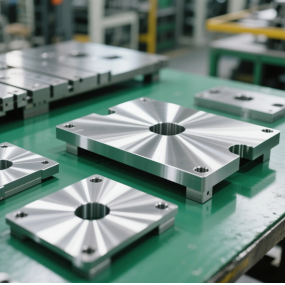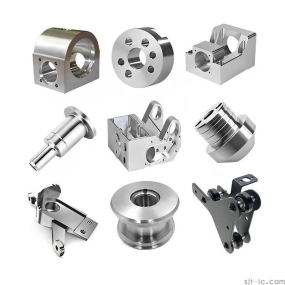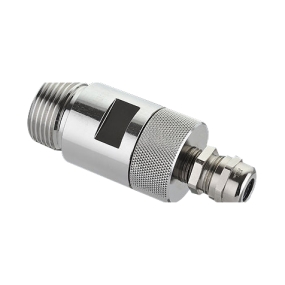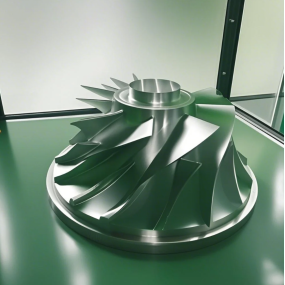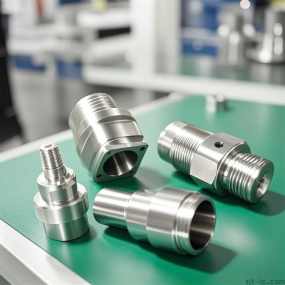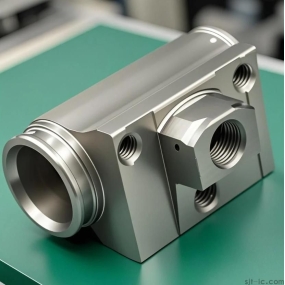


The electric vehicle (EV) industry is growing quickly, and manufacturers need parts that are lightweight, strong, accurate, and reliable. From battery housings and motor components to chassis parts, every EV component must meet strict performance requirements. CNC Machining Electric Vehicle Parts provides an effective solution by producing high-precision components with excellent consistency and durability.
Many EV manufacturers face challenges such as reducing vehicle weight, improving driving range, controlling heat, and maintaining reliable assembly accuracy. CNC machining helps solve these problems by creating complex parts with tight tolerances and stable quality for both prototypes and high-volume production.
EV systems require parts that work together with very little error. A small dimensional difference in a motor component, battery part, or structural element can affect efficiency, safety, and service life. CNC machining offers several advantages for EV applications.
Good part design is the foundation of successful CNC machining. Engineers must consider how each component works inside the electric vehicle system before starting production. These design considerations for CNC-machined EV parts help improve performance, reduce costs, and avoid manufacturing problems.
Different EV parts have different requirements. Battery components need safe structures and effective heat control. Motor parts require high accuracy to maintain smooth rotation and energy efficiency. Chassis elements need strength while keeping the vehicle lightweight.
Vehicle weight directly affects EV driving range. Engineers often use lightweight designs with optimized structures to reduce material usage without reducing strength. CNC machining supports these designs by producing thin-wall parts, complex pockets, and lightweight components with accurate dimensions.
Heat management is a major concern in electric vehicles. Batteries and motors generate heat during operation, so parts may require cooling channels or heat-dissipating surfaces. CNC machining can create accurate internal passages and detailed cooling structures to improve thermal performance.
The right material choice affects strength, weight, heat resistance, and electrical performance. Material selection for EV part CNC machining depends on where the component is used and what conditions it must withstand.
Different machining operations are selected based on the part design, material, and production requirements. The main processes include turning, milling, and drilling.
Turning operations in EV part production are commonly used for round components such as motor shafts, pins, and rotating parts. During turning, the workpiece rotates while a cutting tool removes material to create accurate cylindrical shapes.
Manufacturers must select suitable cutting tools and machining parameters, including spindle speed, feed rate, and depth of cut. For aluminum parts, higher cutting speeds can improve efficiency, while harder materials may require slower speeds and stronger cutting tools.
Milling is important for creating complex surfaces, pockets, slots, and cooling channels in EV components. Multi-axis CNC milling machines can produce complicated geometries while maintaining accuracy.
Drilling is used for mounting holes, connection points, and assembly features. Proper tool selection and cutting conditions help prevent hole size errors and improve final assembly quality.
EV parts often require precise assembly because many systems work together in limited spaces. CNC machining uses programmed operations and advanced inspection methods to maintain stable dimensions throughout production.
Handling burrs in EV part CNC machining is especially important for electrical components. Small metal burrs can damage insulation or create risks such as electrical short-circuits. Manufacturers use deburring processes, improved cutting tools, and optimized machining parameters to remove unwanted edges.
The EV market requires large quantities of reliable parts. CNC machining supports mass production through automation, repeatable programming, and efficient process control. Experienced CNC manufacturers can optimize production cycles while maintaining consistent quality.
After machining, additional treatments may be required to improve part performance and service life.
Safety and reliability are critical in the EV industry. Strong inspection systems help ensure that every component meets required standards. Quality control in CNC EV part manufacturing includes several important steps.
Companies with advanced CNC machining capabilities, such as EMAR, support EV manufacturers by providing precision machining solutions for complex automotive components. With experience in material selection, machining process optimization, and quality control, professional CNC suppliers help customers develop reliable EV parts from prototype production to large-scale manufacturing.
As electric vehicles continue to develop, manufacturers need machining partners who understand precision requirements, lightweight designs, thermal challenges, and production efficiency. A reliable CNC machining supplier can help reduce development risks and improve product performance.
By combining advanced CNC technology, skilled engineering support, and strict quality management, CNC Machining Electric Vehicle Parts enables the production of safer, lighter, and more efficient electric vehicles.