
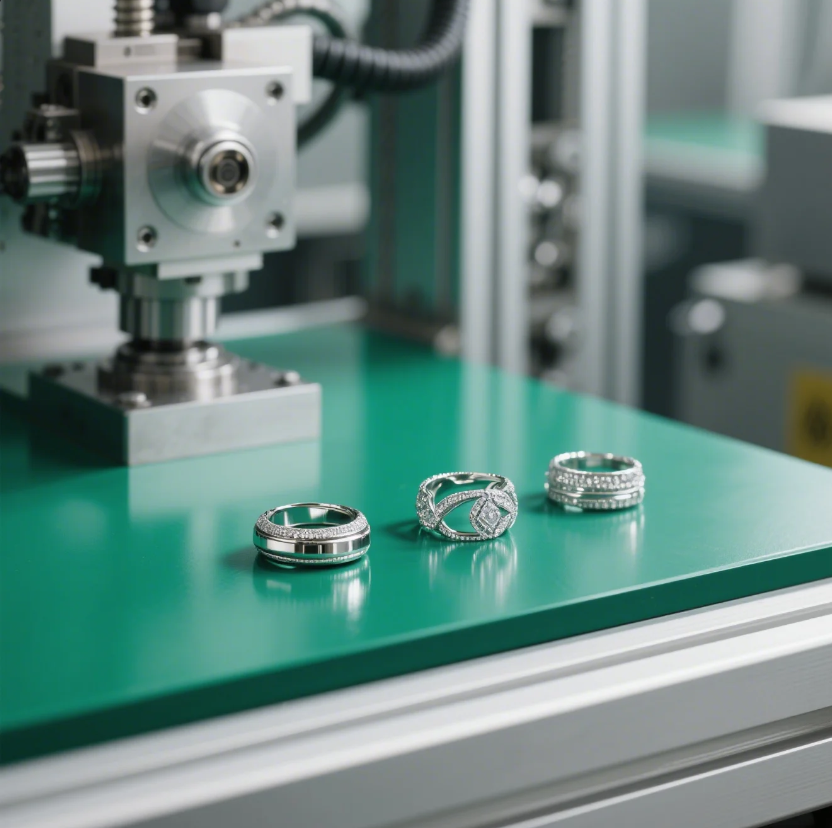
CNC Machining Jewelry has changed the way modern jewelry is designed and produced. Traditional handmade methods are still valuable, but CNC technology helps jewelry makers create more accurate shapes, repeat complex patterns, and produce consistent results. For designers and manufacturers, CNC machining solves many common problems, including creating intricate details, choosing suitable materials, controlling production costs, and maintaining the beauty of the final jewelry piece.
With advanced CNC equipment, jewelry manufacturers can transform digital designs into precise physical products. Companies such as EMAR use CNC machining expertise to help create customized jewelry parts with high accuracy, excellent surface quality, and reliable production efficiency.
Jewelry often requires extremely small details, smooth surfaces, and perfect symmetry. A small mistake can affect the appearance and value of a piece. CNC machining uses computer-controlled movements to remove material with high precision, allowing manufacturers to produce complicated jewelry designs that are difficult to achieve by hand.
The main advantages of CNC machining for jewelry include:
For jewelry businesses, this combination of accuracy and efficiency helps reduce waste, control costs, and provide customers with more personalized designs.
The design process for CNC-machined jewelry begins with an idea. Designers usually consider the inspiration behind the piece before creating a digital model. The concept may come from traditional jewelry styles, modern geometric shapes, nature themes, cultural symbols, or customer-specific requirements.
For example, a designer may want to create a vintage-inspired ring with detailed patterns, a modern necklace with clean lines, or a themed pendant with personalized symbols. The design idea determines the shape, structure, and machining requirements.
After developing the concept, designers use CAD (Computer-Aided Design) software to build a detailed 3D model. CAD allows designers to control every part of the jewelry, including curves, angles, thickness, holes, and decorative elements.
A well-designed CAD model helps prevent production problems because manufacturers can check:
The CAD file is then converted into CNC machining instructions. This digital workflow improves accuracy and makes it easier to modify custom jewelry designs before production begins.
The material selection in CNC jewelry process is important because different materials have different machining characteristics. Jewelry materials must provide not only beauty but also durability, wear resistance, and compatibility with CNC tools.
Gold is one of the most popular materials for jewelry because of its attractive color and corrosion resistance. Common choices include 14K and 18K gold.
Gold is relatively soft and malleable, so CNC machining requires careful control of cutting speed, feed rate, and tooling conditions to avoid scratches or deformation.
Silver is widely used because it offers a bright appearance and lower material cost compared with gold and platinum. However, silver is softer and can develop surface marks during machining. Proper cutting tools and finishing methods are necessary to maintain a smooth surface.
Platinum is highly valued for its strength, durability, and natural white color. It is more difficult to machine because it is dense and requires stronger cutting conditions. High-quality tools and controlled machining parameters help achieve accurate results.
Gemstones are usually added after CNC machining because many stones cannot directly withstand machining forces. Designers must consider gemstone size, hardness, setting method, and placement during the initial design stage.
The machining operations for CNC jewelry include several processes that help create different shapes and decorative features. Each operation requires suitable tools and carefully controlled settings.
CNC milling is one of the most common processes used in jewelry production. It removes material from a metal block to create detailed shapes, patterns, and complex surfaces.
Milling is suitable for:
Small-diameter carbide end mills and fine engraving cutters are often used for jewelry machining. Low cutting forces, appropriate spindle speeds, and stable machine settings help protect delicate details.
CNC turning is used for creating round or cylindrical jewelry components, such as beads, pins, tubes, and clasps. The material rotates while a cutting tool removes material to create a precise shape.
Sharp turning tools and controlled feed rates help achieve smooth surfaces and accurate dimensions.
Engraving adds personal or decorative details, including names, symbols, patterns, and messages. Fine engraving tools are required to create clean lines without damaging the jewelry surface.
Proper tool selection, controlled depth, and stable machining conditions are essential for high-quality engraving results.
The handling challenges in CNC jewelry production requires careful planning because jewelry materials are valuable and often delicate. Common problems include material damage, tool wear, and poor surface finishing.
Precious metals can be scratched, overheated, or deformed if machining conditions are not controlled. Manufacturers can reduce these risks by:
Jewelry requires extremely fine details, so worn tools can create rough surfaces or inaccurate patterns. Regular tool inspection and replacement help maintain machining quality.
Using high-quality micro cutting tools also improves edge quality and reduces the risk of damaging expensive materials.
CNC machining creates the basic jewelry shape, but additional finishing is needed to achieve a premium appearance. Polishing, surface treatment, and cleaning remove small marks and improve shine.
The post-machining in CNC-machined jewelry stage improves appearance, durability, and customer value. Several finishing steps may be used depending on the jewelry design and material.
Quality control is essential because jewelry combines technical accuracy with artistic value. Manufacturers inspect CNC-machined jewelry through several methods:
Experienced CNC machining providers like EMAR combine advanced equipment, skilled operators, and strict quality management to support jewelry manufacturers that need reliable custom production.
CNC machining provides jewelry designers with a powerful solution for creating detailed, repeatable, and high-quality products. From the first CAD model to material selection, machining, finishing, and inspection, every step affects the final result.
By choosing the right materials, optimizing machining parameters, maintaining tools, and applying professional finishing methods, CNC machining can produce jewelry that combines artistic creativity with manufacturing precision. Whether creating a unique custom piece or producing a collection of designs, CNC technology offers the accuracy and flexibility needed for modern jewelry manufacturing.