Impellers are important rotating components used in pumps, compressors, turbines, and other fluid-handling equipment. Their job is to move liquids or gases efficiently by converting mechanical energy into fluid movement. Because impellers have curved blades and require high accuracy, manufacturing them requires advanced machining methods.
Three-axis CNC machining of impellers is a common manufacturing method that uses computer-controlled machines to produce accurate impeller parts. The process controls three main movements of the cutting tool: X-axis, Y-axis, and Z-axis. This allows manufacturers to create complex blade shapes while maintaining consistent quality.
This guide explains the key factors involved in impeller machining, including material selection, design, machining methods, precision requirements, and quality control. It also provides practical advice for choosing a reliable CNC machining partner.
The material of an impeller directly affects its strength, durability, corrosion resistance, and operating performance. Different applications require different materials. Choosing the correct material is one of the most important steps before CNC machining begins.
Stainless steel is widely used for impellers because it provides excellent corrosion resistance and high mechanical strength. It is suitable for industries such as chemical processing, marine equipment, food processing, and industrial pumps.
Aluminum alloys are another popular choice because they are lightweight and easy to machine. They are often used where reducing weight is important, such as aerospace equipment, automotive systems, and small cooling devices.
When selecting materials for material selection in three-axis CNC machining of impellers, engineers should consider operating temperature, fluid type, rotation speed, expected service life, and production cost.
Impeller design has a direct influence on fluid flow efficiency, vibration, and energy consumption. A well-designed impeller can improve equipment performance and reduce operating costs.
The blade shape is one of the most important design factors. Different blade curves create different fluid flow characteristics.
For example, a high-efficiency industrial pump may use carefully curved blades to reduce turbulence and improve fluid movement.
The impeller diameter and blade quantity depend on the application requirements.
Good design considerations in three-axis CNC machining of impellers include balancing machining difficulty with performance requirements. A complicated blade design may improve efficiency but also increases manufacturing time and cost.
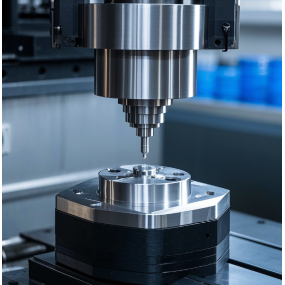
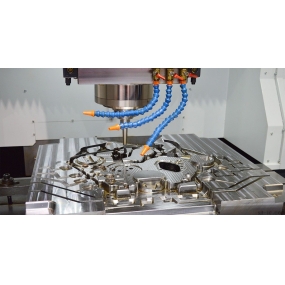
Three-axis CNC machines are widely used for producing impellers because they provide stable accuracy and repeatable production. However, successful machining requires proper tool selection, cutting strategies, and process planning.
The correct cutting tools help improve machining quality and reduce production time.
Tool path planning determines how the cutting tool moves across the impeller surface. A good path reduces machining time and creates a smoother surface.
Manufacturers usually divide the process into two main stages:
In machining techniques in three-axis CNC machining of impellers, experienced machinists carefully adjust cutting speed, feed rate, and tool movement to prevent vibration and tool damage.
Impellers must meet strict accuracy requirements because even small errors can affect rotation balance, fluid movement, and equipment efficiency.
Important dimensions include:
Many industrial impellers require machining tolerances within a few hundredths of a millimeter, depending on the application. Higher precision helps ensure smooth rotation and reduces vibration.
A smooth blade surface reduces fluid resistance and improves energy efficiency. Rough surfaces can create turbulence and lower performance.
For precision requirements in three-axis CNC machining of impellers, manufacturers should consider both dimensional accuracy and surface quality. A precise but rough impeller may still fail to achieve the expected performance.
Quality inspection is essential to ensure every impeller meets design specifications. Professional CNC manufacturers use multiple inspection methods during and after production.
Common inspection equipment includes:
Strong quality control in three-axis CNC machining of impellers helps manufacturers deliver reliable components for demanding industries such as energy, aerospace, and industrial equipment.
Choosing the right machining supplier can significantly affect product quality, delivery time, and total cost. Before selecting a manufacturer, consider the following points:
A supplier with strong engineering knowledge can help optimize the impeller design before production begins, reducing unnecessary machining costs.
EMAR provides professional three-axis CNC machining services for impellers and other precision mechanical components. With machining experience, skilled engineers, and strict quality control processes, EMAR helps customers produce high-quality impellers for different industrial applications.
EMAR focuses on optimizing the entire manufacturing process, from material selection and machining planning to final inspection. This approach helps customers achieve accurate blade shapes, reliable performance, and stable production results.
For companies looking for a cost-effective impeller manufacturing solution, EMAR can provide customized machining support based on material requirements, design complexity, production volume, and performance goals.
Three-axis CNC machining of impellers is an effective method for producing accurate and reliable rotating components. Successful impeller manufacturing depends on many factors, including choosing the right material, creating a suitable blade design, applying proper machining techniques, meeting precision requirements, and maintaining strict quality control.
By understanding these key areas, engineers and buyers can make better decisions when developing impeller products. Working with an experienced CNC machining partner can further improve product quality, reduce costs, and ensure long-term performance.