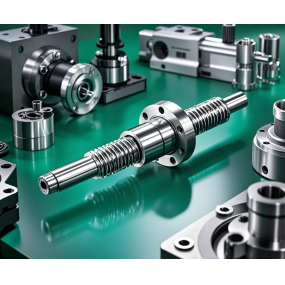

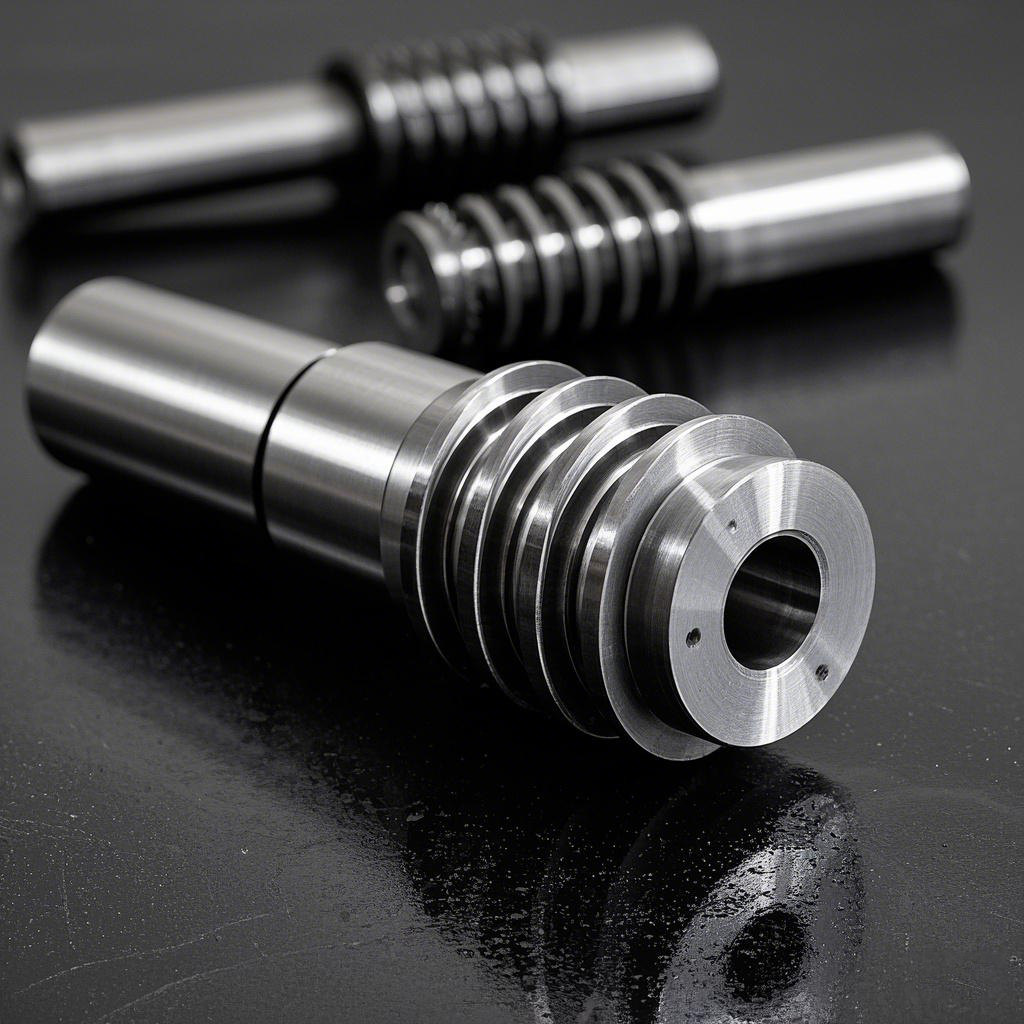
Transmission worms are important mechanical parts used in worm gear systems. They transfer motion and power between two shafts that are not parallel and do not intersect. Because of their ability to provide high reduction ratios, smooth operation, and low noise, transmission worms are widely used in industrial machinery, automotive systems, lifting equipment, and conveyor systems.
Many manufacturers face challenges when producing transmission worms, including choosing the right material, understanding the machining sequence, maintaining thread accuracy, controlling production costs, and meeting different design requirements. This article explains the complete CNC machining transmission worm processing method? Detailed process of transmission worm processing to help engineers and buyers better understand how high-quality worms are produced.
Traditional machining methods can produce basic worm shapes, but they often have limitations in accuracy, repeatability, and efficiency. CNC machining uses computer-controlled machines to precisely control cutting movements, making it suitable for producing complex worm geometries with strict dimensional requirements.
The main advantages of CNC machining for transmission worms include:
Professional CNC machining suppliers such as EMAR use advanced CNC equipment and manufacturing experience to produce transmission worms with stable quality for different industrial applications.
Choosing the correct material is the first important step in transmission worm manufacturing. Worms usually work under high pressure and repeated friction, so the material must provide high strength, wear resistance, and fatigue resistance.
Common materials include:
The selection of material depends on operating conditions, load requirements, service life expectations, and cost considerations. For example, a heavy industrial conveyor system that transfers large loads may require 42CrMo alloy steel to ensure reliable operation.
Before machining starts, a complete engineering drawing and 3D model are required. The design should clearly define important worm parameters, including:
CAD software is commonly used to create accurate 2D drawings and 3D models. These models provide the foundation for CNC programming and help avoid machining errors before production begins.
Turning is the first machining operation used to create the basic shape of the transmission worm. The raw material is usually a round steel bar mounted on a CNC lathe. The workpiece rotates while cutting tools remove material according to programmed instructions.
The raw steel bar is cut into the required length and fixed securely in the CNC lathe. Proper positioning is important because poor alignment can cause problems with concentricity during later machining operations.
Rough turning removes a large amount of unnecessary material quickly. The goal is to create a basic worm shape close to the final dimensions.
During rough turning, machinists adjust:
For example, carbide cutting tools can be used with a larger cutting depth and higher feed rate to improve machining efficiency while maintaining tool life.
After rough turning, finish turning improves dimensional accuracy and surface quality. This stage focuses on achieving the correct diameter, straightness, and concentricity of the worm body.
A stable finish turning process helps prevent problems such as uneven rotation, excessive vibration, and poor gear engagement.
Thread cutting is one of the most critical steps because the worm thread directly affects transmission performance. Incorrect thread dimensions can cause noise, vibration, power loss, and early wear.
Single-point threading is one of the most common methods for machining transmission worm threads. A CNC machine controls the cutting tool movement along the axial direction while synchronizing it with workpiece rotation.
The process requires accurate control of:
The cutting tool usually removes material through multiple passes. This method provides good flexibility and is suitable for different worm designs.
Form-tool threading uses a specially shaped cutting tool that matches the worm thread profile. It can complete machining faster because fewer cutting passes may be needed.
However, the form tool must be manufactured with high precision. This method is often used for specific worm designs and larger production quantities.
After turning and thread cutting, heat treatment is often performed to improve the mechanical performance of the transmission worm.
Common heat treatment processes include:
Proper heat treatment helps the worm withstand repeated loads and friction during long-term operation.
Grinding is used when high precision is required. It improves surface finish, corrects small dimensional errors, and ensures accurate thread geometry.
Thread grinding machines can achieve higher accuracy than ordinary cutting processes, making them suitable for precision worm drives used in demanding applications.
Quality control should not wait until the end of production. During machining, inspection helps identify problems early and prevents costly rework.
Common inspection methods include:
Checking dimensions during different machining stages ensures that errors are corrected before the part reaches final production.
After machining and heat treatment, the finished transmission worm undergoes complete inspection. The inspection process may include:
Following international quality requirements and industry standards helps ensure reliable performance. Experienced manufacturers like EMAR focus on strict inspection procedures to deliver CNC-machined transmission worms that meet customer specifications.
Machining costs depend heavily on cutting efficiency. Selecting the correct tools and optimizing cutting parameters can reduce production expenses.
Important factors include:
For example, using high-quality carbide tools for alloy steel worms can reduce tool replacement frequency and improve overall productivity.
The production quantity also affects the final cost.
A professional CNC machining partner can recommend the best production method based on order quantity, design complexity, and delivery requirements.
Single-start worms have one thread and usually provide higher reduction ratios. They are commonly used where strong torque transmission is needed.
Multi-start worms have multiple threads. They provide higher transmission efficiency and faster movement but require more accurate machining because the thread arrangement is more complex.
CNC machining is especially valuable for multi-start worms because computer-controlled programming can accurately manage complex thread paths.
Cylindrical worms have a constant diameter along their length and are easier to machine. They are widely used in standard worm gear systems.
Cone-shaped worms have a tapered structure. Their machining requires careful control of:
Because of their complexity, cone-shaped worms usually require advanced CNC programming and experienced machinists.
The complete process of CNC transmission worm machining includes material selection, design preparation, turning, thread cutting, heat treatment, grinding, inspection, and cost optimization. Each step affects the final performance, durability, and reliability of the worm.
By selecting suitable materials, applying accurate CNC machining methods, and performing strict quality control, manufacturers can produce transmission worms that meet demanding industrial requirements. Companies with professional CNC machining experience, such as EMAR, help customers handle different worm designs, materials, and production volumes while maintaining consistent quality and competitive costs.