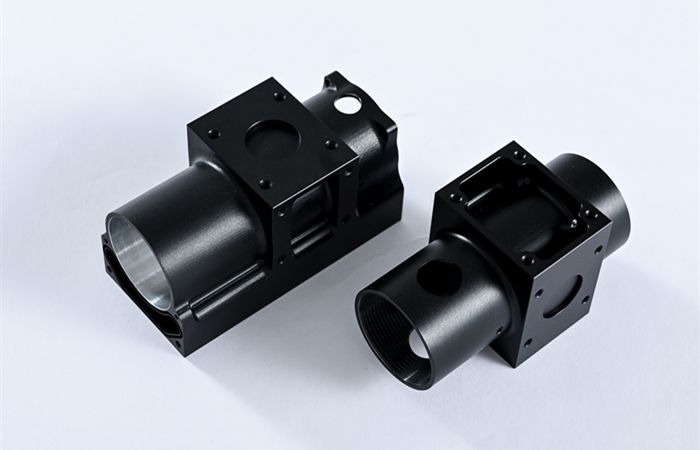
Unmanned aerial vehicles (UAVs), also called drones, require lightweight, strong, and highly accurate components to achieve stable flight. One important part of many UAV designs is the spiral arm, which supports motors, propellers, and other flight systems. Because spiral arms must handle vibration, rotation forces, and changing loads, manufacturers often use advanced CNC machining methods to produce them.
CNC machining of unmanned aerial vehicle spiral arms is a manufacturing process that uses computer-controlled machines to create precise arm structures from selected materials. This process helps achieve complex shapes, accurate dimensions, and reliable performance. From material selection to final inspection, every step affects the safety and efficiency of a UAV.
UAV spiral arms need a combination of low weight and high strength. Traditional manufacturing methods may not always provide the accuracy or complex shapes needed for modern drones. CNC machining allows manufacturers to produce detailed components with consistent quality.
The main advantages of CNC machining for UAV spiral arms include:
Material selection in CNC machining of UAV spiral arms is a key factor that determines the final performance of the drone. The material must be lightweight while providing enough strength to resist vibration, impact, and repeated operation.
Carbon-fiber reinforced polymers are widely used in high-performance UAV components because they offer excellent strength with very low weight. Their main advantages include:
However, carbon-fiber materials require careful machining because incorrect cutting methods can damage the fiber structure. Proper CNC tools and machining parameters are necessary to maintain quality.
Aluminum alloys are another common choice for UAV spiral arms. They provide a good balance between strength, cost, and machinability.
Common benefits of aluminum alloys include:
For example, aluminum alloy spiral arms are often used in commercial drones because they provide reliable performance while keeping manufacturing costs under control.
Design considerations in CNC machining of UAV spiral arms directly influence flight stability and production efficiency. Engineers must consider the shape, weight, strength, and connection methods before machining begins.
The spiral arm design should reduce air resistance and avoid unnecessary weight. A smooth curved structure can help improve airflow around the drone and reduce energy consumption.
A good UAV arm design should not simply use more material to increase strength. Instead, engineers optimize the structure to achieve maximum strength with minimum weight. Removing unnecessary material through proper design can improve flight time and payload capacity.
The connection areas between the spiral arm, motor mount, and UAV body require special attention. These points experience high stress during flight. Designers usually strengthen these areas while keeping the overall structure lightweight.
Practical design advice includes:
CNC machining techniques for UAV spiral arms include several processes that help create accurate and reliable components. The selected machining method depends on the material, design complexity, and production quantity.
CNC milling is one of the most important methods for producing UAV spiral arms. It uses rotating cutting tools to remove material and create complex shapes.
Milling is commonly used for:
CNC turning is mainly used for round components connected with spiral arms, such as shafts, joints, or rotating parts. It provides accurate circular shapes and smooth surfaces.
Precision drilling creates mounting holes for motors, screws, and connection parts. Hole position accuracy is important because even small errors can affect UAV balance.
Precision requirements in CNC machining of UAV spiral arms are very strict because UAVs depend on balanced rotation and stable movement.
Important precision factors include:
If spiral arms have different weights or incorrect dimensions, the UAV may experience vibration, reduced flight time, or unstable control. For this reason, manufacturers carefully control machining accuracy during production.
Quality control in CNC machining of UAV spiral arms ensures that every component meets performance and safety requirements. Professional manufacturers use multiple inspection methods throughout the production process.
Measurement tools such as coordinate measuring machines (CMM), calipers, and precision gauges are used to check length, thickness, hole positions, and overall geometry.
The surface of a spiral arm is inspected to confirm smoothness and proper machining quality. A good surface finish helps reduce weak points caused by rough edges.
Manufacturers may perform strength tests or vibration tests to confirm that the spiral arm can handle real operating conditions. These tests simulate forces experienced during UAV flight.
A racing drone requires extremely lightweight spiral arms because high speed and quick movement are important. In this case, engineers may select carbon-fiber reinforced materials and use precision CNC machining to create thin but strong structures.
A delivery drone, on the other hand, may require stronger arms because it carries additional weight. Aluminum alloy CNC-machined arms can provide a practical solution with good durability and reasonable cost.
Producing UAV spiral arms requires experience in both CNC technology and UAV component requirements. A reliable machining partner should understand material behavior, precision control, and the challenges of complex drone structures.
EMAR provides CNC machining services for UAV components and has experience handling complex parts that require high accuracy and reliable performance. With professional machining equipment, engineering support, and strict quality control processes, EMAR helps customers develop customized UAV spiral arms and other precision drone components.
When selecting a CNC machining supplier, customers should consider:
CNC machining of unmanned aerial vehicle spiral arms combines advanced manufacturing technology with careful engineering design. The right material choice, optimized structure, accurate machining methods, and strict quality inspection all contribute to safer and more efficient UAV performance.
Whether using carbon-fiber reinforced polymers for lightweight designs or aluminum alloys for cost-effective solutions, CNC machining provides the accuracy and flexibility needed for modern UAV manufacturing. Working with an experienced supplier such as EMAR can help companies achieve high-quality spiral arms that meet demanding drone application requirements.