

Gears are critical components in many machines because they transfer power, control speed, and support accurate movement. From automotive transmissions to industrial equipment and robotics systems, gear performance directly affects the reliability and efficiency of the entire machine. However, producing high-quality gears requires excellent accuracy, suitable materials, and careful manufacturing control.
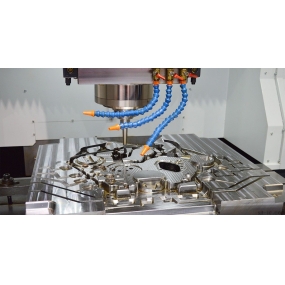
Gear CNC Machining is an advanced manufacturing method that helps manufacturers produce gears with high precision, complex tooth geometries, and consistent quality. Compared with traditional machining methods, CNC technology provides better control over dimensions, surface finish, and repeatability. This makes it a reliable solution for industries that require durable and accurate gears.
For companies looking for professional gear manufacturing solutions, experienced CNC machining suppliers such as EMAR provide advanced equipment, machining knowledge, and quality management systems to support different gear production needs, from prototypes to large-volume manufacturing.
Gears must operate smoothly under continuous loads. Even a small error in tooth shape, spacing, or alignment can cause noise, vibration, energy loss, and early failure. CNC machining helps solve these problems by offering precise computer-controlled operations.
The main advantages of CNC gear machining include:
Because of these benefits, Gear CNC Machining is widely used in automotive systems, aerospace equipment, robotics, medical devices, and industrial machinery.
Good gear performance starts with proper design. The design considerations for CNC-machined gears must match the working conditions, power requirements, and mechanical environment of the final application.
The gear type determines how power is transferred and how the gear system operates.
The selected gear type should consider factors such as operating speed, load capacity, available space, and required movement direction.
Several important design factors affect gear performance:
Engineers must balance these factors to create gears that can handle the required power while maintaining smooth and efficient operation.
The material selection for gear CNC machining has a direct impact on gear strength, service life, and operating performance. Different applications require different material properties, including hardness, wear resistance, corrosion resistance, and toughness.
Alloy steels are widely used for high-performance gears because they provide excellent strength and durability. They can withstand heavy loads and repeated stress, making them suitable for automotive gears, industrial gearboxes, and heavy machinery.
After heat treatment, alloy steel gears can achieve higher hardness and improved wear resistance, allowing them to operate under demanding conditions.
Stainless steel is a good choice when corrosion resistance is important. These materials are often used in food processing equipment, medical machinery, and environments exposed to moisture or chemicals.
Although stainless steel can be more difficult to machine, proper CNC cutting strategies and suitable tools help achieve accurate results.
Materials such as aluminum alloys, brass, and bronze are selected when lightweight design, low friction, or corrosion resistance is needed.
The best material choice depends on the gear's load, speed, environment, and expected service life.
Manufacturing accurate gears requires specialized machining processes. Different operations are selected based on gear type, production volume, and accuracy requirements.
Hobbing is one of the most common gear manufacturing methods. A rotating cutting tool called a hob removes material from the gear blank to create teeth. It is efficient and suitable for producing large quantities of spur and helical gears.
Gear shaping uses a cutter that moves back and forth to create gear teeth. This process is useful for internal gears and gears with special shapes that cannot be easily produced through hobbing.
Grinding is a finishing process used when extremely high accuracy and surface quality are required. It improves tooth precision and reduces friction during operation.
Proper cutting parameters are essential for achieving high-quality gears. CNC machining engineers carefully adjust:
The correct combination of tools and cutting conditions helps prevent machining defects and improves production stability.
Although CNC technology provides excellent accuracy, gear manufacturing still requires careful control to overcome several challenges.
Handling tooth accuracy in gear CNC machining is one of the most important steps for producing reliable gears. Incorrect tooth dimensions can create uneven contact, increased noise, and reduced service life.
Manufacturers control tooth accuracy through precise CNC programming, advanced cutting tools, and inspection equipment. Regular calibration of machines also helps maintain consistent results.
During machining, cutting heat can affect gear dimensions. Excessive heat may cause deformation and reduce accuracy.
To minimize thermal problems, manufacturers use suitable cutting speeds, cooling systems, proper tool selection, and optimized machining sequences.
Tool wear can reduce machining accuracy and increase production costs. Using high-quality cutting tools, monitoring tool conditions, and replacing worn tools at the right time helps maintain gear quality.
After machining, additional treatments are often required to improve gear performance. The post-machining processes for CNC-machined gears enhance strength, durability, and resistance to wear.
These processes allow gears to perform reliably in demanding applications such as vehicles, industrial machines, and robotic systems.
The quality control in CNC-machined gears is essential for ensuring proper functionality and long-term reliability. Professional manufacturers use multiple inspection methods to verify gear performance.
Reliable CNC machining companies combine skilled engineers, advanced inspection equipment, and strict quality systems to deliver gears that meet customer requirements.
Selecting an experienced machining partner is important when producing precision gears. A capable supplier should have advanced CNC equipment, professional engineering support, material knowledge, and strong quality control processes.
EMAR focuses on precision CNC machining services and supports customers with customized gear manufacturing solutions. With experience in material selection, machining optimization, and inspection processes, EMAR helps customers achieve accurate and reliable gears for different industries.
By combining proper gear design, suitable materials, optimized machining operations, and strict quality control, Gear CNC Machining can deliver high-performance components that improve machine efficiency, reduce maintenance costs, and extend product life.