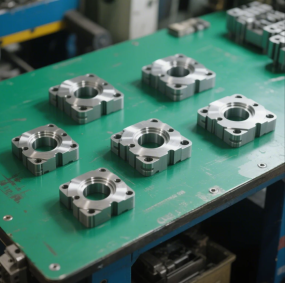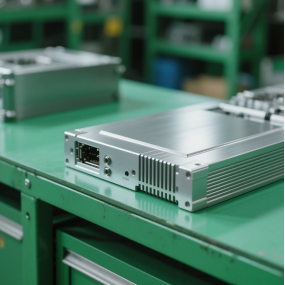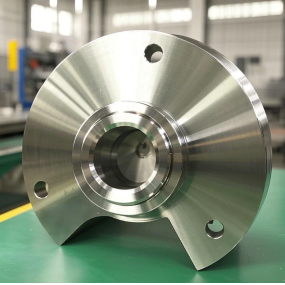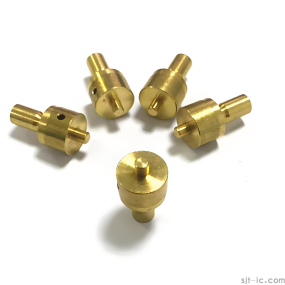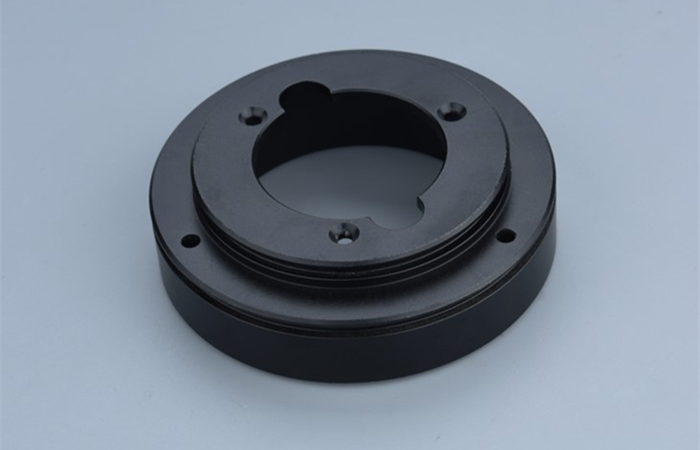
Warehouse automation systems help companies move, store, and manage products faster and more accurately. Behind these advanced systems are many small but important accessories, such as brackets, guide rails, robotic parts, conveyor components, sensor mounts, and connection pieces. These parts must be strong, accurate, and reliable because even a small error can affect the whole automation process.
CNC Machining of Warehouse Automation Accessories is a manufacturing method that uses computer-controlled machines to create high-precision parts for automated warehouses. CNC machining can produce complex shapes with stable quality, making it a popular choice for industries that need durable and accurate automation components.
This article explains the materials, machining methods, design factors, precision needs, and quality checks involved in producing warehouse automation accessories through CNC machining.
Warehouse automation accessories are supporting parts used in automated storage and transportation systems. They help machines operate smoothly and connect different parts together.
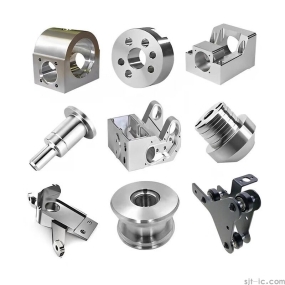
Common examples include:
These accessories may look simple, but they often need to work continuously under heavy loads and repeated movement. CNC machining helps manufacturers create parts that meet these demanding requirements.
The choice of material directly affects the strength, weight, cost, and service life of warehouse automation accessories. Different applications require different material properties.
Steel is widely used for warehouse automation parts that require high strength and wear resistance. It can handle heavy loads and frequent movement without easily deforming.
Advantages of steel include:
For example, a steel mounting bracket used in an automated storage system can provide stable support for robotic equipment operating thousands of times per day.
Aluminum is another common choice for CNC machining because it is lighter than steel while still providing good strength.
Advantages of aluminum include:
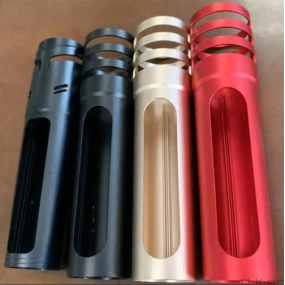
Aluminum parts are often used in conveyor systems, robotic frames, and sensor brackets where reducing weight can improve machine efficiency.
Engineering plastics are useful when parts need lower cost, electrical insulation, or reduced friction.
Common plastic materials include nylon, POM, and ABS. Their benefits include:
Choosing the correct material is an important step in the materials in CNC machining of warehouse automation accessories process. A professional manufacturer will consider working conditions, load requirements, and operating environment before selecting the material.
Different CNC machining methods are used depending on the shape and function of the accessory. Combining several techniques allows manufacturers to produce accurate and reliable parts.
CNC milling uses rotating cutting tools to remove material and create precise shapes. It is commonly used for parts with flat surfaces, slots, holes, and complex structures.
Examples include:
CNC turning is mainly used for round or cylindrical parts. The material rotates while a cutting tool shapes the outside or inside surface.
Typical applications include:
Drilling creates accurate holes for bolts, screws, sensors, and assembly connections. Proper hole placement is important because automation equipment requires accurate assembly.
Grinding improves surface smoothness and dimensional accuracy. It is often used for parts that need very precise fitting or low-friction movement.
These methods are key CNC machining techniques for warehouse automation accessories. Selecting the right process helps balance production cost, speed, and part performance.
Good design is essential for making automation accessories that work correctly in real warehouse environments. Engineers must consider how the part will connect, move, and perform inside the complete system.
Every accessory must match the existing automation equipment. Designers need to consider connection points, installation methods, and interaction with other components.
For example, a sensor mounting bracket must have the correct hole position and size so that the sensor can detect products accurately.
The design should match the part's purpose. Components that carry heavy loads need stronger structures, while moving parts may need lightweight designs with smooth surfaces.
Important factors include:
Modern warehouses often need maximum storage efficiency. Compact automation accessories can help reduce equipment size while maintaining performance.
Engineers may use CNC machining to create smaller, customized parts that fit limited installation spaces.
These are important design considerations in CNC machining of warehouse automation accessories. Careful planning reduces installation problems and improves system reliability.
Automation systems depend on accurate movement and positioning. If a machined part is too large, too small, or incorrectly shaped, it may cause equipment vibration, misalignment, or unexpected downtime.
The precision requirements in CNC machining of warehouse automation accessories usually include:
For example, a conveyor guide component must maintain accurate dimensions so packages move along the correct path without blocking or shifting.
Tight machining tolerances are especially important for robotic systems because multiple parts must work together smoothly. CNC equipment helps achieve consistent accuracy during both prototype production and large-volume manufacturing.
Quality control ensures that every machined accessory meets performance requirements before it is installed in an automation system.
Manufacturers use measuring tools such as calipers, micrometers, and coordinate measuring machines to check part dimensions. These inspections confirm that the finished part matches the design drawings.
A smooth surface can reduce friction, improve appearance, and increase service life. Inspectors check whether the surface finish meets the required standard.
Some accessories require practical testing to confirm that they fit correctly and work properly with other equipment.
A reliable quality process includes:
Strong quality control in CNC machining of warehouse automation accessories helps prevent failures and improves the long-term reliability of warehouse systems.
As warehouses become more intelligent, automation equipment requires more customized and precise components. Standard parts may not always meet the needs of special systems, so CNC machining provides a flexible solution.
With CNC technology, manufacturers can produce:
For companies developing automated warehouse solutions, working with an experienced CNC machining partner can reduce development time and improve product reliability.
When selecting a CNC machining supplier for warehouse automation accessories, companies should consider machining experience, equipment capability, quality management, and communication ability.
EMAR provides CNC machining services for customized automation components, supporting customers with material selection, precision machining, and quality inspection. With experience in producing industrial parts, EMAR helps businesses develop reliable accessories that meet the requirements of modern warehouse automation systems.
A professional machining partner can help transform a design idea into a finished component that fits accurately, operates smoothly, and performs reliably in demanding warehouse environments.
CNC Machining of Warehouse Automation Accessories plays an important role in building efficient and reliable automated warehouse systems. From selecting suitable materials such as steel, aluminum, and plastics to applying advanced machining methods like milling, turning, drilling, and grinding, every step affects the final performance of the accessory.
By focusing on smart design, accurate machining, and strict quality control, manufacturers can create components that support faster, safer, and more efficient warehouse operations. Choosing an experienced CNC machining supplier ensures that automation accessories meet real-world requirements and provide long-term value.