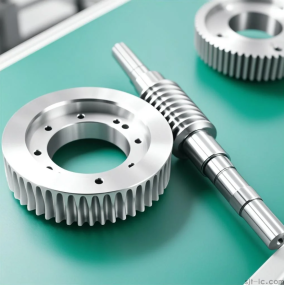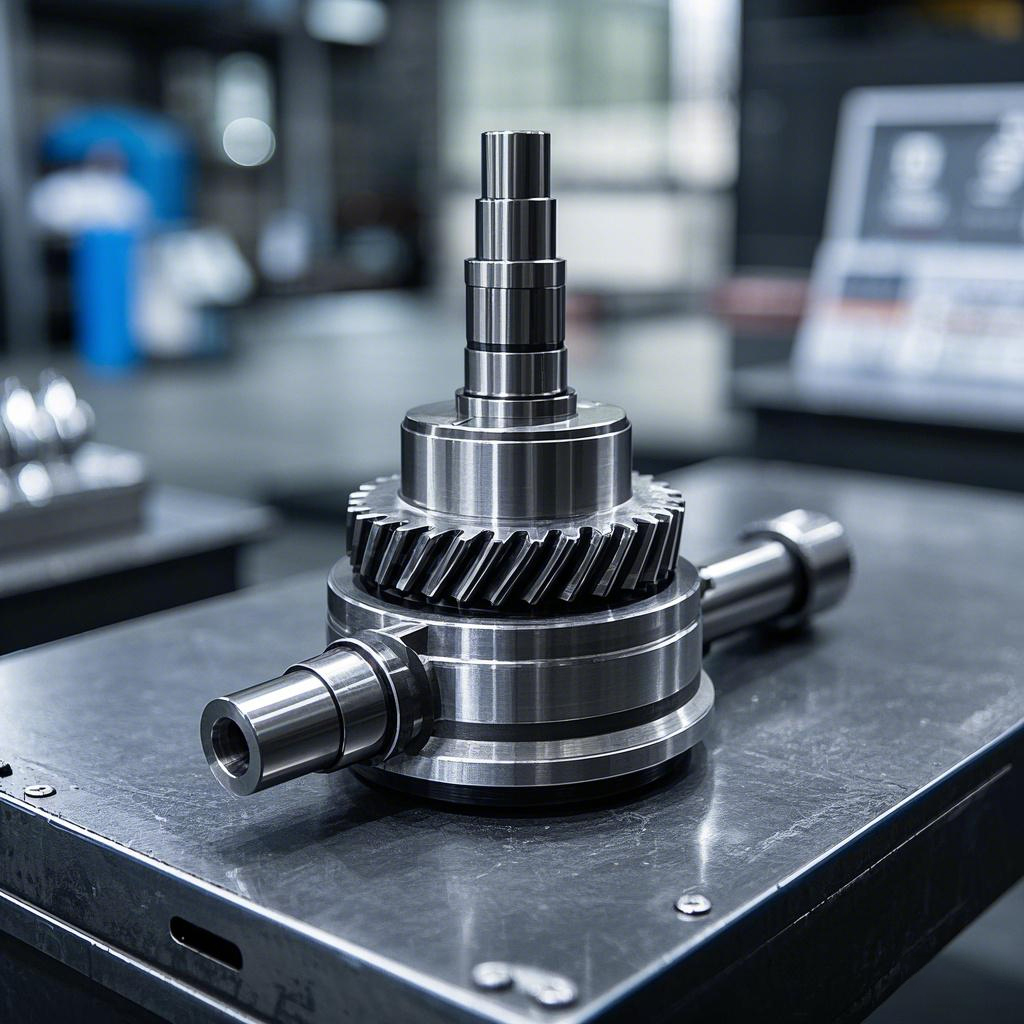
Transmission gear shafts are important parts in mechanical power transmission systems. They combine the functions of a gear and a shaft: the gear transfers power through tooth engagement, while the shaft supports rotation and transfers torque. They are widely used in automotive transmissions, industrial gearboxes, construction equipment, and many other machines.
Many manufacturers face challenges when producing transmission gear shafts, including choosing the right material, understanding the machining sequence, controlling precision, reducing production costs, and handling different shaft designs. A clear understanding of the CNC machining transmission gear shaft processing method? Transmission gear shaft processing detailed process helps engineers and buyers select the right manufacturing solution.
CNC machining provides major advantages compared with traditional machining methods. CNC machines can achieve higher accuracy, stable repeatability, and complex geometric processing. They can produce different gear shaft structures with consistent quality while reducing human operation errors. For companies requiring high-performance transmission components, professional CNC machining suppliers such as EMAR use advanced equipment and process control methods to improve machining efficiency and product reliability.
Material selection is the first important step in transmission gear shaft manufacturing. The material directly affects strength, wear resistance, service life, and production cost.
Common materials include alloy steels and carbon steels. Alloy steels such as 40Cr and 42CrMo are widely used because they provide high strength, good fatigue resistance, and excellent response to heat treatment. These materials are suitable for applications with high torque and heavy loads, such as automotive transmission systems.
Carbon steel can also be used for transmission gear shafts with lower load requirements. It offers good machinability and lower material costs, making it suitable for general mechanical equipment.
The correct material choice depends on several factors:
For example, a high-performance vehicle transmission gear shaft needs excellent strength and fatigue resistance, so alloy steel is usually preferred. For standard industrial equipment, a cost-effective carbon steel option may be enough.
A detailed design drawing is essential before CNC machining begins. The blueprint should clearly define all important dimensions and technical requirements, including:
CAD software is commonly used to create accurate 2D drawings and 3D models. These digital models provide the foundation for CNC programming and help engineers check potential design problems before production.
A complete design review can prevent machining errors, reduce material waste, and improve production efficiency.
The machining process usually includes turning, gear cutting, drilling, milling, heat treatment, and surface treatment. Each step has a specific purpose and must follow the correct sequence.
Turning is usually the first major machining operation. The raw material is commonly a round steel bar or forged blank, which is mounted on a CNC lathe. The workpiece rotates at a controlled speed while cutting tools remove material.
The raw shaft blank must be fixed accurately on the CNC lathe. Correct positioning ensures machining stability and helps maintain shaft concentricity during later operations.
Rough turning removes a large amount of extra material quickly. The goal is to create the basic shaft shape and approximate dimensions.
During rough turning, engineers adjust:
For example, carbide cutting tools are often used because they can handle higher cutting speeds and improve machining efficiency.
After rough turning, finish turning improves dimensional accuracy and surface quality. This step creates the final shaft diameter, shoulder positions, and other precision features.
Important quality requirements during finish turning include:
Incorrect turning parameters may cause vibration, poor surface quality, or dimensional errors, so experienced CNC technicians carefully optimize the machining conditions.
After turning, gear teeth are machined on the shaft. Gear cutting is one of the most critical steps because gear accuracy directly affects transmission performance, noise level, and service life.
Gear hobbing is one of the most common methods for manufacturing external gear teeth. During hobbing, the hob cutter rotates while moving along the shaft. The shaft and hob rotate together according to a specific speed ratio to generate accurate gear teeth.
Advantages of hobbing include:
For medium-sized transmission gear shafts, hobbing is often the preferred method because it provides a balance between quality and production speed.
Gear shaping is used for special gear structures, such as internal gears or unusual tooth designs. A shaping cutter moves back and forth while the workpiece rotates, gradually forming the gear teeth.
This method is useful when hobbing cannot meet the design requirements.
Center holes are usually drilled at both ends of the shaft at the beginning of machining. These holes provide accurate reference points for later turning and grinding operations.
Proper center-hole machining helps maintain shaft alignment and improves overall machining accuracy.
If the transmission gear shaft requires a keyway, CNC milling is used to create the required slot. The CNC system controls the cutter movement precisely to achieve the correct width, depth, and length.
Some transmission gear shafts use splines instead of keys for torque transmission. Specialized spline cutters are used to create accurate spline profiles.
CNC control ensures that the spline shape, spacing, and alignment meet design requirements.
Heat treatment improves the mechanical properties of transmission gear shafts. It increases hardness, strength, and fatigue resistance, allowing the shaft to handle higher loads.
Common heat treatment methods include:
For example, a 42CrMo transmission gear shaft may be quenched and tempered to achieve a strong combination of hardness and impact resistance.
Surface treatments further improve performance according to application requirements.
The correct surface treatment depends on factors such as operating environment, friction conditions, and required service life.
Quality control is essential because transmission gear shafts must operate under continuous mechanical stress. Even small errors can cause vibration, noise, or early failure.
Inspection should be performed during machining instead of only after production is complete. Early inspection helps detect problems and reduces waste.
Common measuring tools include:
Measurements are usually taken after important operations such as turning, gear cutting, and milling.
After machining and heat treatment, final inspection verifies that the finished transmission gear shaft meets all technical requirements.
Final inspection may include:
Following international standards such as ISO requirements or automotive industry standards helps ensure reliable product performance.
Companies like EMAR focus on strict process control, precision machining, and inspection procedures to provide stable CNC transmission gear shaft solutions for different industries.
Controlling machining costs does not mean reducing quality. The goal is to improve efficiency while maintaining accuracy.
Proper CNC parameter settings can reduce production costs. Engineers optimize:
Using suitable cutting tools reduces tool replacement frequency and improves machining efficiency.
Production quantity has a major impact on cost.
For large-volume production, automated CNC processes and optimized tooling reduce the cost per piece. For small-batch production, reducing setup time is more important. Quick-change tools and flexible CNC programming can help control costs.
Single-stage transmission gear shafts usually have one main gear section and a simpler structure. Their machining process is easier and requires fewer operations.
Multi-stage transmission gear shafts contain multiple gears and different diameter sections along the shaft length. They require more complex turning, positioning, and gear-cutting processes.
Accurate process planning is especially important for multi-stage shafts because small positioning errors can affect the entire transmission system.
Spur gear shafts have straight teeth and are relatively simple to manufacture. They are commonly used where simple power transmission is required.
Helical gear shafts have angled teeth, which provide smoother operation and higher load capacity. However, machining requires precise control of the helix angle and tooth geometry.
Because of these differences, CNC programming and inspection methods must be adjusted according to the gear type.
The CNC machining transmission gear shaft processing method? Transmission gear shaft processing detailed process involves multiple carefully controlled steps, from material selection and design preparation to turning, gear cutting, heat treatment, inspection, and cost optimization.
The key to producing high-quality transmission gear shafts is choosing the correct material, using suitable CNC machining methods, controlling every production stage, and applying strict quality inspection.
With professional CNC machining experience, advanced equipment, and complete process management, EMAR helps customers produce reliable transmission gear shafts for automotive, industrial, and mechanical applications while balancing precision, efficiency, and cost.