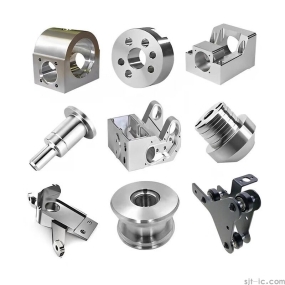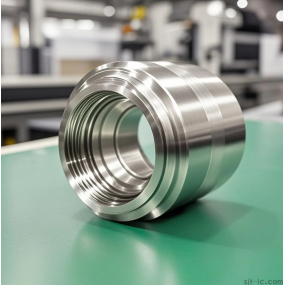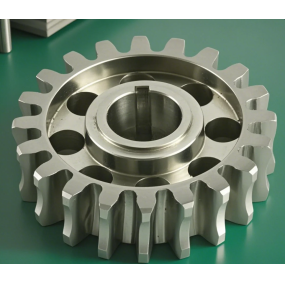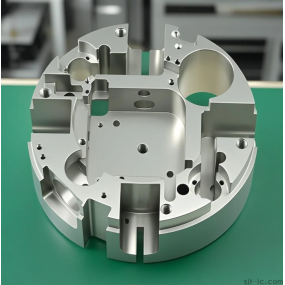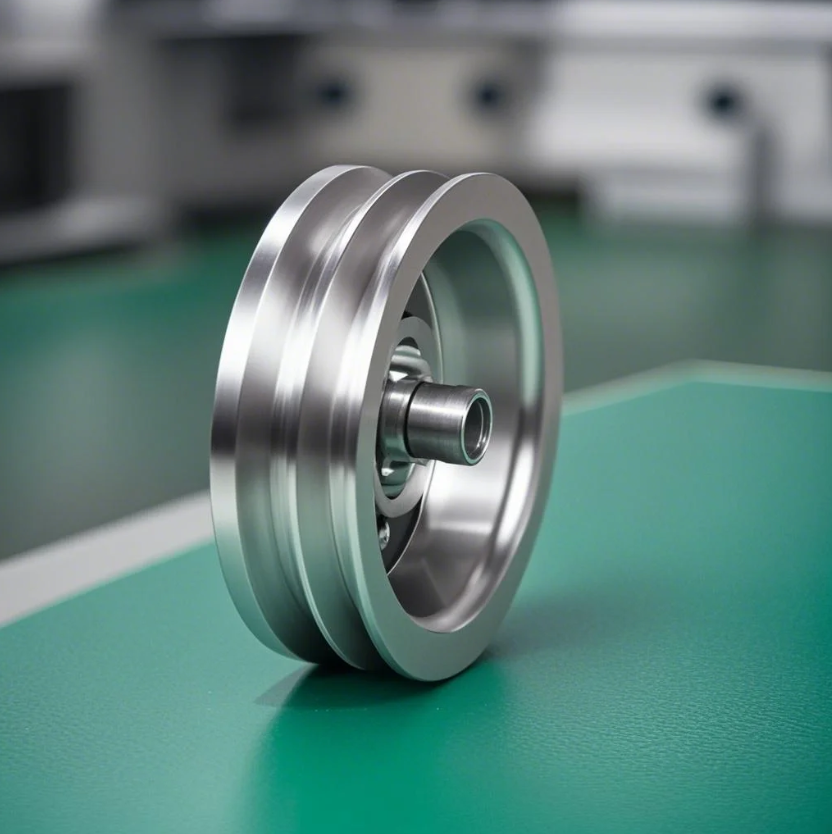
Pulley CNC Machining is an important manufacturing method used to produce high-quality pulleys for power transmission, motion control, and mechanical systems. Many companies need pulleys that can work smoothly, carry heavy loads, reduce vibration, and maintain long service life. However, choosing the right material, controlling machining accuracy, and managing production costs are common challenges.
With advanced CNC technology, manufacturers can produce pulleys with accurate dimensions, consistent quality, and excellent surface finishes. A professional CNC machining partner, such as EMAR, helps customers develop pulley solutions based on application requirements, material performance, and production needs.
Pulleys must meet strict requirements because even small dimensional errors can cause belt slipping, uneven load distribution, noise, and premature wear. CNC machining provides a reliable solution because machines can follow programmed designs with high repeatability.
The main benefits of precision requirements in pulley CNC machining include:
Compared with traditional manual machining, CNC production reduces human error and improves efficiency, making it suitable for both prototypes and large-volume manufacturing.
Choosing the correct material is one of the most important steps in pulley manufacturing. The best material depends on load capacity, operating environment, corrosion exposure, weight requirements, and temperature conditions.
The following materials are commonly used in material selection for pulley CNC machining:
Carbon steel is widely used because it provides good strength, durability, and cost efficiency. It is suitable for heavy-duty applications where the pulley must handle high mechanical loads.
Carbon steel pulleys are often used in industrial equipment, conveyor systems, and mechanical drive applications where strength is more important than low weight.
Stainless steel is selected when corrosion resistance and cleanliness are important. It is commonly used in food processing equipment, chemical systems, and outdoor machinery.
Although stainless steel is more expensive and harder to machine than carbon steel, it provides better performance in harsh environments.
Aluminum alloy is a popular choice when reducing weight is a priority. Lightweight pulleys help reduce system inertia and improve movement efficiency.
Aluminum pulleys are commonly used in robotics, automation equipment, and lightweight transmission systems.
Cast iron offers excellent vibration damping and wear resistance. It is often used for large industrial pulleys that require stability during continuous operation.
Non-metallic materials such as engineering plastics, nylon, and polyurethane are useful when low noise, low weight, and chemical resistance are required.
The quality of a pulley depends not only on material choice but also on the machining methods used. The main machining processes in pulley CNC production include CNC turning, CNC milling, and balancing.
CNC turning is mainly used to create the pulley’s outer diameter, grooves, shafts, and cylindrical surfaces. The workpiece rotates while cutting tools remove material with high accuracy.
CNC milling is used for complex features such as keyways, mounting holes, slots, and special groove designs. It improves the flexibility of pulley designs.
Balancing is a critical step for high-speed pulleys. An unbalanced pulley can create vibration, noise, and damage to connected components.
Many details influence the final performance of a CNC-machined pulley. Understanding the factors affecting pulley CNC machining quality helps manufacturers avoid production problems.
Modern CNC machines with stable structures, accurate positioning systems, and advanced control systems are necessary for producing precision pulleys. Equipment accuracy directly affects groove dimensions, bore accuracy, and surface quality.
A well-designed production process improves both quality and cost control. A typical sequence may include:
Incorrect process sequencing may cause deformation, dimensional changes, or unnecessary machining costs.
Quality inspection ensures every pulley meets design requirements. Professional manufacturers use inspection equipment such as:
For example, a pulley used in a robotic system may require extremely accurate bore positioning, while a conveyor pulley may focus more on strength and wear resistance. Proper inspection methods ensure the final product matches the application.
The application fields of pulley CNC-machined products cover many industries because pulleys are essential for movement and power transmission systems.
Automotive pulleys are used in engine systems, belt drives, and accessory mechanisms. They require high dimensional accuracy, strong materials, and excellent balancing performance to operate reliably at high speeds.
Robotic systems require lightweight and precise pulleys to achieve accurate movement control. Aluminum alloy pulleys are often preferred because they reduce moving weight while maintaining sufficient strength.
Industrial conveyor systems require durable pulleys that can operate continuously under heavy loads. Carbon steel and cast iron pulleys are common choices because of their strength and wear resistance.
Selecting an experienced manufacturer is essential for achieving reliable pulley performance. A qualified supplier should understand material behavior, machining technology, inspection methods, and industry-specific requirements.
EMAR provides professional CNC machining services with experience in precision component manufacturing. The company supports customers with material selection, machining process development, quality inspection, and customized pulley solutions to meet different application needs.
By combining advanced CNC equipment, optimized production planning, and strict quality control, Pulley CNC Machining can deliver accurate, durable, and cost-effective products for modern mechanical systems.