The automotive industry depends on parts that must work with extreme accuracy, strength, and reliability. From engine components to braking systems, even a small dimensional error can affect vehicle safety, efficiency, and durability. This is why CNC machining of automotive precision parts has become an essential manufacturing method for modern vehicles.
CNC (Computer Numerical Control) machining uses computer-controlled machines to produce complex automotive parts with high accuracy and repeatability. Unlike traditional manual machining, CNC technology can follow programmed instructions to create identical parts thousands of times while maintaining strict quality standards.
For example, automotive engines contain pistons, cylinder heads, crankshafts, and other components that must fit together perfectly. If these parts are not machined accurately, the engine may lose power, consume more fuel, or experience premature wear. Understanding the role of CNC machining helps manufacturers and buyers recognize why precision manufacturing is directly connected to automotive quality.
One of the biggest reasons for the importance of CNC in automotive precision parts is its ability to achieve extremely tight tolerances. Automotive components often require accuracy within very small measurements because they operate under high pressure, heat, and continuous movement.
Take engine pistons as an example. A piston must move smoothly inside a cylinder while maintaining a proper seal. If the piston size is too large, it may create excessive friction. If it is too small, gas leakage can reduce engine efficiency. CNC machining can produce pistons with tolerances as small as ±0.01mm, helping ensure stable combustion and efficient power transfer.
The same principle applies to transmission gears, fuel system components, and suspension parts. High machining accuracy allows different components to work together smoothly, reducing failures and improving vehicle reliability.
Automobile manufacturers produce thousands or even millions of vehicles each year. This requires a manufacturing process that can create large quantities of identical parts without quality differences.
CNC machines provide excellent repeatability. Once engineers create and verify a machining program, the machine can produce the same automotive component repeatedly with consistent dimensions and surface quality.
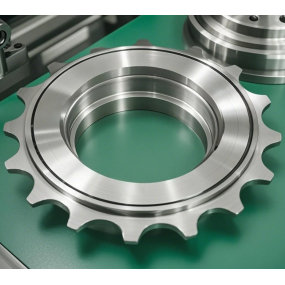
For example, when producing transmission gears, CNC machining ensures that every gear has the same tooth shape, size, and positioning accuracy. This makes assembly easier, reduces production errors, and improves overall manufacturing efficiency.
The key processes in automotive CNC machining include design preparation, material selection, machining operations, and quality inspection. Each step affects the final performance of the automotive part.
The CNC machining process begins with digital design. Engineers use CAD (Computer-Aided Design) software to create a detailed 3D model of the automotive component. The model defines the part's shape, size, holes, curves, and other important features.
After the design is completed, CAM (Computer-Aided Manufacturing) software converts the model into CNC machine instructions. These instructions control tool movement, cutting speed, machining paths, and other parameters.
For example, when developing a new suspension component, engineers can use CAD and CAM systems to design a lightweight but strong structure and create a precise machining plan before production begins.
Choosing the correct material is another important step in CNC machining of automotive precision parts. Different automotive applications require different material properties.
Before machining, raw materials may need cutting, heat treatment, or surface preparation. For example, a steel blank used for a crankshaft may require heat treatment to improve hardness and strength before CNC processing.
CNC machines perform different operations depending on the design requirements of the automotive part. Common machining processes include:
For example, when manufacturing an automotive axle, turning creates the main cylindrical shape, milling produces key areas for connection, and grinding improves surface accuracy. These operations work together to create a finished component that meets automotive requirements.
One of the main challenges in CNC machining for automotive parts is maintaining accuracy during long production cycles. Automotive components often require strict dimensional control, but several factors can influence machining results.
For example, a worn cutting tool used for engine components may create parts outside the required tolerance range. Regular tool monitoring and process adjustment are necessary to maintain stable quality.
Automotive manufacturers need high-quality parts while keeping production costs competitive. CNC machining requires investment in equipment, programming, tooling, and skilled operators.
Manufacturers must optimize machining strategies, select suitable cutting tools, and reduce unnecessary processing time without affecting precision. Efficient CNC production helps companies achieve both reliable quality and reasonable manufacturing costs.
The impact on automotive performance from CNC machining can be seen clearly in engine systems. Precision-machined engine parts help improve combustion efficiency, reduce friction, and increase power delivery.
For example, CNC-machined cylinder heads can have accurately designed combustion chambers and air passages. Better airflow allows the engine to burn fuel more efficiently, resulting in improved horsepower, fuel economy, and smoother operation.
CNC machining also improves vehicle safety and durability. Components such as brake calipers, steering parts, and suspension components require precise dimensions to function correctly.
A precisely machined brake caliper can apply consistent pressure to brake pads, helping drivers achieve reliable braking performance. Accurate fitting between components also reduces unnecessary wear, extending the service life of the vehicle.
Quality control in automotive CNC precision parts is essential because automotive components must meet strict safety and performance standards. Inspection during machining helps identify problems before large quantities of defective parts are produced.
Manufacturers may use tools such as micrometers, gauges, and coordinate measuring machines (CMM) to check dimensions during production. If a measurement error is detected, engineers can adjust machining parameters or update the CNC program immediately.
After machining is completed, each part undergoes final inspection. This process checks dimensions, surface finish, strength, and functional performance.
For example, an automotive wheel hub may be tested for roundness, bearing fit, and surface quality. Suspension components may also undergo load testing to confirm they can handle real driving conditions.
A strict inspection system ensures that only qualified parts enter automotive assembly lines, reducing risks and improving customer confidence.
With professional experience in precision manufacturing, EMAR provides advanced CNC machining solutions for automotive applications. The company understands the strict requirements involved in producing automotive precision components, including accuracy, repeatability, material control, and production efficiency.
EMAR's engineering team focuses on optimizing every stage of the CNC machining process, from design analysis and programming to machining operations and inspection. This approach helps customers receive automotive parts that meet demanding industry standards.
EMAR applies advanced machining equipment and professional inspection methods to ensure stable product quality. Through careful process management and quality checks, EMAR can handle the challenges of producing complex automotive components while maintaining accuracy and reliability.
For automotive manufacturers looking for dependable precision machining partners, EMAR's CNC machining capabilities provide a practical solution for producing high-performance parts that support vehicle safety, efficiency, and durability.
CNC machining of automotive precision parts plays a key role in modern vehicle manufacturing. Its ability to achieve high precision, repeatable production, and strict quality control makes it essential for producing reliable automotive components.
Although manufacturers face challenges such as tight tolerances and cost management, advanced CNC technology continues to improve automotive performance and manufacturing efficiency. By choosing experienced machining partners like EMAR, automotive companies can achieve high-quality parts that meet the demanding requirements of today's vehicles.