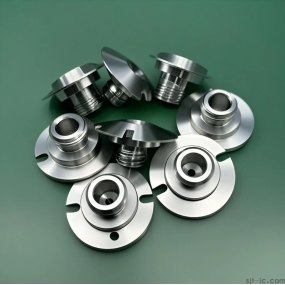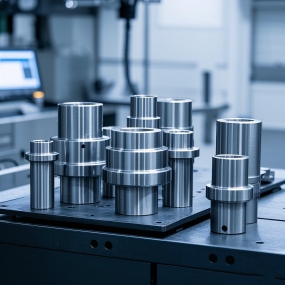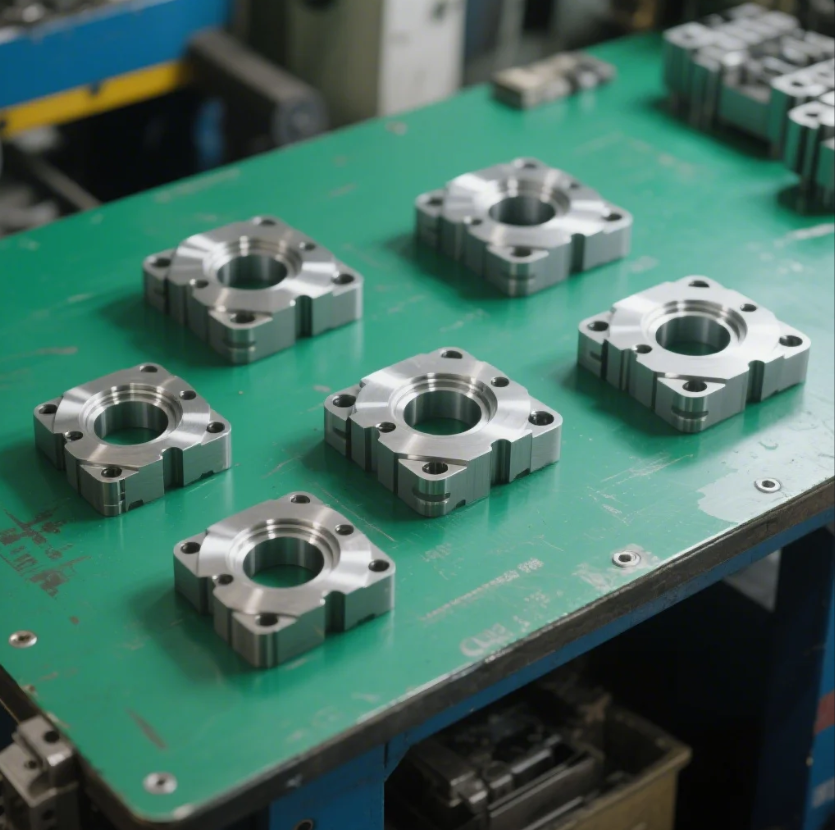
Modern industries need parts that are lighter, stronger, and more complex than ever before. Traditional machining methods often require multiple machines, repeated setups, and extra processing steps to create complicated shapes. Five - Axis CNC Precision Machining changes this situation by allowing manufacturers to produce highly complex parts with greater accuracy, efficiency, and flexibility.
For companies searching for reliable precision manufacturing solutions, understanding the capabilities, applications, costs, and quality requirements of five - axis CNC Machining is essential. A professional machining partner, such as EMAR, helps businesses achieve high-quality results by combining advanced five - axis equipment, experienced engineers, and strict quality management processes.
Five - axis CNC machining uses advanced CNC machines that can move the cutting tool or workpiece along five different directions at the same time. These movements usually include three linear axes (X, Y, and Z) and two rotational axes (A and B or A and C).
Unlike traditional three - axis machining, five - axis technology allows the cutting tool to approach a part from many angles without manually repositioning the workpiece. This ability creates more design freedom and improves machining efficiency.
The main advantage of five - axis machining is its ability to manufacture complex geometries that are difficult or impossible to produce with fewer axes. The machine can maintain the best cutting angle during the machining process, which improves surface quality and dimensional accuracy.
Important capabilities include:
For example, turbine blades used in aircraft engines require extremely precise aerodynamic shapes. Five - axis CNC machining can produce these complex designs while maintaining the strict accuracy requirements needed for safe operation. Similarly, medical implants with patient-specific shapes can be manufactured with excellent fit and surface quality.
The flexibility of five - axis CNC technology makes it valuable in industries where precision, reliability, and complex designs are critical. The applications in 5 - axis CNC machining continue to expand as manufacturers look for faster and more accurate production methods.
The aerospace industry is one of the biggest users of five - axis CNC precision machining. Aircraft components often require lightweight structures with complex aerodynamic shapes. Five - axis machines can manufacture parts such as engine components, structural brackets, and wing components from high-strength materials like titanium and aluminum alloys.
By reducing the number of setups and improving machining accuracy, five - axis technology helps aerospace manufacturers produce strong but lightweight components while meeting strict industry standards.
In automotive manufacturing, five - axis machining supports the production of high-performance engine parts, transmission components, racing parts, and custom interior components.
Manufacturers use this technology to create complex designs that improve vehicle performance, reduce weight, and provide better appearance. It is especially useful for prototypes and low-volume production where flexibility and speed are important.
The medical industry requires parts with extremely accurate dimensions and customized designs. Five - axis CNC machining enables manufacturers to produce patient-specific implants, surgical instruments, and medical devices with precise shapes and smooth finishes.
For example, orthopedic implants often need unique geometries that match a patient's anatomy. Five - axis machining allows manufacturers to create these personalized solutions with high repeatability.
Many businesses worry that five - axis CNC machining is too expensive because the machines require higher initial investment and skilled operators. However, the long-term benefits often make it a cost-effective solution, especially for complex parts and large-scale production.
For example, a manufacturer producing complex aluminum housings may use five - axis machining to complete multiple surfaces in one operation. This reduces handling time, improves consistency, and lowers the overall manufacturing cost compared with using several traditional machining steps.
The total cost of five - axis CNC machining depends on several factors, including:
A trusted machining supplier can help optimize part designs, select suitable materials, and improve manufacturing processes to achieve better cost - effectiveness in 5 - axis precision.
High precision alone is not enough. Reliable quality control is essential to ensure that every machined component meets customer requirements. The complexity of five - axis machining makes inspection and process monitoring even more important.
Professional manufacturers also follow recognized quality standards. General precision machining projects often require ISO quality systems, while aerospace components may require compliance with AS9100 standards. These certifications help ensure consistent and reliable production results.
Poor quality control can lead to expensive problems such as part failure, production delays, and customer complaints. Strong inspection processes help manufacturers deliver parts that meet exact specifications and perform reliably in demanding environments.
EMAR applies strict quality management practices throughout the five - axis CNC machining process, from material inspection and machining monitoring to final product verification, helping customers receive dependable precision components.
Although five - axis machining offers many advantages, manufacturers must overcome several technical challenges. Understanding these challenges helps businesses choose the right machining partner and production strategy.
Five - axis machines require more advanced programming because the cutting tool can move in multiple directions simultaneously. Incorrect programming may affect accuracy or damage the workpiece.
Solution: Manufacturers use specialized CAD/CAM software with advanced simulation and collision detection features. These tools help engineers create safe toolpaths and reduce programming errors.
During complex machining operations, the cutting tool, holder, or machine components may interfere with the workpiece.
Solution: Selecting the correct cutting tools, toolholders, and machining strategies helps avoid collisions while maintaining efficient cutting performance.
Complex toolpaths and difficult materials can create additional heat, which may affect tool life and part accuracy.
Solution: Effective cooling methods, proper cutting parameters, and suitable tool materials help control heat and improve machining stability.
Five - Axis CNC Precision Machining provides manufacturers with the ability to create complex, accurate, and high-performance components more efficiently than traditional methods. Its combination of design flexibility, reduced setups, improved accuracy, and advanced quality control makes it a valuable technology for modern manufacturing.
From aerospace parts and automotive components to customized medical implants, five - axis machining helps companies solve difficult production challenges while improving product quality and reducing long-term costs.
Choosing an experienced five - axis CNC machining provider is important for achieving the best results. With advanced equipment, skilled engineering teams, and strong quality systems, companies like EMAR support customers in developing reliable precision parts for demanding applications.
As industries continue to require more complex and precise components, five - axis CNC machining will remain a key technology driving innovation and efficiency in global manufacturing.