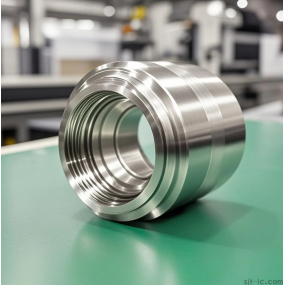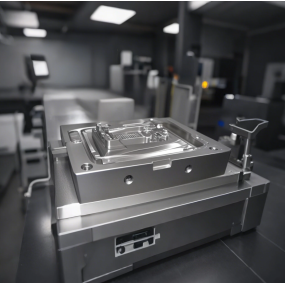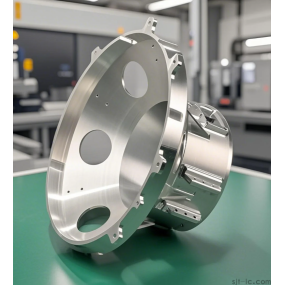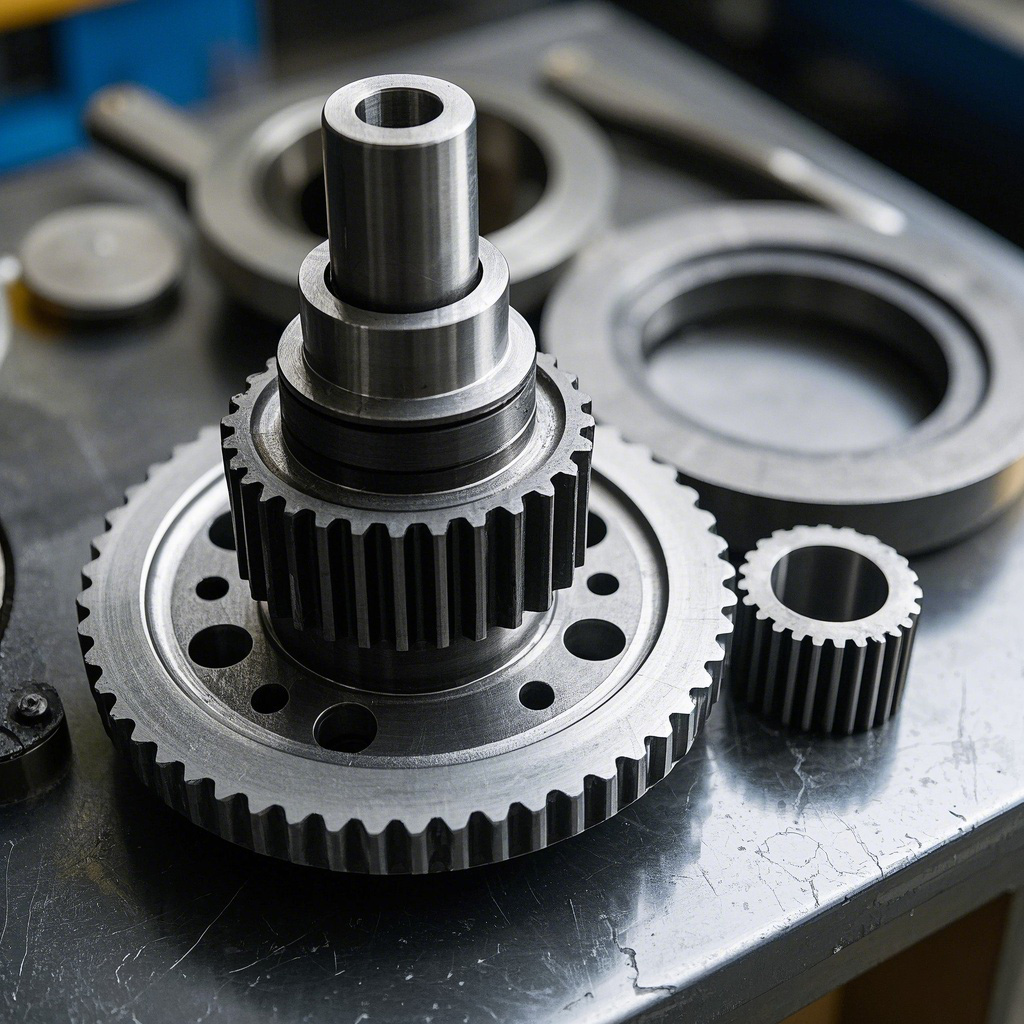
Transmission worm gears are important mechanical components used in power transmission systems. They transfer motion and power between two shafts that are not parallel and do not intersect. Because worm gears can provide high reduction ratios, they are widely used in industrial equipment, automotive systems, manufacturing machines, and robotics.
The accuracy of worm gear machining directly affects machine performance. Poorly processed worm gears may cause noise, vibration, excessive wear, and energy loss. Therefore, manufacturers need reliable processing methods, suitable materials, strict quality control, and efficient production strategies.
This article explains the CNC Machining Transmission Worm Gear Processing Method? Detailed Process of Transmission Worm Gear Processing, including material selection, machining steps, precision control methods, cost-saving approaches, and solutions for different worm gear designs.
A transmission worm gear system usually consists of a worm and a worm wheel. The worm is a screw-like gear that drives the worm wheel through sliding contact. This structure allows the system to achieve large speed reduction in a compact space.
Common applications include:
Since worm gears often work under continuous load and high friction conditions, their tooth profile, lead angle, surface finish, and dimensional accuracy must be carefully controlled.
CNC machining provides higher accuracy and repeatability compared with traditional manual machining methods. Traditional worm gear processing often depends heavily on operator experience, which can lead to inconsistent quality between batches.
With CNC technology, manufacturers can achieve:
Modern CNC equipment allows manufacturers such as EMAR to process different transmission worm gears with strict dimensional control and reliable performance. Advanced CNC machining methods help customers reduce development risks while improving product quality.
Choosing the correct material is one of the most important steps in worm gear manufacturing. The material affects strength, wear resistance, service life, machining difficulty, and overall production cost.
Worms usually experience high contact pressure and sliding friction, so they require materials with excellent strength and wear resistance. Common materials include alloy steels such as 40Cr and 42CrMo.
These alloy steels provide:
For heavy-duty industrial applications, 42CrMo is often selected. After quenching and tempering, it can achieve a good balance between hardness and toughness. This allows the worm to handle repeated loads without early failure.
Worm wheels usually use softer materials than worms because the combination of a hard worm and softer wheel reduces friction damage and improves operating smoothness.
Common worm wheel materials include:
The correct material depends on operating conditions, required load capacity, working environment, noise requirements, and budget. Proper CNC worm gear material selection helps balance performance and manufacturing cost.
The worm is the driving component of the worm gear system. Its thread accuracy directly affects transmission efficiency and noise levels. The machining process usually includes turning, thread cutting, heat treatment, and grinding.
The first step is preparing the raw material. The steel round bar is cut to the required size and mounted on the CNC lathe. The machine rotates the workpiece at a controlled speed while cutting tools remove material.
Rough turning removes excess material quickly and creates the basic shape of the worm. During this stage, the goal is efficiency rather than final accuracy.
Machinists adjust:
For example, carbide cutting tools can be used for rough turning because they provide good wear resistance and allow higher cutting efficiency.
After rough turning, finish turning creates the final outside diameter and improves surface quality. The CNC machine carefully controls dimensions to prepare the worm for thread cutting.
During finish turning, special attention is given to:
Proper turning in CNC worm machining ensures a stable foundation for later thread processing.
The worm thread is the most critical feature of the component. CNC machines create the helical thread according to the designed pitch, depth, and profile.
Single-point threading is a common worm machining method. A special cutting tool removes material gradually through multiple passes.
The CNC system controls:
This method provides high flexibility and is suitable for different worm designs.
Form-tool threading uses a cutting tool with a shape matching the worm thread profile. It can reduce machining time because fewer passes may be needed.
However, the form tool must be manufactured accurately. Any tool error can directly affect worm accuracy.
After machining, worms often receive heat treatment to improve hardness and wear resistance.
Common processes include:
Proper heat treatment helps worms maintain performance under high-pressure operating conditions.
For high-precision worm gears, grinding is an important finishing process. Thread grinding machines remove small errors and improve surface smoothness.
Grinding helps achieve:
The worm wheel requires accurate tooth machining because it must perfectly match the worm. The most common process is hobbing.
Selecting the correct hob is essential for worm wheel quality. The hob must match the worm design parameters, including:
A high-precision hob creates better tooth contact and improves the service life of the complete gear system.
The worm wheel blank is fixed on the hobbing machine, and the hob is installed with accurate alignment.
The machine controls:
During hobbing, the hob continuously cuts the worm wheel teeth. The hob and workpiece rotate together at a specific ratio, creating the correct tooth shape.
This continuous cutting method provides high production efficiency and consistent tooth accuracy, making it suitable for both prototype and production manufacturing.
After hobbing, small burrs may remain on the tooth edges. Deburring removes these sharp edges to improve assembly and prevent abnormal wear.
Deburring methods include:
Some worm wheels require heat treatment to improve strength and durability. However, heat treatment may cause slight deformation, so additional machining or correction may be required afterward.
Precision inspection is essential because small errors in worm gears can create serious operating problems. Effective quality control in CNC worm-gear processing ensures reliable performance and reduces failure risks.
Inspection should be performed during different machining stages instead of waiting until the final product.
Common inspection tools include:
Early inspection allows manufacturers to correct problems before additional processing costs occur.
After machining and finishing, worm gears undergo final quality checks.
Important inspection items include:
Advanced equipment such as coordinate measuring machines (CMMs) and gear testing systems can verify that worm gears meet customer requirements.
Many customers are concerned about machining costs while still requiring high precision. A good production strategy can improve efficiency without reducing quality.
Correct machining parameters directly affect production cost.
Manufacturers can reduce costs by:
For example, using wear-resistant tools and optimized CNC programs can reduce tool replacement frequency and improve production efficiency.
The production quantity affects the best manufacturing approach.
Professional CNC manufacturers can select the most suitable process according to order quantity, accuracy requirements, and application needs.
Single-start worms have one thread and usually provide higher reduction ratios. They are commonly used where self-locking ability is important.
Multi-start worms contain multiple threads. They provide higher transmission efficiency and faster movement but require more precise machining control.
Multi-start worm production requires accurate control of:
Cylindrical worm gears have a constant diameter and are easier to machine. They are widely used in standard transmission applications.
Cone-shaped worm gears have a tapered structure. Their machining process is more complex because manufacturers must control:
Advanced CNC equipment and experienced machining teams are important for producing complex worm gear designs with stable quality.
The CNC Machining Transmission Worm Gear Processing Method? Detailed Process of Transmission Worm Gear Processing involves multiple carefully controlled steps, including material selection, CNC turning, thread cutting, hobbing, heat treatment, grinding, and inspection.
Choosing suitable materials, optimizing machining parameters, and applying strict quality control are the keys to producing reliable worm gears. Whether producing single-start, multi-start, cylindrical, or cone-shaped worm gears, experienced CNC manufacturers can provide solutions that balance precision, performance, and cost.
With professional CNC machining capabilities, EMAR focuses on transmission worm gear manufacturing and helps customers achieve high-quality components for industrial automation, automotive, and precision equipment applications.