Spanish
 Arabic
 French
 Portuguese
 Belarusian
 Japanese
 Russian
 Malay
Malay Icelandic
 Bulgarian
 Azerbaijani
 Estonian
 Irish
Irish Polish
 Persian
 Boolean
 Danish
 German
 Filipino
 Finnish
 Korean
 Dutch
Dutch Galician
 Catalan
 Czech
Czech Croatian
 Latin
Latin Latvian
 Romanian
 Maltese
 Macedonian
 Norwegian
 Swedish
 Serbian
 Slovak
 Slovenian
 Swahili
 Thai
Thai Turkish
 Welsh
Welsh Urdu
Urdu Ukrainian
 Greek
Greek Hungarian
 Italian
 Yiddish
 Indonesian
 Vietnamese
 Haitian Creole
 Spanish Basque

HTML
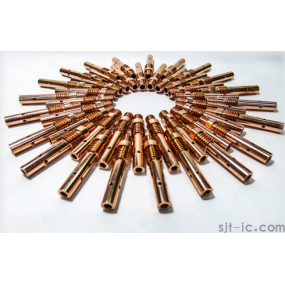
Copper CNC Machining Production
Copper CNC Machining Production is widely used in industries that need high electrical conductivity, strong thermal performance, and reliable precision parts. However, many buyers and engineers face common problems such as tool wear, surface burrs, and unstable machining results when working with copper.
This article explains key challenges, solutions, and best practices in simple English so you can better understand how to improve production results and choose the right manufacturing partner.
Common Challenges in Copper CNC Machining Production
Copper is not an easy material to machine. Even though it is soft, it can create production difficulties.
- Tool sticking due to soft and sticky material behavior
- Fast tool wear caused by heat and friction
- Burr formation on edges and holes
- Dimensional changes caused by heat expansion
- Surface scratches affecting product appearance
These issues make it important to choose the right process and experienced manufacturer.
Advantages of Copper in CNC Machining Production
Understanding the advantages of copper in CNC machining production helps explain why it is still widely used in electronics, energy systems, and precision engineering.
- Excellent electrical conductivity for connectors and terminals
- High thermal conductivity for cooling components
- Good corrosion resistance in many environments
- High recyclability and long-term stability
These advantages make copper a preferred material despite machining difficulties.
Steps in Copper CNC Machining Production Process
The steps in copper CNC machining production process must be carefully controlled to ensure stable quality and precision.
- Material selection – Choose high-purity copper suitable for machining.
- CAD design – Create accurate digital models for production.
- Tool path programming – Set cutting paths to reduce heat and deformation.
- CNC machining – Perform milling, turning, drilling, or engraving.
- Deburring and polishing – Remove sharp edges and improve surface finish.
- Final inspection – Check dimensions and surface quality.
Tooling for Copper CNC Machining Production
Proper tooling for copper CNC machining production is essential to reduce sticking and improve surface quality.
- Sharp carbide tools to reduce friction
- Polished cutting edges for smoother chip removal
- Coated tools to reduce heat buildup
- High-speed cutting tools for stable performance
Good tooling selection helps extend tool life and improve machining efficiency.
Precision Control in Copper CNC Machining Production
Precision control in copper CNC machining production is critical because copper easily expands under heat and pressure.
To improve accuracy, manufacturers use:
- Stable temperature-controlled workshop environments
- Low-vibration CNC machines
- Carefully adjusted cutting speeds and feed rates
- Real-time measurement systems during machining
These methods help ensure consistent dimensions and high-quality results.
Quality Assurance in Copper CNC Machining Production
Quality assurance in copper CNC machining production ensures every part meets customer requirements before delivery.
- Incoming material inspection for purity and consistency
- In-process inspection during machining
- Final measurement using precision instruments
- Surface quality and burr inspection
A strict quality system reduces defects and improves product reliability.
Professional Support from EMAR
In modern manufacturing, choosing a reliable partner is just as important as choosing the right process. EMAR provides professional Copper CNC Machining Production services for industries requiring high precision and stable quality.
With advanced CNC equipment, experienced engineers, and strict quality control systems, EMAR helps customers reduce production risks and improve efficiency. From prototype development to mass production, EMAR supports every stage with careful attention to detail.
If you are looking for stable performance, precise dimensions, and consistent copper parts, EMAR can be a dependable manufacturing partner for your project.
Conclusion
Copper CNC machining requires careful control of tools, temperature, and process steps. By understanding the advantages, process stages, tooling choices, precision control methods, and quality assurance systems, manufacturers can significantly improve results.
With the right technical support and production partner like EMAR, Copper CNC Machining Production becomes more stable, efficient, and reliable for demanding industrial applications.