Spanish
 Arabic
 French
 Portuguese
 Belarusian
 Japanese
 Russian
 Malay
Malay Icelandic
 Bulgarian
 Azerbaijani
 Estonian
 Irish
Irish Polish
 Persian
 Boolean
 Danish
 German
 Filipino
 Finnish
 Korean
 Dutch
Dutch Galician
 Catalan
 Czech
Czech Croatian
 Latin
Latin Latvian
 Romanian
 Maltese
 Macedonian
 Norwegian
 Swedish
 Serbian
 Slovak
 Slovenian
 Swahili
 Thai
Thai Turkish
 Welsh
Welsh Urdu
Urdu Ukrainian
 Greek
Greek Hungarian
 Italian
 Yiddish
 Indonesian
 Vietnamese
 Haitian Creole
 Spanish Basque

In the rapidly evolving world of unmanned aerial vehicles (UAVs), performance hinges on a delicate balance of lightweight design, structural strength, and pinpoint precision. Whether you are developing a racing drone, an industrial inspection unit, or a military-grade surveillance system, the quality of your components dictates the success of your mission.
This is where CNC Machining has become the gold standard for manufacturing custom UAV parts. By leveraging computer-controlled subtractive processes, manufacturers can achieve tolerances and material properties that other methods simply cannot match.
If you are looking to turbocharge your drone development, EMAR provides on-demand manufacturing solutions using CNC machining, 3D printing, and more, delivering parts within days.
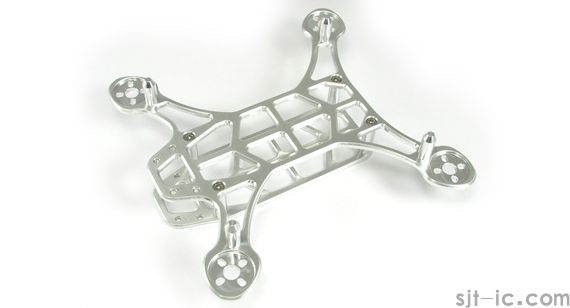
What Are CNC Drone Parts?
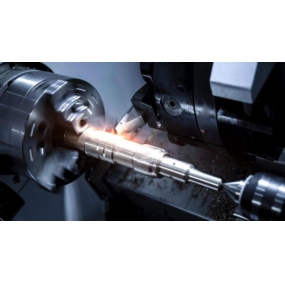
CNC drone parts are components manufactured using Computer Numerical Control (CNC) machining. This subtractive manufacturing process uses programmed software to control the movement of cutting tools, removing material from a solid block (or billet) to create a precise shape.
Unlike 3D printing which builds layers, CNC machining carves the final part from a solid piece of material, resulting in superior structural integrity and dimensional accuracy.
The CNC Manufacturing Process for UAVs
Design (CAD Modeling): Engineers create a 3D CAD model defining the geometry, interfaces, and critical features.
Programming (CAM): The model is imported into CAM software to generate tool paths and machining sequences.
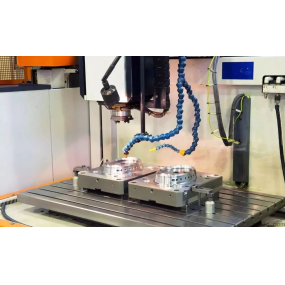
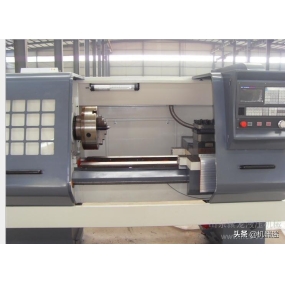
Machining: Multi-axis CNC mills and lathes (including 5-axis machines) perform milling, drilling, and cutting operations to shape the part.
Post-Processing: The part undergoes surface finishing (anodizing, polishing) and strict inspection to verify tolerances.
Main Types of CNC Drone Parts
CNC machining is versatile enough to produce nearly every critical component of a UAV. Here are the most common applications:
1. Frames and Structural Components
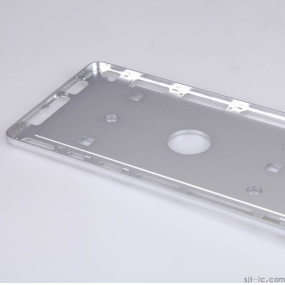
The frame is the backbone of the drone. CNC machining ensures perfectly flat surfaces and accurate mounting points.
Drone Arms & Booms: Aerodynamically optimized arms machined from aluminum or carbon fiber to hold rigidity while eliminating mass.
Custom Drone Body: The main structure designed to house flight controllers and batteries securely.
2. Propulsion System Parts
Precision here directly affects flight efficiency and noise levels.
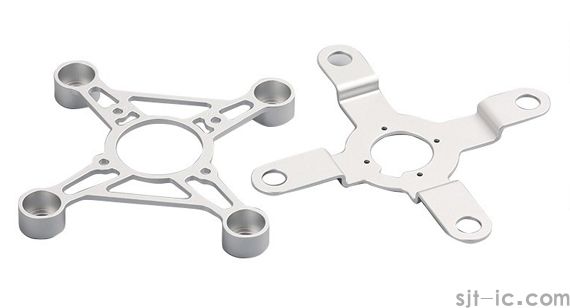
Motor Mounts: High-precision mounting plates that ensure absolute motor alignment, maximizing thrust and minimizing vibration.
Propeller Hubs & Adapters: Balanced components that ensure smooth power transfer and rotation.
3. Payload and Navigation
Gimbals and Camera Mounts: Machined with tight tolerances to eliminate micro-vibrations, ensuring smooth footage for cinematography and inspection.
Sensor Housings: Protective enclosures for LiDAR, cameras, and thermal sensors that shield against dust and vibration.
4. Functional Hardware
Landing Gear: Lightweight yet impact-resistant designs, often featuring complex folding joints.
Electronic Casings: Tight-fitting enclosures for ESCs and flight controllers that offer environmental protection.
Materials: Balancing Weight and Strength
The choice of material is critical in UAV design. EMAR offers a wide selection of high-strength and lightweight materials to optimize every project.
| Material | Key Properties | Typical Applications |
|---|---|---|
| Aluminum 6061-T6 | Lightweight, corrosion-resistant, easy to machine | Frames, arms, general structural parts |
| Aluminum 7075-T6 | Very high strength-to-weight ratio | High-stress motor mounts, racing frames |
| Titanium (Grade 5) | Extremely strong, fatigue & heat resistant | Rotor hubs, critical fasteners, landing gear |
| Carbon Fiber | Ultra-high stiffness, extremely lightweight | High-performance frames, propeller blades |
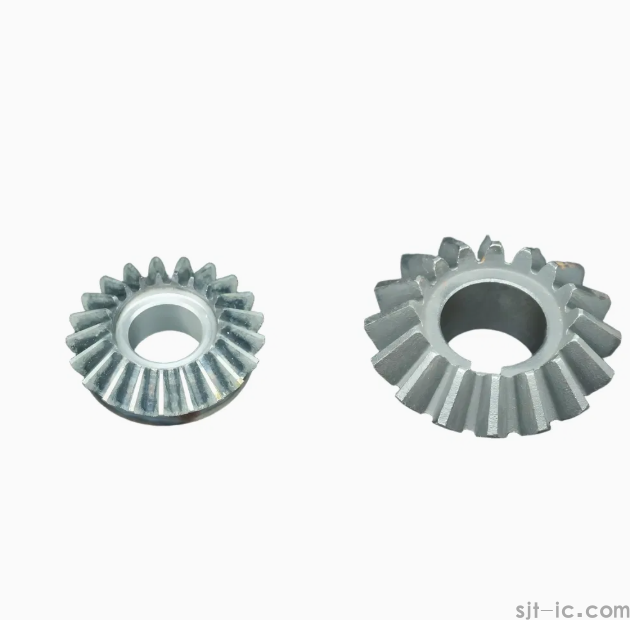
| Delrin (POM) | Low friction, dimensional stability | Gears, precision mounts, gimbal parts |
| PEEK | High temp resistance, electrical insulation | Specialized electronic housings |
CNC Drone Parts for Different Applications
Different drones require different engineering approaches. Here is how CNC machining serves various sectors:
Precision Agriculture: Requires corrosion-resistant aluminum for folding arm joints and durable motor mounts to handle heavy payloads.
Infrastructure Inspection: Demands precision gimbal brackets for stable imaging and rugged sensor housings to protect LiDAR equipment.
Cinematography: Relies on lightweight carbon fiber frames and ultra-smooth gimbals machined to eliminate jitter.
Military & Security: Requires high-reliability avionics enclosures and custom payload mounts for mission-specific gear.
FPV Racing: Benefits from crash-resistant custom carbon fiber plates and precision aluminum brackets to survive high-speed impacts.
Key Advantages of CNC Machining for UAVs
Why do top engineers choose CNC over injection molding or basic 3D printing?
Unmatched Precision: CNC machining routinely holds tolerances of ±0.0005" (0.0127mm) or better. This ensures perfect alignment of motors and sensors, reducing vibration and improving flight stability.
Structural Integrity: Because parts are cut from solid material, they are inherently stronger and more durable than printed parts, which can have layer-line weaknesses.
Material Purity: You can use certified aerospace-grade materials (like 7075 aluminum or Ti-6Al-4V titanium) that are necessary for high-stress environments.
Consistency: Whether you need 10 parts or 10,000, CNC machines produce identical components, reducing assembly errors.
Rapid Prototyping: Iterate designs quickly. With services like EMAR, prototypes can be delivered in as little as 72 hours, allowing for fast design validation.
How to Choose a Quality CNC Manufacturer
Selecting the right partner is just as important as selecting the right material. Here are five core indicators to look for:
Equipment Capacity: Ensure the provider has multi-axis (3, 4, and 5-axis) machining centers to handle complex geometries.
Quality Certifications: Look for ISO 9001:2015, AS9100D (Aerospace), and ITAR registration if applicable.
Inspection Systems: A reliable supplier uses CMM (Coordinate Measuring Machines) to verify dimensions.
Material Traceability: They should offer CoCs and material certifications.
Speed: The ability to deliver first articles in under 3 days is a significant advantage in the fast-paced drone industry.
Surface Finishing and Post-Processing
To maximize the lifespan of your UAV parts, surface treatment is essential.
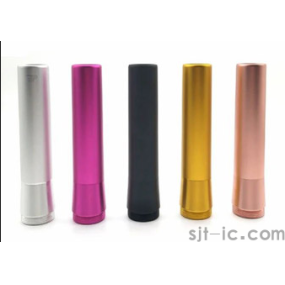
Anodizing (Type II & III): Increases corrosion resistance and wear hardness on aluminum parts. Type II offers color options, while Type III (hardcoat) is ideal for landing gear.
Passivation: Enhances the corrosion resistance of stainless steel.
Powder Coating: Provides a durable, aesthetic finish for less critical structural parts.
Heat Treatment: Relieves stress in metal parts to ensure long-term dimensional stability.
Why EMAR is the Preferred Partner for UAV Manufacturing
EMAR stands at the intersection of data science and manufacturing. By leveraging a massive network of over 10,000 manufacturers, EMAR provides instant quoting, Design for Manufacturability (DFM) feedback, and rapid lead times that drone innovators require.
Our Commitment to Quality:
EMAR is certified to ISO 9001:2015, ISO 13485, IATF 16949:2016, and AS9100D. We are ITAR registered and offer full dimensional reports, material certifications, and process lot traceability.
Get an Instant Quote
Ready to bring your custom drone design to life?
Contact us: +86 18664342076
Email: sales8@sjt-ic.com
Upload your STEP or Parasolid files today to receive pricing and DFM feedback in seconds. Whether you need a single prototype or high-volume production, EMAR has the capacity to make your UAV project soar.
Frequently Asked Questions (FAQ)
Q1: How precise are CNC drone parts?
A: CNC drone parts are typically manufactured with tight tolerances, often within ±0.05 mm (or ±0.0005" for high-precision work). This high precision helps reduce vibration and ensure stable integration of motors and sensors.
Q2: What are the best materials for racing drones?
A: For racing drones, Aluminum 7075-T6 offers the best balance of weight and strength to withstand crashes. For frames, carbon fiber composites are preferred for their stiffness and light weight.
Q3: Can you help me minimize the weight of my drone design?
A: Yes! Through Design for Manufacturability (DFM) feedback, EMAR can recommend strategies like material selection, thin-wall machining, and topology optimization to remove mass from non-critical areas.
Q4: Do you offer anodizing for drone parts?
A: Yes. EMAR offers color anodizing (Type II) for aesthetics and hardcoat anodizing (Type III) for enhanced durability and wear resistance on components like landing gear and frame structures.
Q5: How do CNC parts compare to 3D printed parts?
A: CNC parts offer higher precision and superior strength, making them suitable for high-load or high-speed components. 3D printed parts are generally better for rapid prototyping or lightweight, low-stress cosmetic components.
Q6: What file types do you accept for quoting?
A: EMAR’s instant quoting engine is compatible with STEP, Mesh, Parasolid, and ACIS files.