Hello! Welcome to EMAR's website!
Focus on numerical control processing parts, metal stamping parts, sheet metal processing and manufacturing for more than 16 years
Germany and Japan's high-precision production equipment and testing equipment ensure that the precision of metal parts reaches 0.003 tolerance and high quality
Email:
sales8@sjt-ic.com
Your location: HOME > News > Industry trends > The Complete Guide to CNC Machining Cost: Factors, Calculation, and Cost Saving Tips

The Complete Guide to CNC Machining Cost: Factors, Calculation, and Cost Saving Tips

Release time:2026-04-10     Number of views :


CNC (Computer Numerical Control) machining is one of the most effective and widely used manufacturing processes for producing precision parts. Whether you are prototyping a new product or planning a large production run, understanding the cost of CNC Machining is essential for budgeting and maintaining market competitiveness.

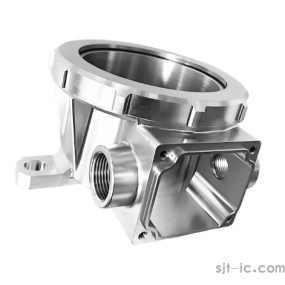
The Complete Guide to CNC Machining Cost: Factors, Calculation, and Cost Saving Tips(图1)

So, how much does CNC machining cost? The exact answer varies depending on several factors, including the type of equipment used, design complexity, batch size, desired precision and finish, labor charges, and overhead costs. This comprehensive guide breaks down every cost factor and provides practical tips to help you reduce expenses without compromising quality.

Is CNC Machining Expensive?

Compared with conventional machining processes, CNC machining can be expensive, especially for small volumes. The key reasons are the use of multi-axis CNC equipment, higher setup and tooling charges, and the need for skilled labor. However, CNC machining prices are justified, as the process can produce intricate parts with tight tolerances at a rapid pace. For higher volumes, the per-part cost decreases significantly, and automation ensures consistency in machined parts.

Typically, CNC machining costs range from $30 to $200 per hour or more. The cost is lower for simple 3-axis CNC machining, whereas it increases for complex, higher-axis machining projects. For per-part pricing, simple parts and small production runs often range from $10 to $50 per part, while complex or precision-engineered parts may cost $160 or more per part, especially for low-volume orders.

Key Factors That Determine CNC Machining Cost

Understanding the breakdown of CNC machining cost calculation helps you budget your project properly. Below are the primary factors that influence the final price.

1. Material Cost

Material prices are a significant contributor to overall machining costs. It is not only about the cost of raw material but also about machinability. Some materials are easily machinable, while others require special considerations. Materials with high machinability help reduce costs.

Standard machining metals, high-performance plastics, and specialized composites are generally expensive. For instance, titanium, stainless steel, carbon fiber, and copper are more expensive than materials such as aluminum, PEEK, and nylon. The price can also vary by grade for the same material.

MaterialApprox. Cost (USD/kg)Common Applications
Aluminum$5–$15Aerospace, automotive, electronics
Stainless steel$15–$25Medical devices, industrial machinery
Carbon steel$2–$5Tools, automotive, heavy machinery
Titanium$30–$50Aerospace, medical implants
Brass$10–$20Electrical connectors, fittings
Copper$9–$15Electrical components, heat sinks
ABS$2–$4Prototyping, electronics
Nylon$3–$6Gears, bearings, machine components
Delrin$4–$8Precision components, medical devices
Inconel$60–$80High-temperature aerospace parts

2. Design Complexity and Machining Complexity

The complexity of your part design directly impacts machining time and cost. Intricate geometries that require advanced 5-axis machines, tight tolerances, and multiple setups will increase expenses. Complex designs with features like holes, cutouts, fine details, and tight tolerances require slower machining speeds to ensure accuracy, increasing both machining time and the likelihood of frequent tool changes.

3. Axis Capability and Machine Type

The type of CNC machine used significantly influences cost. Using large-sized and higher-axis machines is costlier than using 2- or 3-axis machines.

  • 3-axis milling: Simple (X, Y, Z) axis movement of the spindle. Suitable for basic parts like brackets, mounting plates, and enclosures. Cost: $35–$120 per hour.

  • 4-axis milling: 3-axis spindle movement plus rotation of the workpiece (A-axis). Ideal for complex gear blanks, rotor plates, and jigs. Cost: $50–$150 per hour.

  • 5-axis milling: The tool can shape from any angle, offering high flexibility and intricate machining capability. Used for impellers, turbine blades, and medical implants. Cost: $75–$250+ per hour.

  • CNC turning: Generally faster and more cost-effective for producing round shapes like shafts, bushings, and custom threads. Cost: $40–$110 per hour.

  • Swiss turning: For watch screws, precision pins, and micro connectors. Cost: $80–$120 per hour.

  • CNC EDM: For fine die cuts, tool steel inserts, and hard alloys. Cost: $60–$150 per hour.

  • High-precision CNC: For aircraft fittings, probes, and orthopedic plates. Cost: $80–$200+ per hour.

4. Production Volume and Batch Size

Setup, programming, and tooling costs are spread over each machined part. This means the per-part machining cost for large batches is much more cost-effective than for prototyping or small volumes. Larger production volumes benefit from economies of scale, reducing the cost per unit significantly.

For example, ordering 1,000 units instead of 100 can spread fixed setup costs across more items, dramatically reducing the cost contribution per part. Bulk material purchases also often attract discounts.

5. Machining Time

Machining time is a critical factor that directly impacts labor and machine operation costs. The longer it takes to machine a part, the higher the cost. Factors affecting machining time include material thickness, hardness, and part complexity. Thicker or harder materials require multiple passes and slower feed rates, extending machining time.

6. Programming Cost

CNC systems need a file containing G and M codes, called a CNC program, generated by computer software based on the part’s 3D design. These are machining commands that dictate coordinate systems, tool/work movement, machining positions, coolant flow, and other machine functions. The CNC programming cost is higher for complex parts that require multiple operations. A CNC programmer typically costs around $30 per hour or more depending on job complexity.

7. Machine Setup Cost

The program is uploaded to the CNC control unit, and the operator sets up the machine to prepare it for actual machining. This includes tool installation, work clamping, fixture setting, tool positioning and alignment, calibration, and more. Machine setup costs are typically charged on a per-hour basis. If setup takes a longer time and is used for small batches, the cost is higher. Setup fees for a project can start at $50 and go as high as $1,000+, depending on job complexity.

8. Tooling Cost

Every CNC tool has its own lifespan and must be replaced after a certain number of machining cycles. Tooling cost refers to the price of the tools and fixtures you need. It also differs from one machining process to another. For instance, complex tooling increases custom CNC milling costs, whereas it is relatively low for drilling.

HSS/carbide end mills, ball nose cutters, drill bits, and turning inserts are less costly than indexable inserts, reamers, thread taps, and boring bars. If tools are coated with hard materials like diamond, the cost increases significantly.

9. Labor Cost

No matter how advanced and automated CNC machines are, they still require skilled engineers and machinists to operate them. Labor cost covers both setup and machining time, charged on an hourly basis. Labor costs vary based on skill level and regional wage rates. Skilled CNC operators typically earn $20 to $50 per hour in the US. The wages of a skilled 5-axis CNC operator in China and Vietnam are lower than those in the US and Europe.

10. Post-Processing and Finishing Cost

After machining, parts may require post-processing operations such as chamfering, deburring, bead blasting, polishing, anodizing, electroplating, or powder coating. Each finishing process adds to processing time and requires various levels of labor intensity. Basic finishes like as-machined surfaces incur minimal costs, while advanced finishes add significantly to the total.

  • Deburring: $50–$150

  • Anodizing: $100–$500

  • Powder coating: Additional 1–3% over base cost

11. Quality Control Cost

This is the cost of inspecting for defects, measuring and verifying dimensional accuracy, and assessing whether parts comply with industry-specific standards. If you need tight tolerances and testing of different performance parameters, CMM machines, 3D scanners, non-destructive testing sets, and other instruments are needed, which are costlier than simple micrometers and gauges.

12. Logistics and Overhead Costs

After production and quality verification, machined parts need to be packaged and shipped to the client’s location. Logistics costs vary depending on required inventory space and shipment distance. Overhead costs include workshop space, lubrication, maintenance, and machine downtime.

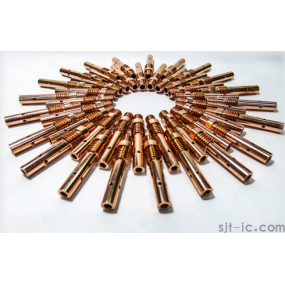
The Complete Guide to CNC Machining Cost: Factors, Calculation, and Cost Saving Tips(图2)

How to Calculate CNC Machining Cost

To calculate CNC machining costs, you need to add up machine time, labor, tooling, materials, and overhead. The five levels of cost estimation are: rough order, preliminary, budget, bid control, and definitive.

Most manufacturers charge CNC machining price on a per-hour or per-project basis. For accurate quotes, upload your design file to EMAR, and our engineers will review it and provide an estimation with a clear breakdown.

Best Practices for Reducing CNC Machining Cost

There are several rules and industry practices for reducing CNC machining costs. Here are the key strategies:

1. Optimize Your Design for Manufacturability (DFM)

Simplify part geometry to reduce the number of machine setups. Avoid intricate geometries that require advanced 5-axis machines or extended machining times. Focus on:

  • Avoiding sharp, 90-degree internal corners (use rounded corners)

  • Keeping internal corner radii consistent where possible

  • Avoiding deep internal pockets (limit pocket depths to four times their length)

  • Using standard drill sizes and nominal hole sizes

  • Keeping hole length to no more than 4 times diameter

  • Avoiding thin walls (metal parts ≥0.8mm, plastic parts ≥1.5mm)

  • Reducing thread length (beyond three times hole diameter adds no strength)

2. Choose Standard and Cost-Effective Materials

Specialized materials and exotic grades are more costly than standard machining metals and plastics such as aluminum 6061, stainless 304 & 316, ABS, Delrin, and PC. These offer better machinability and can be processed with regular tooling. If a part does not require the corrosion resistance of stainless steel, using carbon steel with zinc plating can achieve similar results at a lower cost.

3. Manage Tolerances Wisely

High-precision tooling with finer passes takes longer to shape the material, increasing costs. Determine tolerance levels based on desired functionality and performance; do not set tighter tolerances than required. General machining tolerances (±0.127mm) are considered most cost-effective.

  • ±0.1mm to ±0.05mm: Slightly looser tolerances decrease need for high-precision tools.

  • ±0.05mm to ±0.02mm: Substantial increase in complexity; use only if critical.

4. Consider Large Batch Orders

Unless you are in the initial phase of product development and need only a few prototypes, order large batches at once. This helps distribute tooling, setup, and programming costs over a large number of parts. Ordering 100 pieces in one go is much cheaper than 5 batches of 20 pieces.

5. Lean Manufacturing and Process Automation

Lean manufacturing principles streamline the machining process, reducing material waste and machine downtime. Follow value stream mapping and 5S techniques. Automate tool changeovers, machine tending, handling, and staging. Automation improves efficiency, reduces human input, and lowers labor costs. AI-powered predictive maintenance helps identify potential machine problems, preventing costly downtime.

6. Use Nominal Sizes Whenever Possible

Use standard drill sizes, overall sizes that match purchasable stock material, nominal thicknesses, and standard bolts and hardware. This allows machinists to use standard tooling and quick setups, reducing cost.

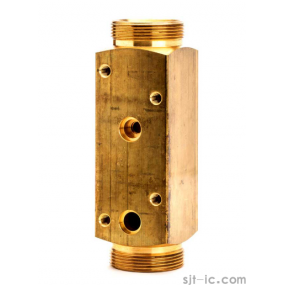
The Complete Guide to CNC Machining Cost: Factors, Calculation, and Cost Saving Tips(图3)

Real-World Cost Examples

Example 1: Prototyping a Custom Aluminum Part (10 units)

  • Material (Aluminum, 2kg): $40

  • Setup and programming (basic 3-axis): $150

  • Machine time (2 hours @ $75/hr): $150

  • Labor (2 hours @ $35/hr): $70

  • Tooling wear: $50

  • Total for 10 parts: $3,500 ($350 per part)

Example 2: Large Production Run (1,000 units of a smaller part)

  • Material ($4 per unit): $4,000

  • Setup (3-axis): $150

  • Machine time (40 hours @ $75/hr): $3,000

  • Labor (40 hours @ $35/hr): $1,400

  • Tooling wear: $500

  • Total for 1,000 parts: $9,050 ($9.05 per part)

CNC Machining vs. Alternatives

vs. Injection Molding: Injection molding has very high upfront costs (molds from $500 to $50,000+) but lower per-part cost for runs over 10,000+ units. CNC machining has low upfront costs and is better for small to medium production runs.

vs. 3D Printing: 3D printing is good for one-off prototypes and complex geometries but doesn't do large production runs well. Materials are often not as strong as metals. For durable, precise parts in volume, CNC machining is better.

How EMAR Helps You Reduce CNC Machining Costs

At EMAR, we follow a systematic approach to cost reduction while ensuring quality and performance:

  • Design optimization for manufacturability

  • Selection of cost-competitive materials

  • Standardization of machining processes and use of right tools

  • High automation and repeatability in production

  • Lean manufacturing principles to reduce waste and streamline processes

Our team of experts is ready to discuss design optimizations, recommend budget-friendly materials, and utilize efficient processes to reduce your expenses.

Frequently Asked Questions

1. How much does CNC machining cost per hour?
The per-hour CNC machining costs vary from $30 to $200+, depending on equipment type, complexity, precision, and region. Three-axis machines typically cost $50–$100 per hour, while five-axis machines range from $100–$150+ per hour.

2. How can I reduce the cost of CNC machining?
The number one impact is to increase batch size. Next, simplify designs to minimize complex features and reduce setups. Finally, use the loosest possible tolerances that work for your part. Choosing standard materials and nominal sizes also helps.

3. Why is material selection important?
Choosing the right material affects both machining process and cost. Softer materials like aluminum are easier and cheaper to machine than harder materials like stainless steel or titanium, which require more time and cause faster tool wear.

4. How does bulk ordering help reduce costs?
Bulk ordering spreads fixed costs such as setup and tooling across more parts, reducing the cost per unit. It also often secures material discounts and reduces handling and shipping costs per part.

5. What are practical tolerances in CNC machining?
For standard machining, ±0.1mm is typical. For high precision, ±0.05mm. Fine tolerances (±0.02mm) should only be used if critical to part function.

6. Can the design of a part affect its CNC machining cost?
Yes, significantly. Complex designs requiring multiple setups, high precision, and special tooling increase costs. Simplifying the design reduces machining time, tooling changes, and overall price.

7. Is it cheaper to machine aluminum or stainless steel?
Aluminum is generally cheaper to machine than stainless steel due to its softer nature, which allows for quicker machining times and less tool wear.

8. How much does a machinist charge per hour?
It depends on the region and skill level, typically ranging from $10 to $100+ per hour. In the US, $20–$50 per hour is common.

9. Do you offer instant quotes?
Yes. Upload your design file to EMAR, and our engineers will review it and provide an estimation with a clear breakdown.

10. How can I contact EMAR?
You can reach us at +86 18664342076 or email sales8@sjt-ic.com for any inquiries or to request a quote.

Final Thoughts

The price of CNC machining does not depend on a single factor; instead, it is the accumulation of material, setup, programming, tooling, labor, post-processing, quality inspection, logistics, and overhead costs. By understanding these factors and applying cost-saving strategies such as design optimization, smart material selection, tolerance management, and batch production, you can significantly reduce your CNC machining expenses while maintaining high quality.

Do you want to know how much it costs to convert your design into reality? Contact EMAR today at +86 18664342076 or sales8@sjt-ic.com. Upload your design file and request a quote for our custom CNC machining service. Our engineers will review your design and provide you with an accurate estimation with a clear breakdown.


Contact Us
 Recommended products
LiveChat关闭