Spanish
 Arabic
 French
 Portuguese
 Belarusian
 Japanese
 Russian
 Malay
Malay Icelandic
 Bulgarian
 Azerbaijani
 Estonian
 Irish
Irish Polish
 Persian
 Boolean
 Danish
 German
 Filipino
 Finnish
 Korean
 Dutch
Dutch Galician
 Catalan
 Czech
Czech Croatian
 Latin
Latin Latvian
 Romanian
 Maltese
 Macedonian
 Norwegian
 Swedish
 Serbian
 Slovak
 Slovenian
 Swahili
 Thai
Thai Turkish
 Welsh
Welsh Urdu
Urdu Ukrainian
 Greek
Greek Hungarian
 Italian
 Yiddish
 Indonesian
 Vietnamese
 Haitian Creole
 Spanish Basque

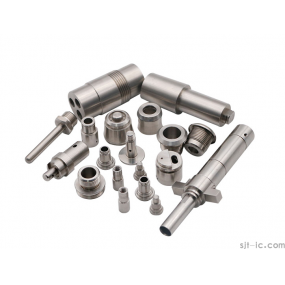
Mastering the parameters for CNC Machining stainless steel is the cornerstone of profitable and precision-driven manufacturing. Unlike standard carbon steels, stainless steel alloys present unique challenges, including rapid work hardening, high cutting forces, and poor thermal conductivity. Getting your parameters wrong leads to scrapped parts, broken end mills, and missed deadlines.
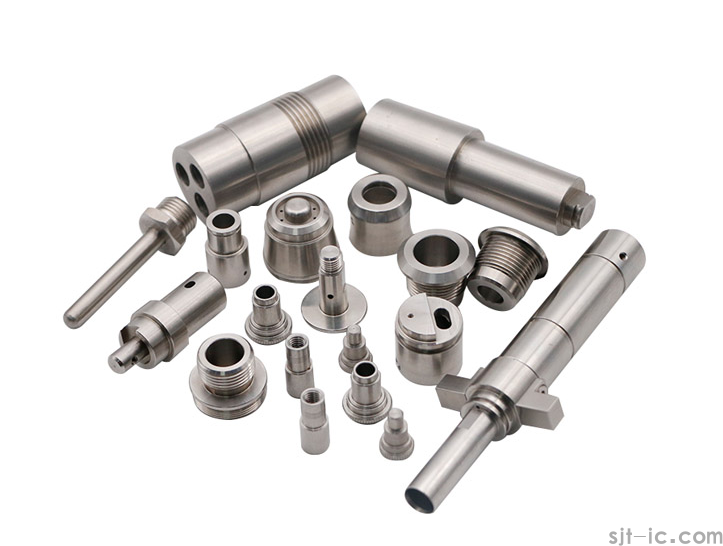
At EMAR, we have spent years refining our CNC machining processes across austenitic, martensitic, and precipitation-hardened grades. This guide consolidates industry-best data into a single, actionable resource. Whether you are roughing 304 or finishing 17-4 PH, you will find the exact cutting speeds, feed rates, tool geometries, and cooling strategies to elevate your shop floor performance.
Understanding Stainless Steel: Why Parameters Matter
Before adjusting your CNC code, you must understand the material’s behavior. Stainless steels are high-alloy steels containing at least 10.5% chromium, which forms a passive oxide layer for corrosion resistance. However, this same property, combined with low thermal conductivity (approx. 16.2 W/m·K), causes heat to concentrate at the cutting edge.
The five main categories—Austenitic (304, 316), Ferritic (430), Martensitic (420), Precipitation Hardened (17-4 PH), and Duplex—each react differently to cutting forces. For instance, austenitic grades have a high work-hardening rate (n ≈ 0.45), meaning the material hardens under stress. If your parameters for CNC machining stainless steel are too conservative (light cuts, slow feeds), the tool rubs rather than cuts, exacerbating work hardening and leading to premature failure.
Critical Cutting Parameters for Stainless Steel
To achieve stable machining, you must balance five interdependent variables. Treat these as your control knobs for success.
Cutting Speed (Vc) – Balancing Heat and Hardening
Cutting speed is the most critical factor. Too low, and you promote work hardening; too high, and heat degrades the tool edge.
SUS304 (Austenitic): 80–120 m/min (milling); 160–180 m/min (turning finishing)
SUS303 (Free-machining): 100–150 m/min
SUS316 (Molybdenum alloy): 70–110 m/min (more conservative due to toughness)
17-4 PH (Precipitation Hardened): 80–160 SFM (reduced for aged/high-hardness conditions)
Pro Tip from EMAR: Always start at the lower 30% of the recommended range when machining a new batch of heat-treated stainless. Adjust upward based on chip color (straw-colored chips are ideal; blue indicates excessive heat).
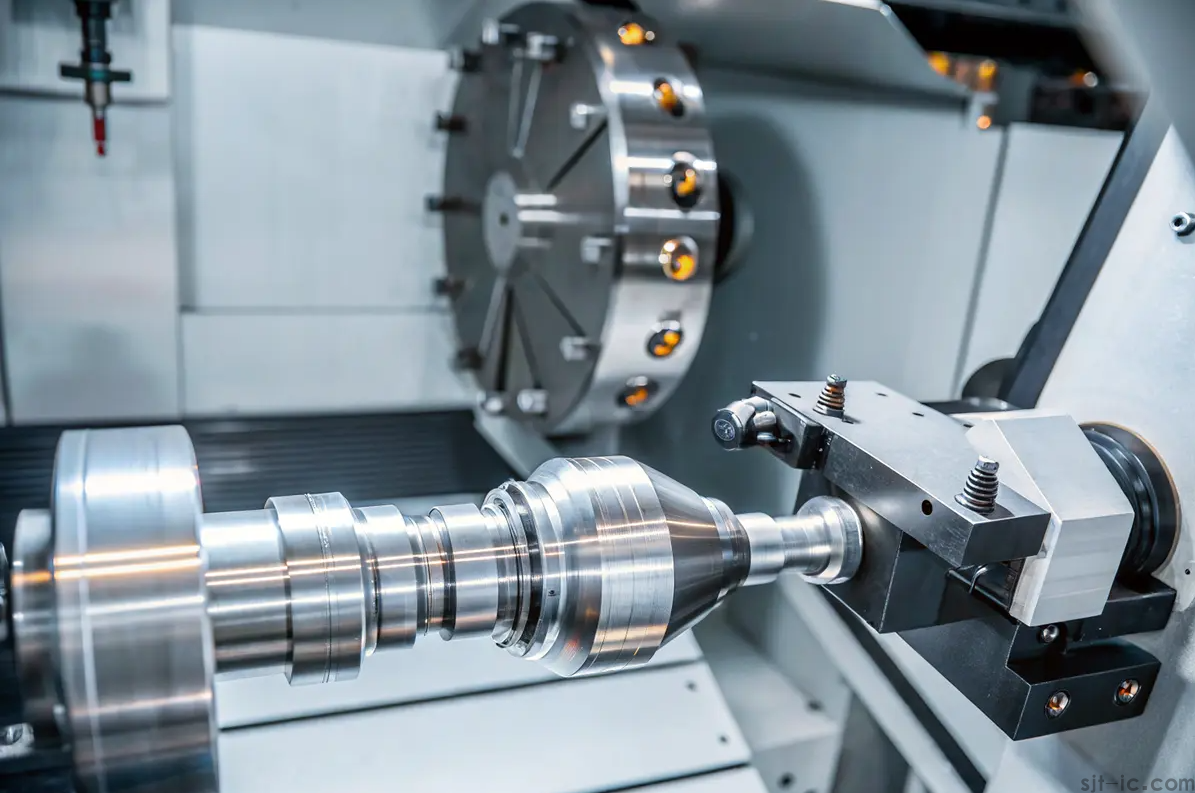
Feed Rate (fz) – Controlling Chip Formation
Feed per tooth directly influences chip thickness and cutting forces. A feed that is too low causes rubbing, while excessive feed leads to chatter.
Roughing: 0.12–0.15 mm/tooth (0.0047-0.006 in/tooth)
Finishing: 0.08–0.10 mm/tooth (0.003-0.004 in/tooth)
Thin-wall or 316L: Reduce to 0.05–0.08 mm/tooth and use high-speed machining (HSM) toolpaths.
Depth of Cut (ap) – Roughing vs. Finishing
Stainless steel requires a strategic depth strategy to avoid the hardened layer.
Roughing: 2–4 mm (0.08-0.16 in). Use consistent engagement to prevent shock loading.
Finishing: 0.1–0.5 mm (0.004-0.02 in) for dimensional accuracy and surface integrity.
Deep Cavities: Implement a layered depth strategy. Start with higher DOC at shallow depths and gradually reduce as tool extension increases.
Tool Selection and Geometry for Stainless Steel
Your cutting tool is your primary weapon against work hardening. EMAR recommends carbide over HSS for any production environment.
Recommended Tool Materials & Coatings
Carbide Grades: Micro-grain carbide with 10-12% cobalt content balances hardness and toughness.
Coatings: PVD coatings are essential.
AlTiN (Aluminum Titanium Nitride): Best for high-heat resistance and high-speed machining. Extends tool life by 30-50%.
TiCN (Titanium Carbonitride): Excellent for interrupted cuts and reducing built-up edge (BUE).
TiAlN: Superior oxidation resistance for heavy roughing.
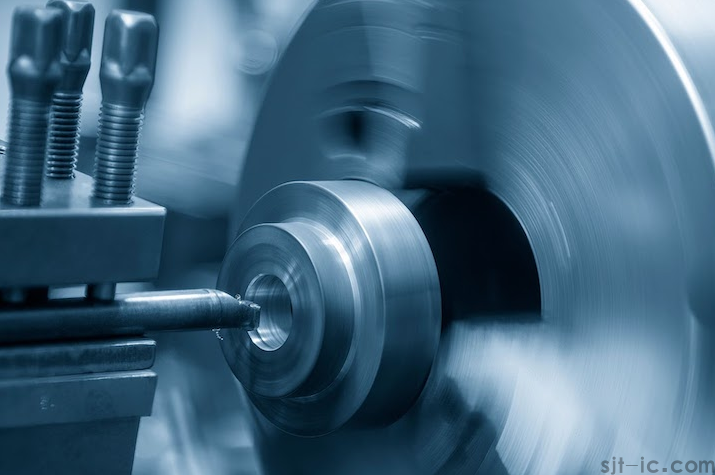
Geometry & Chipbreaker Design
Rake Angle: Positive rake (10°–20°) to reduce cutting forces and shear the material cleanly.
Helix Angle: High helix (>40°) for finishing; variable helix for roughing to dampen chatter.
Nose Radius: 0.2-0.4 mm for finishing (low forces); 0.8-1.2 mm for roughing (edge strength).
Chipbreakers: Dedicated stainless steel chipbreakers are mandatory. They break long, stringy chips that wrap around tools and fixtures, improving automation safety.
Cooling and Lubrication Strategies
Stainless steel retains heat. Without an effective cooling strategy, your tools will anneal and fail.
High-Pressure Coolant (The Game Changer)
For turning and deep-hole drilling, standard flood cooling is insufficient.
Pressure: 70-100 bar (1000-1450 PSI).
Flow Rate: 15-20 L/min.
Delivery: Through-tool coolant channels direct fluid exactly to the cutting zone, breaking the vapor barrier and evacuating chips efficiently.
Fluid Selection
Emulsion (Water-soluble): 8-12% concentration. Good for general turning and milling.
Synthetic Fluids: Preferred for high-speed milling and finishing. They offer superior lubricity and reduce foaming.
Straight Oils: Used for tapping and heavy-duty operations where extreme lubrication is required.
EMAR’s Maintenance Tip: Monitor coolant concentration weekly and maintain a pH of 8.5-9.5. Contaminated or weak coolant accelerates tool wear by 20% or more.
Optimized Toolpath Strategies
Modern CAM programming can mitigate the challenges of stainless steel.
Climb Milling Only: Always use climb milling for stainless. Conventional milling rubs the material, inducing immediate work hardening.
Trochoidal / HEM (High Efficiency Milling): For tough grades like 316 or hardened 17-4, use trochoidal toolpaths. These maintain a constant, low radial engagement (5-15% of tool diameter), allowing higher axial depths and reducing heat concentration.
Entry/Exit: Use arc or helical ramping entries. Plunging directly into stainless causes micro-chipping on the tool edge.
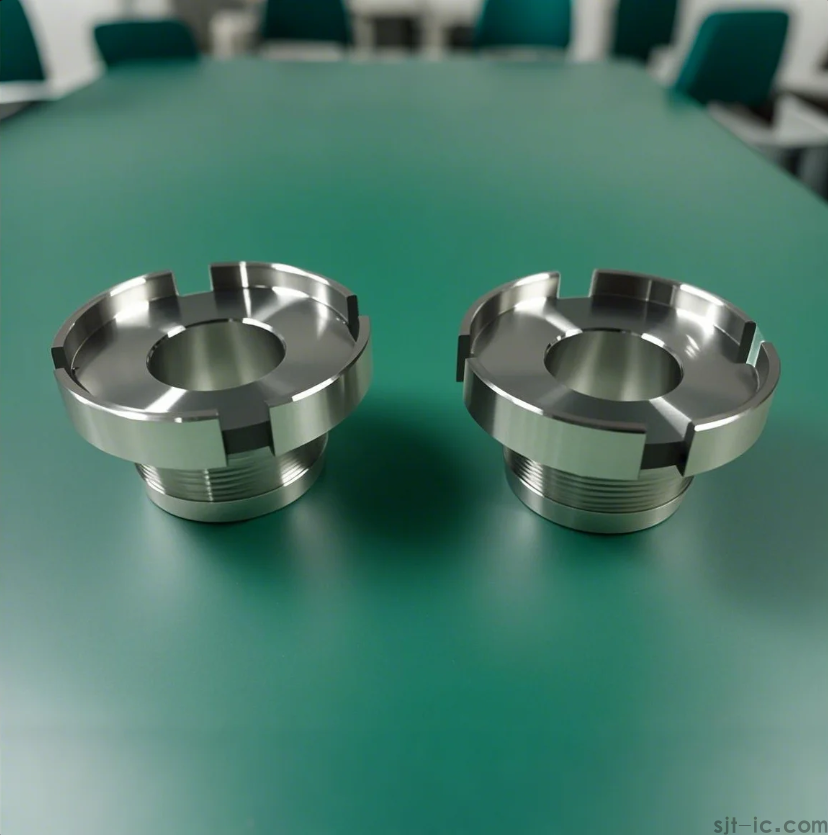
Grade-Specific Parameter Sets (Practical Examples)
Here are the baseline parameters for CNC machining stainless steel used at EMAR for quality production.
| Parameter | SUS304 (Standard) | SUS303 (High Machinability) | SUS316 (Marine Grade) | 17-4 PH (High Strength) |
|---|---|---|---|---|
| Cutting Speed (Vc) | 100 m/min | 130 m/min | 90 m/min | 80-160 SFM |
| Feed (fz) | 0.12 mm/tooth | 0.15 mm/tooth | 0.10 mm/tooth | 0.003-0.006 in/tooth |
| Depth of Cut (ap) | 2 mm | 3 mm | 1.5 mm | 0.04-0.08 in |
| Coolant | High-pressure (80 bar) | Standard Emulsion | High-pressure (100 bar) | Through-tool |
| Primary Tool Wear | Flank & BUE | Crater (due to sulfur) | Notching | Adhesive wear |
Preventing Common Machining Failures
Eliminating Work Hardening
Work hardening is the #1 scrapped part cause. To prevent it:
Never let the tool dwell in the cut.
Maintain a minimum chip thickness (do not take “air cuts”).
If you must stop mid-cut, retract the tool and re-enter with a helical move.
Chip Evacuation
Long, stringy chips are dangerous and damage surface finishes.
Solution: Use chipbreaker geometries and high-pressure coolant directed at the cutting zone. For drilling, use a pecking cycle (0.5x D increments) with full retraction to clear flutes.
Quality Control and Process Optimization
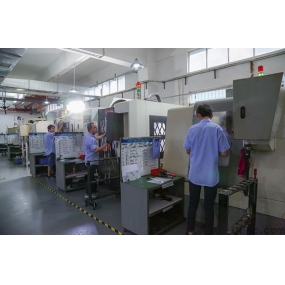
Consistent parameters lead to consistent parts. EMAR integrates statistical process control (SPC) into our stainless steel workflow.
In-Process Inspection: Regular CMM measurements to catch thermal drift.
Tool Life Monitoring: Track cutting forces and acoustic emissions. replace tools based on data, not guesswork.
Surface Finish Targets: Standard turning achieves Ra 1.6-3.2 µm. With optimized wiper inserts and reduced feed, we achieve Ra 0.8 µm, eliminating secondary polishing.
Conclusion & Get Your Precision Quote Today
Machining stainless steel does not have to be a battle against tool wear and scrap. By adhering to these scientifically backed parameters for CNC machining stainless steel—from selecting AlTiN-coated carbide tools and applying high-pressure coolant to utilizing trochoidal toolpaths—you can achieve higher productivity, longer tool life, and superior surface finishes.
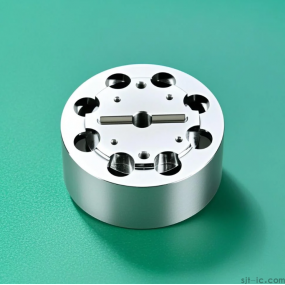
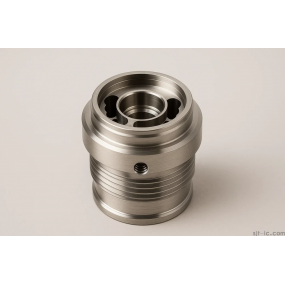
At EMAR, we don’t just write about precision; we deliver it. Whether you need complex CNC milled parts for aerospace or turned components for medical devices, our engineered approach ensures your stainless steel parts meet spec every time.
Ready to optimize your supply chain?
Contact EMAR today for a free design review and quote.
Call/WhatsApp: +86 18664342076
Email: sales8@sjt-ic.com
Let us turn your stainless steel challenges into high-performance solutions.