Hello! Welcome to EMAR's website!
Focus on numerical control processing parts, metal stamping parts, sheet metal processing and manufacturing for more than 16 years
Germany and Japan's high-precision production equipment and testing equipment ensure that the precision of metal parts reaches 0.003 tolerance and high quality
Email:
sales8@sjt-ic.com
Your location: HOME > News > Industry trends > CNC Small Batch Production: The Ultimate Guide to Low-Volume Manufacturing

CNC Small Batch Production: The Ultimate Guide to Low-Volume Manufacturing

Release time:2026-04-20     Number of views :


In today’s fast-paced manufacturing landscape, businesses increasingly require high-quality precision parts without committing to large production runs. Whether you need functional prototypes, pilot runs for market validation, custom components for niche applications, or on-demand spare parts, traditional mass production methods often fall short due to high tooling costs, long lead times, and inflexible minimum order quantities.

CNC small batch production solves these challenges by combining the precision and repeatability of computer numerical control machining with the agility of low-volume manufacturing. At EMAR, we specialize in delivering custom small-batch CNC Machining services that help engineers, product designers, and procurement teams accelerate time-to-market, reduce inventory risks, and maintain exceptional quality across runs from single prototypes to several thousand parts.

This comprehensive guide extracts the most valuable insights from industry best practices, covering everything from processes and materials to cost optimization, design for manufacturability (DFM), quality assurance, and how to select the right CNC partner for your low-volume projects.

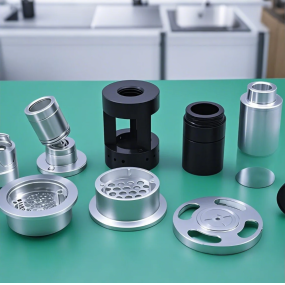
CNC Small Batch Production: The Ultimate Guide to Low-Volume Manufacturing(图1)


What Is CNC Small Batch Production?

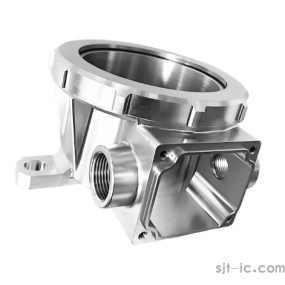
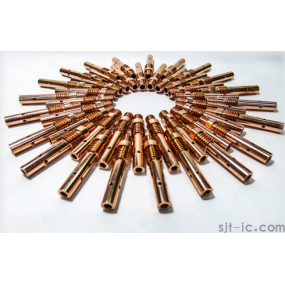
CNC small batch production refers to the use of computer-controlled machining equipment—such as milling machines, lathes, drills, and EDM systems—to manufacture limited quantities of parts, typically ranging from 1 to 5,000 units. Unlike injection molding or die casting, which require expensive molds and high upfront investment, small-batch CNC machining operates directly from digital CAD files, eliminating the need for physical tooling.

This “digital-to-product” model transforms manufacturing from a capital-intensive, long-cycle prediction model into an agile, on-demand capability. Key characteristics include:

  • Zero initial cost constraints – No mold development; production starts with a 3D drawing.

  • Unlimited design freedom – Complex geometries, 5-axis contours, and late-stage design changes are easy and inexpensive.

  • On-demand supply chain – Parts are produced only when needed, reducing inventory and waste.

Typical output ranges vary by application:

  • R&D and prototyping: 1–50 units

  • Pilot production and market testing: 200–500 units

  • Spare parts and legacy replacements: 50–100 units

  • Customized products: up to 2,000+ units

At EMAR, we routinely support orders from a single piece to several hundred, with no minimum quantity restrictions.


Key Benefits of CNC Small Batch Production

Adopting small-batch CNC machining offers distinct advantages over both traditional mass production and other low-volume methods like 3D printing or vacuum forming.

1. Cost-Effectiveness Without Tooling Investment

Because CNC machining requires no molds, dies, or custom fixtures (for most parts), the upfront investment is dramatically lower than injection molding. The cost structure consists mainly of programming, setup, and machining time, which scales predictably with part complexity and quantity. For runs under 500–1,000 units, CNC is almost always more economical than molding.

2. Faster Turnaround and Shorter Lead Times

CNC machines operate from digital files with minimal manual intervention. Once the CAM program is verified, production can begin immediately. Typical lead times at EMAR range from 5 to 10 business days for standard orders, with expedited services available for urgent needs. This speed enables rapid iteration and faster product launches.

3. High Precision and Batch-to-Batch Consistency

Modern CNC equipment holds tolerances as tight as ±0.01 mm (±0.0004 in) or better. Advanced software and in-machine probing ensure every part in a batch matches the first article identically. This repeatability is critical for industries like aerospace, medical devices, and automotive where consistency directly impacts safety and performance.

4. Design Flexibility and Mass Customization

Unlike hard tooling that locks a design, CNC machining allows changes simply by editing the CAD file and regenerating toolpaths. This is invaluable during product development, enabling engineers to test multiple iterations, adjust materials, or refine geometries without penalties. For customized products—such as patient-specific medical implants or bespoke consumer goods—CNC provides unparalleled agility.

5. Reduced Inventory and Storage Needs

On-demand production means you only make what you need, when you need it. This lean approach minimizes warehousing costs, reduces the risk of obsolete stock, and frees up working capital. Many EMAR clients use our services for just-in-time (JIT) spare parts and bridge production while scaling to higher volumes.

6. Lower Labor Costs and Human Error

Automated CNC processes require minimal operator intervention after setup. This reduces labor costs per part and eliminates variability introduced by manual machining. The result is consistent quality and fewer defects.

7. Sustainability and Waste Reduction

CNC machining is subtractive, but advanced nesting software and optimized toolpaths maximize material utilization. Chip recycling systems allow metal shavings to be repurposed. Compared to casting or stamping, CNC generates significantly less scrap, especially when working with expensive alloys like titanium or Inconel.

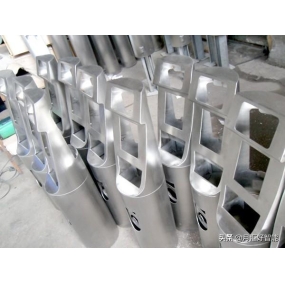
CNC Small Batch Production: The Ultimate Guide to Low-Volume Manufacturing(图2)


Common CNC Machining Processes for Small Batch Production

Depending on part geometry, material, and precision requirements, different CNC processes are used. EMAR offers a full range of capabilities, often combining multiple processes in a single setup using multi-axis or mill-turn machines.

ProcessDescriptionBest For
CNC TurningLathe process; workpiece rotates while a cutting tool removes material along the diameter.Axisymmetric parts: shafts, fasteners, camshafts, custom vessels.
CNC MillingRotating cutting tool removes material from a stationary workpiece; 3, 4, or 5 axes.Complex geometries: gears, enclosures, orthopedic implants, brackets.
CNC Drilling & TappingDrill bits create cylindrical holes; taps add threads.Precision holes, threaded features in any part.
Sinker EDMSpark erosion in dielectric fluid; uses shaped electrode.Hard metals, complex cavities, injection mold details.
Wire EDMContinuously fed wire electrode cuts through conductive materials.Precision contours in hard metals, dies, and tooling.
Surface GrindingAbrasive wheel removes small amounts of material.Fine surface finish (Ra 0.4 μm), tight flatness tolerances.
Mill-Turn (multi-axis)Combines turning and milling in one setup.Parts with both rotational and prismatic features; reduces errors and lead time.

For most small-batch projects, 5-axis CNC milling and mill-turn machining offer the best balance of efficiency, accuracy, and cost because they minimize setups and manual re-clamping.


Materials and Surface Finishes Available

EMAR maintains a broad inventory of metals and engineering plastics, allowing rapid material sourcing without purchasing full bars or sheets.

Metals

MaterialKey PropertiesTypical Applications
AluminumLightweight, high strength-to-weight, corrosion-resistant, excellent machinabilityAerospace, electronics, automotive, consumer goods
Stainless SteelHigh strength, corrosion resistance, aesthetic appealMedical, food processing, marine, chemical equipment
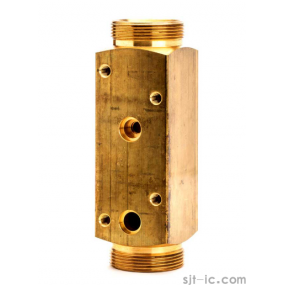
BrassSoft, easy to machine, good conductivityPlumbing fittings, electrical terminals, gears, decorative parts
Mild SteelLow carbon (0.05–0.20%), most common and easiest steel to machineStructural parts, pipelines, machinery components
Alloy SteelEnhanced hardness, strength, wear resistance (Ni, Cr, Mo additions)Automotive, rail, mining, construction
Tool SteelHigh carbon + alloying elements (W, V, Cr); high hardness, thermal stabilityDrills, dies, reamers, hand tools

Plastics

MaterialKey PropertiesTypical Applications
ABSTough, chemical/thermal stability, glossy finishAutomotive trim, electronic housings, toys, helmets
Nylon (PA)High mechanical strength, toughness, electrical insulationWashers, pulleys, rollers, valve seats, insulators
PTFE (Teflon®)Wide temperature range, chemical resistance, low frictionMachined gears, slide plates, bearings, seals
POM (Acetal/Delrin)Dimensional stability, low friction, UV/chemical resistancePulleys, rollers, gears, zippers, buckles
Polycarbonate (PC)Transparent, high impact strength, flame resistantSafety guards, windscreens, electronic housings, eyewear
HDPELow melting point, high strength-to-weight, recyclablePackaging, sporting goods, medical equipment
PEEKExceptional strength at high temperatures (250°C), chemical resistancePump components, bushings, medical implants, electrical connectors

Surface Finishes

FinishDescriptionBenefits
As-MachinedMinor tool marks; Ra 0.2–3.2 µ-inLowest cost, preserves tight tolerances
Bead BlastingGlass/bead media pelts surface to remove marksUniform matte/satin finish, improves aesthetics
Anodizing (Type III Hardcoat)Electrochemical oxide layer on aluminumCorrosion/abrasion resistance, adds thickness, color options
Powder CoatingElectrostatic application of paint, then curedDurable, corrosion-resistant, various colors/gloss levels
SandblastingHigh-pressure abrasives create uniform matte textureImproves grip and appearance
PolishingMechanical/chemical smoothing to mirror finishDecorative parts, low-friction surfaces
PlatingMetal coating (e.g., nickel, chrome)Wear resistance, conductivity, corrosion protection
Black OxideDark conversion coating on steelRust prevention, glare reduction

Cost Structure and How to Optimize Costs

Understanding the cost drivers of small-batch CNC machining helps you make informed design and procurement decisions.

Main Cost Components

  1. Material – Can account for 40–60% of total cost for premium alloys. Using readily available stock sizes and optimizing nesting reduces waste by 15–20%.

  2. Machining Time – Typically 30–50% of cost. Complex 5-axis parts may require 6–8 hours of programming and longer cycle times.

  3. Setup & Programming – Fixed costs amortized over batch quantity. Higher quantity lowers per-unit cost.

  4. Tooling & Fixturing – Standard tools are reusable; custom fixtures add cost.

  5. Secondary Operations – Anodizing, heat treatment, or coating add 10–25%.

Pricing Model Example

A common formula: Total cost = (Material cost) + (Machine hours × hourly rate) + (Programming time × rate) + (Finishing cost)

For example, a single aluminum bracket might cost $120, while 10 units cost $40 each, and 100 units drop to $12 each—because programming and setup are spread across more parts.

Cost-Saving Strategies

  • Simplify designs – Reduce unnecessary features, standardize hole sizes, avoid deep cavities (depth < 4× width).

  • Choose machinable materials – Aluminum, brass, and mild steel cut faster than titanium or Inconel.

  • Consolidate batches – Producing 50 units once is cheaper than five orders of 10.

  • Use standard tools – Avoid custom radii or thread sizes that require special cutters.

  • Apply realistic tolerances – Tight tolerances (±0.005 mm) can double machining time; only specify where functionally necessary.

  • Combine parts on a single fixture – Multi-part machining increases throughput by 15–30%.

At EMAR, our engineers provide free DFM analysis before production, identifying cost-saving modifications without compromising part function.

CNC Small Batch Production: The Ultimate Guide to Low-Volume Manufacturing(图3)


Design for Manufacturability (DFM) Guidelines

Following DFM principles ensures your small-batch CNC project is efficient, cost-effective, and defect-free.

Cavity Depth

Keep cavity depth no more than four times the cavity width. Deeper cavities require specialized tools and multiple passes, increasing time and cost.

Feature Alignment and Symmetry

Asymmetric parts create uneven tool forces, causing deflection and poor surface finish. Where possible, design symmetric features or add balancing elements.

Internal Edges

Vertical inside corners should have a radius at least one-third the cavity depth. Using a tool slightly larger than the corner radius allows circular toolpaths instead of sharp angles, improving finish and tool life.

Avoid Thin Walls

Walls thinner than 1 mm are prone to vibration and deformation. Add ribs or increase thickness where possible.

Eliminate Sharp Corners

CNC tools cannot machine perfect internal sharp corners. Add fillets (≥0.5 mm radius) to reduce stress concentrations and tool wear.

Realistic Tolerances

Over-tolerancing a part can increase costs by 20–30%. Only apply tight tolerances (±0.01 mm) to critical mating surfaces, datums, or functional interfaces.

Tool Accessibility

Design deep holes, slots, and undercuts so standard tool lengths can reach without interference. If a feature requires a custom long-reach tool, consider splitting the part into assemblies.

Use Standard Dimensions

Specify standard hole diameters, thread sizes, and radii to avoid custom tooling. For example, use M6 threads instead of M5.5.

Complete 2D Drawings and 3D Models

Provide detailed drawings with tolerances, surface finish requirements, material specifications, and heat treatment notes. The more information, the more accurate the quote and the smoother the production.


Quality Assurance in Small Batch CNC Machining

Even for low-volume orders, EMAR applies rigorous quality management systems to ensure every part meets specifications.

Incoming Material Inspection

All raw materials come with Certificates of Conformance (COC). We verify hardness, dimensions, and surface defects before machining.

First-Article Inspection (FAI)

Before full production, the first machined part undergoes a complete dimensional inspection using CMM (Coordinate Measuring Machine) or optical comparators. This validates the program and fixturing.

In-Process and In-Machine Measurement

Probes mounted on CNC spindles automatically measure critical features during machining, adjusting tool offsets in real time. This prevents scrap from tool wear or thermal drift.

Statistical Process Control (SPC)

For batches over 50 units, we monitor key dimensions at regular intervals, ensuring process stability.

Final Inspection and Reporting

Every batch receives a final inspection report, including dimensional data, material certificates, and surface finish measurements. Full traceability is maintained from raw stock to finished part.

Certifications

  • ISO 9001:2015 – Baseline quality management.

  • ISO 13485 – Medical device quality (available upon request).

  • AS9100 – Aerospace quality system (available for qualified projects).


How to Choose the Right CNC Partner for Small Batch Production

Selecting a supplier that understands low-volume manufacturing is critical. Here’s what to evaluate:

Technical Capabilities

  • Machine range: 3/4/5-axis milling, mill-turn, wire EDM, surface grinding.

  • Material experience: aluminum, stainless, titanium, engineering plastics, PEEK, Inconel.

  • Maximum part size and tolerance capabilities.

Engineering Support

  • Free DFM analysis and optimization suggestions.

  • Fast response to design changes.

  • Experience in your industry (medical, aerospace, automotive, etc.).

Communication and Transparency

  • Quote within 24 hours of uploading CAD files.

  • Clear breakdown of costs: material, machining, finishing, shipping.

  • Real-time production tracking (MES or ERP system).

Quality Systems

  • ISO 9001 certification minimum.

  • In-house CMM inspection and FAI reports.

  • Material certifications and full traceability.

Delivery Performance

  • Standard lead times: 5–10 business days.

  • Expedited options available (48-hour turnaround for urgent orders).

Pricing Transparency

  • No hidden costs. Any design change or additional requirement is requoted and approved before proceeding.

EMAR meets all these criteria, with over 20 years of experience serving clients in more than 150 countries. Our digital workflow—from instant quoting to live production updates—ensures a seamless experience.


Industries and Applications of Small Batch CNC Machining

Small-batch CNC production serves diverse sectors where precision, customization, and speed are paramount.

IndustryTypical Applications
AerospaceTurbine blades, structural brackets, flight-critical prototypes, tooling
Automotive & New EnergyEV battery housings, suspension test parts, custom connectors, motor shafts
Medical & HealthcareSurgical instruments, orthopedic implants, custom stents, device housings
Consumer ElectronicsPhone casings, heat sinks, electronic enclosures, component racks
Industrial EquipmentMounting brackets, custom storage racks, valve components, pump parts
Energy & Oil/GasInconel turbine components, corrosion-resistant fittings, exploration tooling
Startups & R&DFunctional prototypes, market-testing samples, proof-of-concept models

Case Example: A medical device startup needed 50 functional prototypes of a new surgical instrument stent within three weeks for clinical evaluation. Traditional suppliers either rejected the small order or quoted exorbitant prices. EMAR completed DFM analysis in 24 hours, sourced medical-grade stainless steel from inventory, and delivered all 50 precision parts in 10 working days—four days ahead of schedule. The client successfully completed clinical trials and accelerated product launch by nearly two months.


Frequently Asked Questions (FAQs)

What is considered a small batch in CNC machining?

Typically, 1 to 5,000 units. Prototypes (1–50), pilot runs (200–500), and custom or spare parts (50–100) all fall under small-batch production.

What is the minimum order quantity (MOQ) at EMAR?

We support single-piece production. There is no MOQ—whether you need one prototype or several hundred parts.

How long does small-batch CNC machining take?

Standard lead times are 5–10 business days after design confirmation. Expedited services can reduce this to 48 hours for urgent projects.

Is CNC machining cost-effective for small batches compared to injection molding?

Yes, for quantities under 500–1,000 units. Injection molding requires expensive molds ($5,000–$100,000+), while CNC has no tooling cost. Even at higher per-unit cost, total project cost is lower for small batches.

Can CNC machine difficult materials like titanium or Inconel?

Absolutely. With rigid multi-axis machines, proper tooling, and optimized cutting parameters, EMAR routinely machines titanium, Inconel, and other superalloys to ±0.01 mm tolerances.

How do I get a quote for my small-batch project?

Simply upload your 3D CAD file (STEP, IGES, or STP) and 2D drawings to our website or email sales8@sjt-ic.com. Our engineering team will provide a DFM analysis and detailed quote within 24 hours.

Are my design files protected?

Yes. We sign strict non-disclosure agreements (NDAs) and store all files in encrypted systems with access limited to authorized personnel.

What surface finishes do you offer?

We provide as-machined, bead blasting, anodizing (clear and colors), powder coating, sandblasting, polishing, plating, black oxide, and heat treatment.

Do you offer material certifications?

Yes, every batch includes material certificates (COC) and full inspection reports upon request.

Can you handle design changes mid-production?

Yes. Because no molds are involved, design changes are simply updated in the CAD/CAM files. We requote any additional work and proceed with your approval.


Conclusion: Accelerate Your Product Development with EMAR’s CNC Small Batch Production

Small-batch CNC machining is no longer a niche alternative—it is a strategic manufacturing capability that enables faster innovation, lower risk, and leaner supply chains. Whether you are an engineer validating a new design, a startup launching a custom product, or an OEM needing on-demand spare parts, EMAR delivers precision, speed, and flexibility without the burden of tooling costs or large minimum orders.

Why partner with EMAR?

  • Agility – No MOQ, single prototype to thousands of parts.

  • Professionalism – Free DFM analysis, experienced engineers, ISO-certified quality.

  • Transparency – Detailed quotes with no hidden fees, real-time production tracking.

  • Partnership – We become an extension of your team, supporting you from concept to market.

Ready to bring your project to life?
📞 Call us: +86 18664342076
📧 Email: sales8@sjt-ic.com
🌐 Visit our website or upload your CAD files today for an instant quote and expert DFM feedback.

Let’s turn your digital designs into high-quality, precision-machined parts—faster and more affordably than you thought possible.


Contact Us
 Recommended products
LiveChat关闭