In the rapidly advancing sectors of 5G infrastructure, electric vehicle (EV) power electronics, and high-performance computing, thermal management is no longer an afterthought—it is a critical engineering constraint. As component densities increase and form factors shrink, traditional manufacturing methods like extrusion and die casting often fail to deliver the complex fin geometries and tight tolerances required for modern heat dissipation.
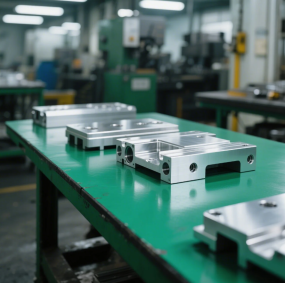
This is where CNC Machining of heat sinks excels. Offering unparalleled precision, material versatility, and tooling-free agility, CNC milling has become the definitive solution for prototyping and producing high-efficiency thermal components. At EMAR, we specialize in transforming complex thermal simulations into tangible, high-performance cooling hardware. This guide consolidates industry best practices, material science, and design-for-manufacturability (DFM) rules to help procurement specialists and design engineers navigate the intricacies of machined heat sinks.

Why CNC Machining Outperforms Extrusion and Die Casting for Heat Sinks
While high-volume production often leverages extrusion for its cost-effectiveness on uniform profiles, this method imposes severe limitations on design freedom. Die casting, similarly, requires expensive tooling and struggles with high-conductivity metals like pure copper. CNC machining of heat sinks bridges the gap between performance and practicality.
Key Advantages of CNC Machined Heat Sinks:
Geometric Freedom: Unlike the linear restrictions of extrusion, CNC machining allows for multi-directional fins, curved profiles, undercuts, and variable base thicknesses. This is essential for optimizing airflow around obstructed board layouts.
No Tooling Investment: For prototypes and small-to-medium batches (under 5,000 units), CNC eliminates the lead time and capital expenditure associated with extrusion dies or casting molds.
Material Versatility: CNC handles the full spectrum of thermal materials, from easily machined Aluminum 6061/6063 to notoriously difficult pure Copper C110. It also enables hybrid designs where a copper core is press-fit or bonded into an aluminum fin array.
Integrated Precision: CNC machining consolidates multiple operations in a single setup. Features such as counterbores, tapped mounting holes, alignment pins, and recessed pockets for Thermal Interface Material (TIM) are machined with positional accuracy down to ±0.02 mm, ensuring perfect assembly with IGBT modules and PCBs.
Core Design Principles for High-Efficiency CNC Heat Sinks
Effective thermal management is a marriage of physics and machinability. A design that looks perfect in Computational Fluid Dynamics (CFD) software can be unmanufacturable if DFM constraints are ignored.

Fin Geometry and Aspect Ratio Constraints
The goal is maximizing surface area without compromising the structural integrity of the fin during machining. The following table represents the critical DFM thresholds developed by EMAR to prevent tool chatter and part failure:
| Parameter | Aluminum (6061/6063) | Copper (C110) |
|---|---|---|
| Min. Fin Thickness | ≥ 0.8 mm | ≥ 1.0 mm |
| Min. Fin Spacing | ≥ 1.5 mm | ≥ 1.8 mm |
| Max. Aspect Ratio (Height:Thickness) | ≤ 6:1 | ≤ 4:1 |
| Max. Cavity Depth | ≤ 4x Tool Diameter | ≤ 3x Tool Diameter |
Exceeding these ratios requires extremely long, flexible tooling, which induces vibration, reduces surface finish quality, and dramatically increases cycle time.
Material Selection: Aluminum vs. Copper
The choice between aluminum and copper significantly impacts both thermal performance and project TCO (Total Cost of Ownership).
Aluminum (6061-T6 / 6063-T5): The industry standard. With a thermal conductivity of ~200-230 W/m·K and a density of 2.7 g/cm³, it offers an optimal balance of weight, cost, and machinability. It is ideal for aerospace, automotive ECU, and general LED lighting applications.
Copper (C11000): The premium choice for extreme heat flux. With conductivity near 400 W/m·K, copper is unparalleled for heat spreading. However, it is 3x heavier than aluminum, prone to work hardening and burring during machining, and costs 2-4x more.
The Hybrid Approach: Many EMAR designs utilize a thick copper base plate (for direct contact with the heat source) with aluminum fins (for convective dissipation). CNC precision ensures the flatness and pocket tolerances required to join these dissimilar metals effectively.
Thermal Interface and Base Thickness
Thermal resistance (Rₜₕ) at the interface can negate the benefits of an expensive material if not managed correctly.
Flatness Requirement: Uneven surfaces trap air, which is a powerful insulator. EMAR maintains a surface flatness of ≤ ±0.05 mm on the contact face to ensure optimal TIM compression.
Base Thickness Rule: To prevent localized hotspots and ensure lateral heat spreading into the fins, the base thickness should be ≥ 2x the average fin thickness.
Advanced Manufacturing Technologies at EMAR
Beyond standard 3-axis milling, EMAR employs a suite of advanced processes to tackle the most demanding thermal challenges.
5-Axis CNC Machining and Horizontal Milling
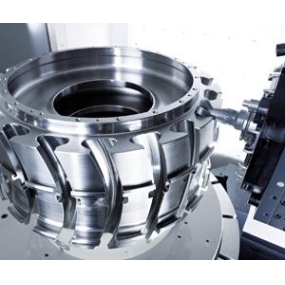
5-Axis Machining allows for simultaneous movement across five axes, enabling the creation of complex, multi-sided heat sinks in a single setup. This eliminates the tolerance stacking associated with multiple fixtures and allows for superior surface finishes by approaching the workpiece from optimal angles.
Horizontal Milling provides unmatched stability for deep slotting. For skived fin designs or dense fin arrays, the horizontal configuration allows for more efficient chip evacuation and the use of longer tools, ensuring straight, burr-free fins even at depth.

EDM for Intricate Internal Geometries
When designs require features impossible for a rotating tool—such as sharp internal corners, deep narrow cavities, or extremely thin walls—EMAR utilizes Electrical Discharge Machining (EDM) .
Wire EDM: Ideal for cutting precise, narrow slots in hard materials without inducing mechanical stress.
Sinker EDM: Perfect for creating complex internal geometries and deep pockets using a shaped electrode.
Robotic Automation and Unattended Production
To deliver on short lead times and cost efficiency, EMAR integrates Fanuc robots and advanced pallet systems like the Trinity AX5. This automation manages the movement of blanks from up to 42 pallet positions, enabling "lights-out" manufacturing overnight and during weekends. This results in consistent quality, reduced human error, and a lower cost per part for our clients.
Surface Finishing for Thermal Optimization and Durability
The final surface condition directly impacts performance and longevity.
Anodizing (Aluminum): Black anodizing increases surface emissivity, enhancing radiative heat transfer in passive cooling scenarios. It also provides corrosion resistance and electrical isolation.
Nickel Plating (Copper): Prevents oxidation of the copper surface, which would otherwise degrade thermal contact resistance over time.
Fly-Cutting & Facing: Ensures a mirror-like finish on the TIM contact area to maximize heat transfer efficiency.
Global Manufacturing Excellence: The Vietnam Advantage in 2026
As global supply chains navigate shifting tariffs and logistics costs, EMAR has strategically positioned resources to offer competitive advantages beyond engineering. For clients in the US and EU markets, manufacturing through our Vietnam facilities offers significant relief from Section 301 tariffs and leverages trade agreements like EVFTA and CPTPP. This provides a cost-competitive alternative to China-based supply without sacrificing precision—maintaining the same IATF 16949 and ISO 9001 quality standards expected in automotive and telecom infrastructure.
DFM Checklist for CNC Machined Heat Sinks
Before submitting your CAD file to EMAR for quoting, verify these critical design elements to reduce cost and lead time:
Internal Corner Radii: Avoid sharp, square corners. Design with a fillet radius to allow standard end mills to cut efficiently.
Fin Aspect Ratio: Keep Aluminum fins ≤ 6:1 and Copper fins ≤ 4:1.
Draft Angles: While not always required, a 2-3° draft on deep fin walls aids tool clearance and chip evacuation.
Surface Specification: Only specify high-polish or fly-cutting for the contact base. Non-critical areas can utilize a standard or bead-blasted finish to reduce machining time.
Feature Consolidation: Integrate mounting bosses and connector cutouts into the heat sink design to eliminate secondary assembly steps.
Conclusion: Partner with EMAR for Custom Thermal Solutions
Designing a heat sink is a system-level engineering challenge that requires more than just a CFD model. It demands a manufacturing partner who understands the interplay between material behavior, toolpath strategy, and thermal physics.
Whether you are prototyping a new laser driver or scaling production of EV inverter baseplates, EMAR delivers precision cooling solutions with industry-leading speed. Our team is ready to provide a free DFM analysis on your design to ensure cost-efficiency and peak thermal performance.
Contact EMAR today to discuss your thermal management requirements.
Engineering Support: Our team can assist with design optimization and material selection.
Quote Request: Upload your STEP or IGES file for an instant quote and lead time estimate.
Phone: +86 18664342076
Email: sales8@sjt-ic.com


Spanish
Arabic
French
Portuguese
Belarusian
Japanese
Russian
Malay
Icelandic
Bulgarian
Azerbaijani
Estonian
Irish
Polish
Persian
Boolean
Danish
German
Filipino
Finnish
Korean
Dutch
Galician
Catalan
Czech
Croatian
Latin
Latvian
Romanian
Maltese
Macedonian
Norwegian
Swedish
Serbian
Slovak
Slovenian
Swahili
Thai
Turkish
Welsh
Urdu
Ukrainian
Greek
Hungarian
Italian
Yiddish
Indonesian
Vietnamese
Haitian Creole
Spanish Basque