Spanish
 Arabic
 French
 Portuguese
 Belarusian
 Japanese
 Russian
 Malay
Malay Icelandic
 Bulgarian
 Azerbaijani
 Estonian
 Irish
Irish Polish
 Persian
 Boolean
 Danish
 German
 Filipino
 Finnish
 Korean
 Dutch
Dutch Galician
 Catalan
 Czech
Czech Croatian
 Latin
Latin Latvian
 Romanian
 Maltese
 Macedonian
 Norwegian
 Swedish
 Serbian
 Slovak
 Slovenian
 Swahili
 Thai
Thai Turkish
 Welsh
Welsh Urdu
Urdu Ukrainian
 Greek
Greek Hungarian
 Italian
 Yiddish
 Indonesian
 Vietnamese
 Haitian Creole
 Spanish Basque

The Definitive Guide to CNC Machining Charging Standards: How to Calculate Costs Without Sacrificing Quality
In today’s inflationary landscape, the U.S. and European markets have seen rapid increases in labor and material costs, creating continued supply uncertainty. If you are a product manufacturer or procurement manager looking to outsource precision parts, understanding the CNC machining charging standard isn’t just helpful—it’s a critical financial safeguard. Without a clear grasp of how hourly rates, material costs, and batch volumes interact, you risk eroded margins or non-competitive pricing.
You might have experienced the frustration of receiving quotes that seem disconnected from reality. Perhaps a part’s quality was below average, but the price felt comfortable. Or the quality was excellent, yet your budget couldn’t justify the expense. The sweet spot—better quality at an affordable price—requires transparency in the cost structure.
This guide pulls back the curtain on current market pricing across the USA, Europe, and Asia. We will break down the math behind machine rates, expose hidden cost drivers, and explain how EMAR helps global clients secure precision results without overpaying.
Quick Market Overview: Hourly Rates by Machine Type and Region
There is no single sticker price for CNC machining. Rates vary dramatically depending on the machine type, geographical location, and the expertise required. However, if you are benchmarking suppliers, the following industry-standard hourly rates provide a reliable starting point for your budget estimates.
CNC Machining Hourly Rates in the USA and UK
In the United States and Canada, the mature industrial ecosystem drives a wide pricing band due to high labor overheads and regulatory compliance costs.
Entry-level CNC Milling (3-Axis): 40–80/hour
Mid-range CNC Milling: 50–100/hour
High-end CNC Milling (5-Axis): 100–100–200/hour
CNC Lathe: 40–40–85/hour
Swiss Lathe (High-precision): 80–80–120/hour
In the United Kingdom, ISO 9001 accredited suppliers typically charge between £50 and £65 per hour for 3-axis milling. However, premium providers have refined their pricing strategies. For example, some shops have moved away from blanket hourly rates, applying variable rates as low as £21.98 per hour for non-value-added activities like deburring and setup, while value-added machining rates might cap around £47.50 per hour. This granular approach often results in total project costs significantly lower than the market average.
CNC Machining Costs in Asia: High Quality, Better Efficiency
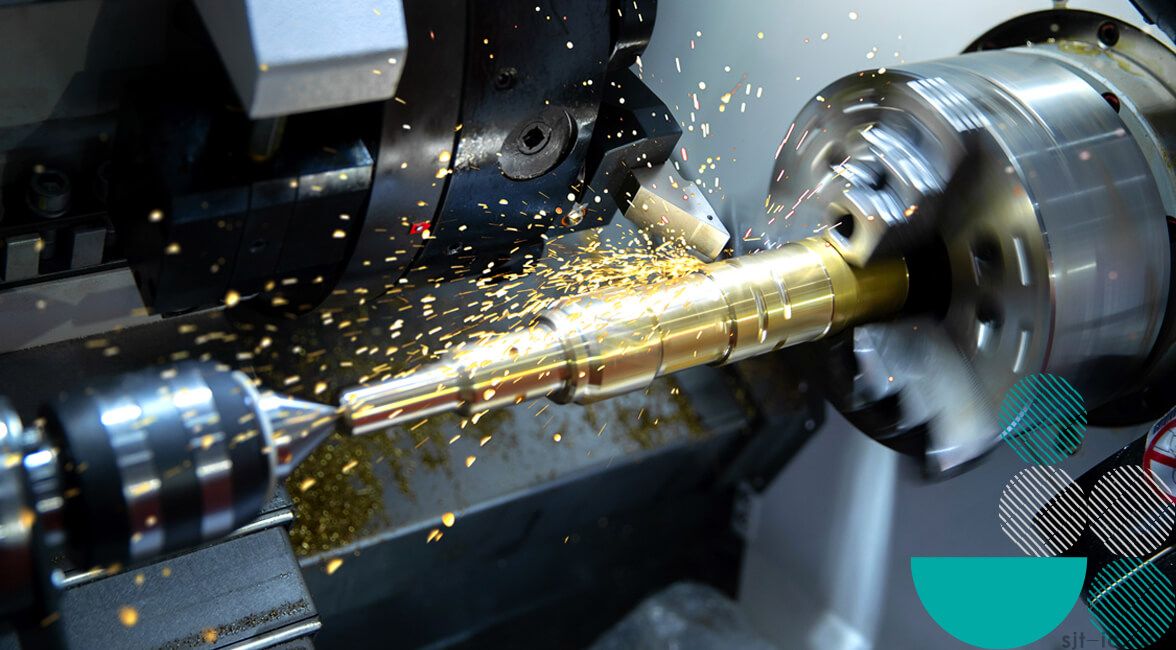
Sourcing from Asian countries often triggers a debate between cost and quality. The reality is that geographical location no longer dictates precision capability. In China, competitive CNC machining charging standards typically range from 30to90 per hour for complex parts, while maintaining global-standard quality under ISO-level quality systems. The cost advantage derives from integrated supply chains and operational efficiency, not compromised precision.
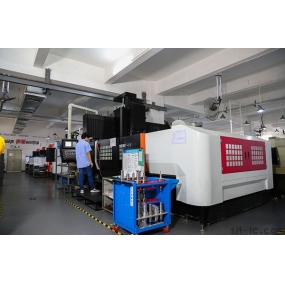
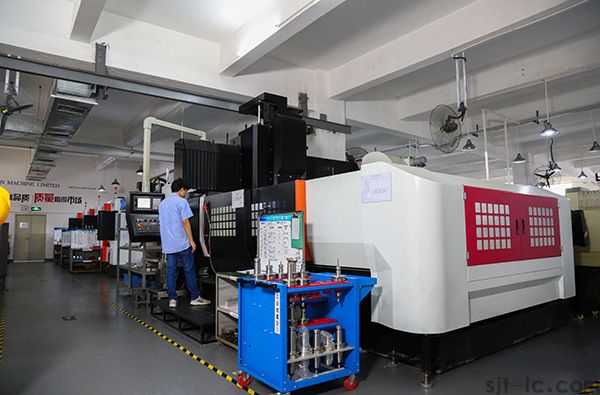
At EMAR, we embody this balance. We operate a diverse fleet of 3-, 4-, and 5-axis machines and Swiss lathes in our Dongguan facility. We don’t just use the most expensive machine for every job; we select the most cost-efficient equipment that meets your technical specifications. This is how we keep costs competitive while delivering parts that meet micron-level tolerances.
Understanding the True CNC Machining Charging Standard
The raw hourly rate is a vanity metric if you ignore the total machining time. Consider a scenario where Shop A quotes 80/hourandShopBquotes80/hourandShopBquotes120/hour. Shop A appears cheaper. But if Shop A requires 10 hours on a 3-axis machine for a complex geometry that Shop B can finish in 4 hours on a 5-axis machine, you save significantly with Shop B.
The real formula is: Total Part Cost = (Hourly Rate × Machining Hours) + Material Costs + Overhead.
To accurately price a project—or audit a quote—you must calculate three distinct cost layers. Most professional shops follow a structure that combines fixed costs, variable costs, and a reasonable profit margin (usually 10% to 30%).
1. Fixed Costs: The Non-Negotiable Baseline
These are the costs a machine shop incurs regardless of whether a spindle is turning, and they must be amortized into every job.
Machine Depreciation: High-end multi-axis machines cost six figures. This is the cost of the equipment spread over its service life.
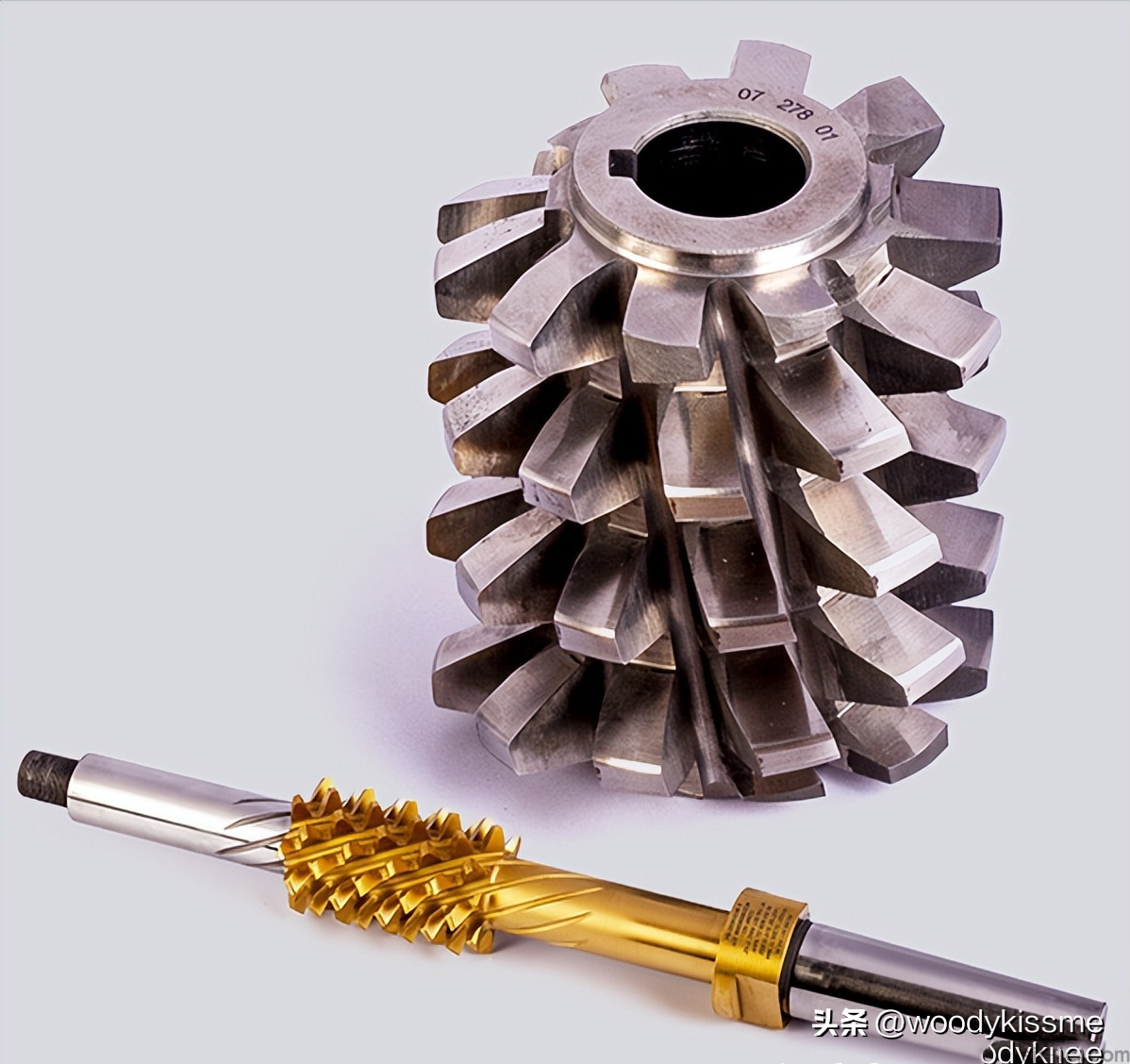
Tooling and Fixtures: Standard cutting tools, tool holders, and custom work-holding solutions required to secure complex profiles during machining. Bespoke fixturing can add a significant line item to one-off projects.
Facility Overhead: Electricity, rent, and interest payments for the facility. Factories with fewer machines or private rented facilities often need to charge a premium per hour to cover these fixed burdens.
2. Variable Costs: Where Material and Precision Intersect
Variable costs scale directly with the actual production of your parts.
Material Selection: The single most controllable cost driver. Aluminum 6061 is fast to machine and widely available, keeping costs low. Stainless steel 304 and 316L are moderate in cost but harder on tools. Exotic materials like Titanium Grade 5 or Inconel are slow to cut, wear down tool inserts rapidly, and often require long lead times for raw stock procurement—pushing hourly effective rates to the high end, often $145/hour or more.
Machining Time & Complexity: This combines setup, programming, and actual cutting time. A basic aluminum bracket might take 10 minutes to machine; a multi-axis, thin-wall aerospace mount with undercuts could take several hours. Geometric features like deep pockets, sharp internal corners, and non-standard thread depths increase tool changes and cycle times exponentially.
Labor Expertise: CNC machining isn’t automated lights-out manufacturing for most prototypes. Skilled engineers program the tool paths, calibrate machines, and inspect parts. Their expertise is a variable cost factored into the hourly rate, preventing costly scrap.
3. Ancillary Costs: The Silent Budget Creepers
Procurement managers often overlook these costs during initial budgeting, leading to unexpected surcharges.
Tolerance Requirements: Tighter tolerances (e.g., ±0.005” or tighter) demand slower feed rates, more precise tool passes, and rigorous inspection sequences, including CMM reports. A standard part with ±1/4” tolerance can be made quickly, whereas a high-precision component requires a completely different, slower strategy.
Surface Finishes: Post-machining processes add cost. Basic bead blasting or hard anodizing is relatively moderate. However, specialized coatings, precious metal plating, or masking specific areas for chemical conversion involve additional processing steps and higher scrap risks.
Outsourced Operations: If a supplier doesn't offer in-house finishing and must subcontract processes, your final cost will include their management margin on those services.
Strategic Levers to Optimize Your CNC Machining Cost
Understanding the charging standard is half the battle. The other half is optimizing your design before it reaches the factory floor. Here are industry-proven strategies to reduce costs without compromising the functional integrity of your components.
Choose Common Materials and Stock Sizes
Whenever mechanical properties allow, select readily available materials like 6061 Aluminum, 304 Stainless Steel, or POM (Acetal) over exotic alloys. More importantly, design parts so the overall external dimensions match standard purchasable stock material. If you choose a non-standard thickness, the machinist must face off significant material, potentially adding hours to a project. By using nominal sizes for overall dimensions and thicknesses, you can eliminate an entire preliminary machining operation.
Streamline Design Complexity
Simplify geometry whenever possible. Eliminate unnecessary features, maintain consistent wall thicknesses, and replace deep pockets or sharp internal corners with appropriate radii. As a general rule: a part that is easier to install and maintain is also easier to machine. Additionally, look for off-the-shelf solutions—if an existing extruded aluminum profile or standard component can be minimally machined to achieve the desired result, you can dramatically reduce setup and programming time.
Balance Tolerance and Functionality
Don’t over-engineer your drawings. Tight tolerances are essential for assembly interfaces and aerospace or medical applications. But if a non-critical surface is specified with a ±0.005” tolerance, you are paying for precision your part doesn’t need. Loosen non-functional tolerances to standard commercial levels to allow for faster, more affordable production.
Optimize Batch Quantities
The setup—loading material, programming, calibrating offsets—is a one-time fixed cost. For a single prototype, this setup cost is fully absorbed by that one part, making it expensive. By batching orders into runs of 20, 50, or 200 units, that setup cost is distributed across the entire lot, sharply lowering your per-unit price. We always advise clients to move from weekly prototype orders to planned monthly production runs when transitioning from R&D to market launch.
EMAR’s Commitment to Transparent Pricing
Transparency in the CNC machining charging standard is the foundation of a long-term global partnership. You deserve a partner that values your margins as much as your product’s quality.
EMAR provides a consultative experience that goes beyond a generic rate sheet. Our engineers—with decades of combined expertise—review and analyze every design before cutting metal. We provide free Design for Manufacturability (DFM) feedback, identifying potential cost traps in your design and suggesting alternatives that maintain structural integrity while reducing machine time. We offer rapid quotes within 12 to 24 hours, and our lead times can be as fast as 3 to 5 days for parts shipped worldwide.
We understand that chasing the absolute lowest price often introduces quality risks. A cheap quote might mean less than full batch inspection, resulting in a percentage of defective parts arriving at your dock. The true cost of a bad CNC part is not just the invoice price—it’s the delayed product launch, the compliance headache, or the safety risk. With EMAR, you invest in quality assurance matched with Chinese efficiency.
Do you have a complex aluminum enclosure that seems too expensive to produce, or a titanium component that requires Swiss machining? Let us look at your project. We promise transparency, engineering rigour, and a competitive price that makes sense for your budget.
Contact EMAR today.
Phone: +86 18664342076
Email: sales8@sjt-ic.com
Our engineers are ready to review your specs and provide a free, no-obligation quote tailored to your specific needs. Let’s make a smarter investment in your supply chain.