Spanish
 Arabic
 French
 Portuguese
 Belarusian
 Japanese
 Russian
 Malay
Malay Icelandic
 Bulgarian
 Azerbaijani
 Estonian
 Irish
Irish Polish
 Persian
 Boolean
 Danish
 German
 Filipino
 Finnish
 Korean
 Dutch
Dutch Galician
 Catalan
 Czech
Czech Croatian
 Latin
Latin Latvian
 Romanian
 Maltese
 Macedonian
 Norwegian
 Swedish
 Serbian
 Slovak
 Slovenian
 Swahili
 Thai
Thai Turkish
 Welsh
Welsh Urdu
Urdu Ukrainian
 Greek
Greek Hungarian
 Italian
 Yiddish
 Indonesian
 Vietnamese
 Haitian Creole
 Spanish Basque

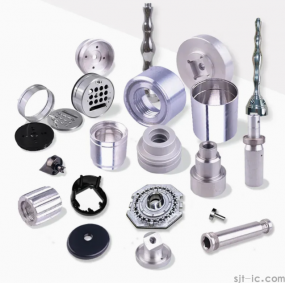
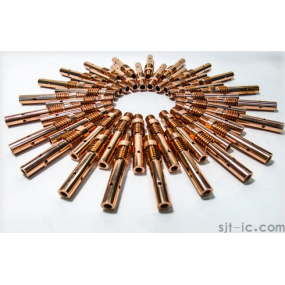
If you’re sourcing precision aluminum components, one question inevitably shapes your budget: “How much does it cost to CNC Machining aluminum parts?” The honest answer is that it’s never a single number. In real-world manufacturing, finished aluminum parts typically range from 30to500 per piece, with machine time costing between 0.50and3.00 per minute. But the final price on your quote is the result of a delicate interplay between material grade, part complexity, tolerance demands, and order volume. Grasping these levers is what separates buyers who overpay from those who get reliable quality at a fair cost. In this guide, we break down the entire cost structure of aluminum CNC machining, drawn from years of hands-on shop floor experience, and explain how companies like EMAR help you achieve precision without waste.
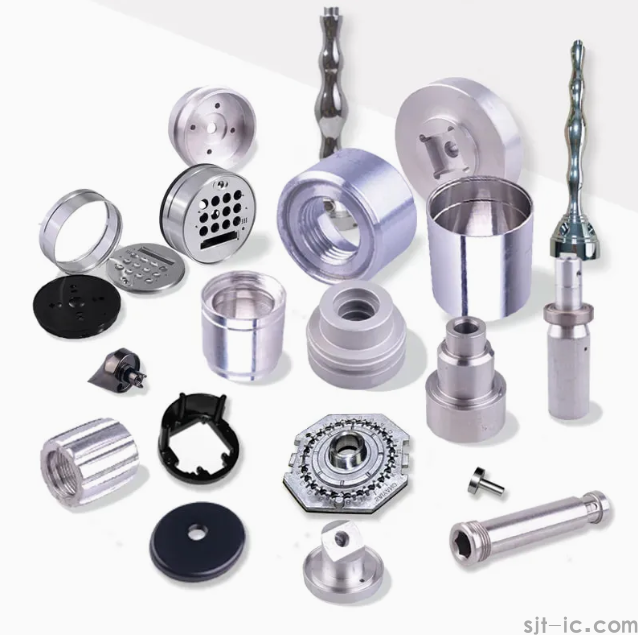
Why Aluminum CNC Machining Is a Cost-Effective Choice
Before diving into numbers, it’s worth understanding why aluminum remains the go-to metal for CNC work. Aluminum is a subtractive manufacturing darling because it can be cut three to four times faster than steel and up to seven times faster than titanium. Its low hardness means cutting forces are only about 30% of what steel demands, which reduces spindle load, energy consumption, and fixture complexity. High thermal conductivity—ranging from 80 to 230 W/m·K—pulls heat away from the cutting zone quickly, keeping dimensions stable and extending tool life by 30% to 50% compared with harder alloys. All this translates into a shop rate that’s easier on your wallet: the machining cost per minute for aluminum is routinely lower than for steel, brass, or engineering plastics that require more careful chip control. When you also factor in aluminum’s excellent corrosion resistance, strength-to-weight ratio, and infinite recyclability, it’s clear why it’s the economical backbone of industries from aerospace to consumer electronics.
Breaking Down the Cost of CNC Machining Aluminum
Looking at a typical EMAR quote, you’ll see that the total is never just “material plus labor.” Here’s how the cost components stack up.
Setup and programming: Every job starts with CAM programming, fixture design, tool loading, and first-article inspection. These charge at 50to200 per hour, and while the absolute cost is fixed, its impact on unit price changes dramatically with volume.
Machine time: The biggest slice—commonly 40% to 60% of the total. CNC hourly rates range from 30to150 depending on machine type, capability, and regional overheads. A 3-axis machine might cost 20–20–30 an hour, while a 5-axis center can command 40–60 or more. However, a complex part that would require multiple setups on a 3-axis machine may be finished in a single 5-axis operation, cutting total cycle time by 30% to 50% and often lowering overall cost despite the higher hourly rate.
Raw material: Aluminum stock generally accounts for 15% to 25% of total part cost. Commodity prices for aluminum range from 2to6 per pound, but that tells only part of the story. A standard 6″×6″×1″ block of 6061-T6 costs roughly 25,whilethesamesizedblockof7075−T6runsabout80, and stainless steel 304 would be around $90. Note that you’re typically charged for the entire blank, so clever nesting and minimal rough stock allowances matter.
Post-machining and finishing: Anodizing, sandblasting, polishing, powder coating, or specialized inspection add another 5% to 20%. These steps improve corrosion resistance, aesthetics, and service life, but specifying them only where functionally necessary keeps budgets in check.
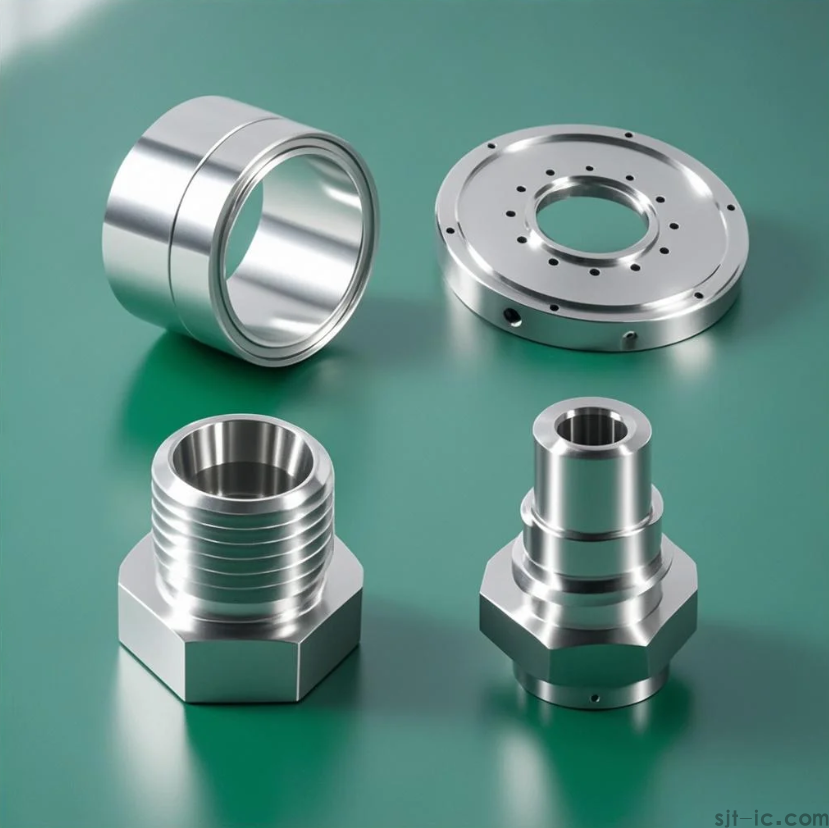
Key Factors That Determine Aluminum CNC Machining Prices
Understanding what moves the needle on cost gives you the power to design smarter and quote more competitively.
Material grade selection: 6061-T6 is the industry workhorse for a reason—it offers a near-perfect balance of strength, corrosion resistance, machinability, and price. High-strength 7075-T6, indispensable for aircraft and high-stress components, increases tool wear and machining time by 15% to 25%, so it should be reserved for applications where its superior mechanical properties are non-negotiable. Other alloys, like 5052 for marine environments or 2024 for fatigue-critical parts, each sit at a different point on the cost-performance curve.
Part complexity and design features: Complexity often claims 40% to 60% of the total cost. Thin walls below 0.8 mm can spike the part price by 40% to 70% because they demand slow feeds, special tooling, and run a high risk of vibration. Deep pockets with a depth exceeding three to four times the tool diameter can add 30% to 60%. Sharp internal corners needing tiny end mills, multiple surface finish callouts, or intricate 3D contours all increase tool changes, programming effort, and cycle time.
Tolerances and surface finish: Standard tolerances of ±0.005″ are achieved during normal machining routines. When you call out ±0.001″ on a feature, expect that feature’s cost to grow by 30% to 50%; ultra-precision tolerances below ±0.0005″ can double or triple the cost. Similarly, moving from a standard machined finish (63–125 RMS) to a fine finish below 32 RMS can add 15% to 40% because of extra finishing passes and possibly secondary polishing.
Production volume: The most powerful lever you have. On a prototype run of one to five parts, setup and programming can eat up 60% to 80% of the total bill. By the time you reach 100+ units, that same setup overhead shrinks to 5% to 15% of the unit cost. In practice, moving from a single prototype to a 50-part batch can drop the per-unit price by 40% to 70%, even without changing material or design. Larger volumes also unlock bulk material discounts, multi-part fixtures, and dedicated tooling that slash cycle times further.
Wall thickness considerations: Standard design should keep minimum wall thickness above 0.5 mm to 0.8 mm, depending on the alloy. Harder alloys like 7075-T6 can reliably go down to 0.5 mm, while softer 5052 might need at least 1.0 mm to resist cutting forces and vibration. Maximum thickness is usually limited not by material but by machine capacity, with many shops easily handling blocks over 12 inches thick. Staying within these limits from the early design phase cuts scrap rates and remachining risk by 20% to 30%.
How to Reduce Aluminum CNC Machining Costs Without Sacrificing Quality
Cost reduction in CNC machining isn’t about cutting corners—it’s about design intelligence. Here are field-proven strategies we apply daily at EMAR.
Optimize part design for machinability: This single step can slash total cost by 30% to 50%. Use standard drill and tap sizes, increase internal corner radii to match common end mill diameters, avoid unnecessary deep pockets, and design parts that can be machined in as few setups as possible. A part that flips from six sides down to three removes hours of handling and fixture time.
Apply tight tolerances sparingly: In most designs, only 20% to 30% of features—mating surfaces, bearing seats, alignment bores—truly need precision. Keeping the rest at standard tolerances maintains function while avoiding costly extra passes and inspection.
Choose the right aluminum alloy from the start: Stick with 6061-T6 unless advanced properties are required. The material is widely available, machines beautifully with common carbide tooling, and keeps both material and tooling expenses low.
Plan batch sizes strategically: Consolidate orders to hit quantities of 50 to 100 parts rather than ordering in frequent tiny lots. The amortization of setup costs and the ability to run optimized toolpaths will directly improve your per-part price.
Design with setups in mind: Eliminating just one setup can reduce machining cost by 10% to 20%. Engage with EMAR’s engineers early; a design for manufacturability (DFM) review can highlight those savings before the first chip is cut.
Prototype vs. Production: The Volume Effect on Unit Price
If you’ve ever been surprised by the high cost of a single prototype, the culprit was almost certainly setup cost concentration. For one- to five-piece orders, setup and programming can represent 60% to 80% of the total. As volumes climb through pilot runs (6–25 pcs) to full production (100+ pcs), that share drops below 10%, and per-unit costs can fall to just 25% to 40% of the prototype price. This isn’t merely arithmetic—it’s also because higher volumes justify dedicated fixtures, fully cycle-optimized toolpaths, and the purchase of material in full lengths rather than pre-cut blanks. When you’re planning a product launch, it often makes economic sense to bundle early-stage prototypes with an order that includes a moderate pre-production batch.
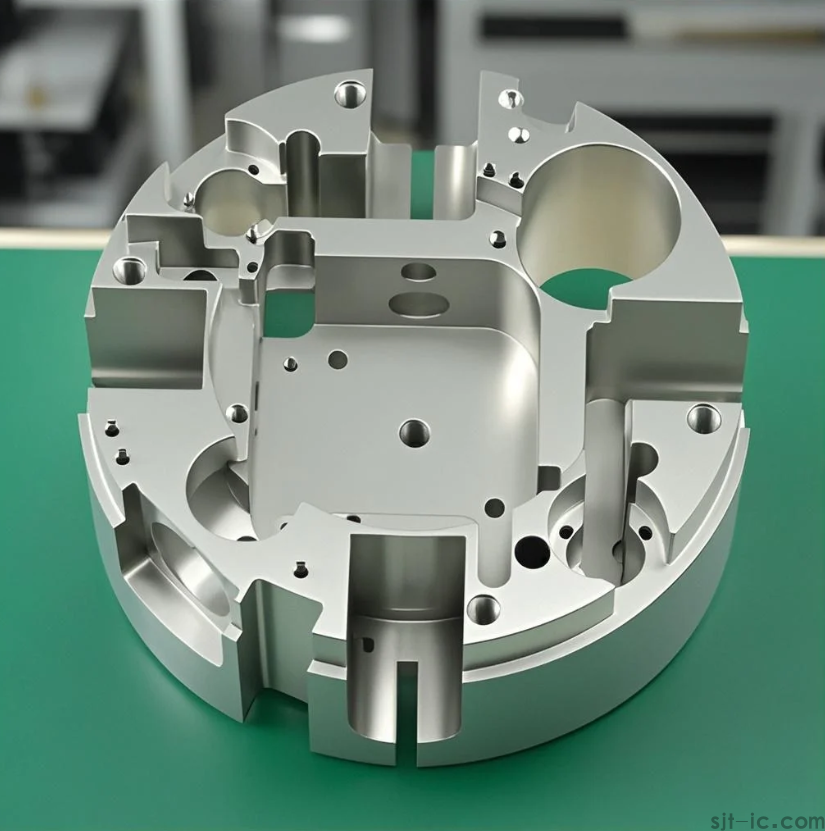
Aluminum vs. Other Materials: Is Machining Aluminum Really Cheaper?
Yes—and the margin is decisive. Aluminum can be cut at 500 to 1,000 surface feet per minute, while steel typically runs at 100 to 300 SFM, and titanium even slower. Tool wear on aluminum is two to three times lower than on steel, and fixturing is simpler because cutting forces are so much lighter. When you account for cycle time, tooling, and energy, machining steel can be 2.5 to 3.5 times more expensive per part, and titanium can climb to five to seven times the cost. Even when raw aluminum stock is costlier than some plastics per pound, the superior stability, surface finish, and ability to hold tight tolerances without creep frequently make aluminum the more economical choice in total-cost-of-ownership terms.
Why EMAR Is Your Trusted Partner for Aluminum CNC Machining
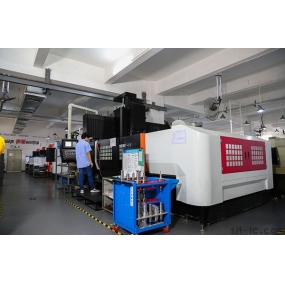
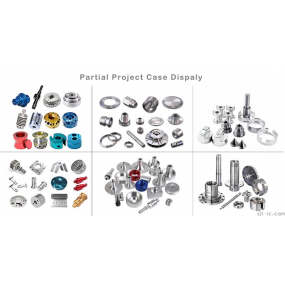
At EMAR, we’ve spent over 15 years refining the art and science of aluminum CNC machining. From 3-axis milling and turning to advanced 5-axis machining, waterjet cutting, and EDM, our floor is equipped to handle everything from quick-turn prototypes to full production runs with absolute consistency. We offer a full spectrum of secondary operations—anodizing, powder coating, polishing, and assembly—so you receive finished parts ready for integration. With no minimum order quantity, a 100% quality guarantee, and competitive global shipping, we make it easy for purchasers to get the precision they need without the supply chain headaches.
Ready to get an accurate quote for your next project? Send your 3D CAD file or drawing to sales8@sjt-ic.com and our engineering team will provide a detailed quotation and a free DFM analysis, typically within a few hours. You can also reach us directly at +86 18664342076. Let’s discuss how we can bring your aluminum components to life at the right cost, with zero compromise on quality.
Frequently Asked Questions
What is the cheapest aluminum alloy for CNC machining?
6061-T6 is the most cost-effective and widely available alloy, offering an excellent balance of machinability, strength, and price.
How does surface finish affect aluminum machining cost?
Specifying a fine finish (below 32 RMS) can increase the part price by 15% to 40% due to slower speeds, extra passes, and possible secondary operations. Keep finishes standard unless a specific functional or cosmetic requirement exists.
Does hole depth influence cost?
Absolutely. Holes deeper than three times the diameter require peck drilling, specialized tooling, and longer cycle times. Exceeding a five-to-one depth-to-diameter ratio can increase feature cost by 50% to 100%.
Is CNC machining suitable for high-volume aluminum production?
Yes. With optimized toolpaths, multi-part fixtures, and bulk material procurement, CNC machining delivers excellent repeatability and unit cost reduction in volumes of hundreds or thousands of parts.
Conclusion
The cost to CNC machining aluminum parts sits at the intersection of design, material, tolerance, and volume. By leveraging aluminum’s exceptional machinability, applying precision only where it counts, and structuring batch sizes thoughtfully, buyers can achieve 20% to 50% cost reductions without sacrificing an ounce of performance. At EMAR, we combine deep process knowledge with advanced equipment to help you navigate these choices, delivering precision aluminum parts on time and on budget. Get in touch today to see how we can optimize your next project.