Spanish
 Arabic
 French
 Portuguese
 Belarusian
 Japanese
 Russian
 Malay
Malay Icelandic
 Bulgarian
 Azerbaijani
 Estonian
 Irish
Irish Polish
 Persian
 Boolean
 Danish
 German
 Filipino
 Finnish
 Korean
 Dutch
Dutch Galician
 Catalan
 Czech
Czech Croatian
 Latin
Latin Latvian
 Romanian
 Maltese
 Macedonian
 Norwegian
 Swedish
 Serbian
 Slovak
 Slovenian
 Swahili
 Thai
Thai Turkish
 Welsh
Welsh Urdu
Urdu Ukrainian
 Greek
Greek Hungarian
 Italian
 Yiddish
 Indonesian
 Vietnamese
 Haitian Creole
 Spanish Basque

HTML
How can the precision of sheet metal chassis processing be improved?
Precision is one of the most important requirements in sheet metal chassis processing. A chassis is not only a protective shell for electronic, industrial, or medical equipment. It also supports internal components, controls airflow, provides electrical protection, and ensures the entire device works safely and reliably.
Many manufacturers and buyers ask: How can the precision of sheet metal chassis processing be improved? The answer involves several factors, including material selection, machine performance, operator skills, processing techniques, and strict quality control. By improving each stage of production, manufacturers can achieve more accurate dimensions, better component fit, and more stable product performance.
This article explains the key methods for improving sheet metal chassis precision, including the importance of precision in sheet metal chassis processing, key factors affecting sheet metal chassis precision, techniques for improving sheet metal chassis precision, and quality control for sheet metal chassis precision.
Why Precision Matters in Sheet Metal Chassis Processing
The precision of a sheet metal chassis directly affects the quality and performance of the final equipment. A chassis with inaccurate dimensions may create problems during assembly, reduce product reliability, and increase production costs.
Ensuring Correct Component Fit-up
One major reason precision is important is that it ensures all internal components fit correctly. Modern equipment often contains many parts, such as circuit boards, power supplies, cooling systems, and connectors. These components require accurate mounting positions and openings.
For example, in a computer server chassis, even a small dimensional error can cause problems when installing motherboards, hard drives, or power modules. Incorrect mounting holes may create mechanical stress, while poor alignment may result in unstable electrical connections.
High-precision sheet metal chassis processing helps manufacturers maintain correct dimensions, allowing components to be installed smoothly and improving the overall reliability of the finished product.
Supporting Electrical and Thermal Management
Precision also plays an important role in electrical insulation and heat management. Many electronic devices require accurate openings for fans, heat sinks, cables, and connectors.
For example, if a heat sink mounting hole is slightly misplaced, the heat sink may not contact the heat-generating component properly. This can reduce cooling efficiency and cause overheating. Similarly, inaccurate cable openings can make wiring difficult and increase the risk of electrical problems.
Therefore, maintaining precision helps equipment achieve better thermal performance, safer electrical layouts, and longer service life.
Key Factors Affecting Sheet Metal Chassis Precision
Improving precision requires understanding the factors that influence processing results. The following elements have a major impact on sheet metal chassis accuracy.
1. Material Quality
The quality of sheet metal material is the foundation of precision manufacturing. Different materials have different levels of strength, flexibility, and deformation resistance.
Using low-quality sheet metal with uneven thickness can create problems during cutting and bending. For example, when a sheet has inconsistent thickness, the bending angle may vary from one area to another, causing inaccurate final dimensions.
High-quality materials, such as aluminum or steel sheets with uniform thickness and stable mechanical properties, help manufacturers achieve more consistent results.
Practical example: When producing a chassis with multiple bending points, a uniform metal sheet allows each bend to maintain the designed angle, reducing adjustment work and material waste.
2. Operator Experience and Technical Skills
Although modern machines provide high automation, operator skills remain important. Experienced technicians understand how to set machine parameters, adjust processing conditions, and solve unexpected issues.
For example, when producing a complex chassis with many holes and bends, a skilled operator can identify potential deformation risks and make adjustments before defects occur.
Professional operation improves production consistency and reduces errors caused by incorrect machine settings.
3. Equipment Condition and Maintenance
The condition of manufacturing equipment directly affects accuracy. Machines that are not properly maintained may produce unstable cutting, inaccurate bending angles, or inconsistent hole positions.
Regular maintenance, calibration, and inspection help ensure that machines continue operating within required tolerances.
Techniques for Improving Sheet Metal Chassis Precision
Manufacturers use several advanced methods to improve processing accuracy. These techniques help achieve tighter tolerances and more stable production results.
CNC Machining and Automated Processing
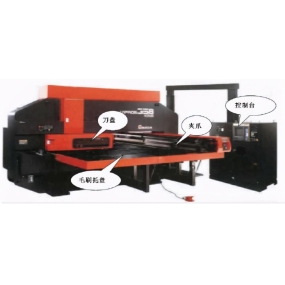
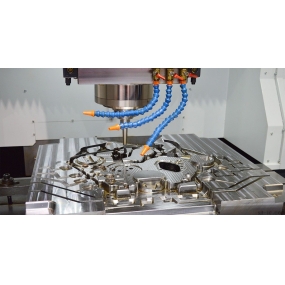
CNC machining is one of the most effective techniques for improving sheet metal chassis precision. CNC equipment uses computer-controlled programs to perform cutting, punching, and bending operations with high accuracy.
Compared with manual processing, CNC machines provide better repeatability. The same program can produce many identical parts with consistent dimensions.
For example, CNC punching machines can create mounting holes with accurate positions, while CNC bending machines can maintain precise bending angles for complex chassis structures.
In industries such as medical equipment and high-end electronics, CNC processing helps manufacturers produce chassis parts that meet strict tolerance requirements.
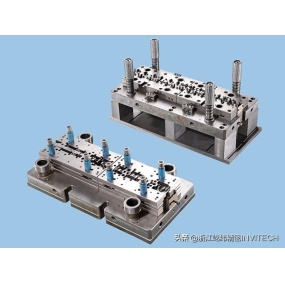
Optimized Fixture Design and Usage
Fixtures are tools used to hold sheet metal parts in a fixed position during processing. A well-designed fixture prevents movement and ensures consistent results.
For example, during the bending process, a customized fixture can hold the metal sheet firmly. This prevents shifting and helps maintain accurate bend angles across multiple production batches.
Good fixture design improves efficiency, reduces human errors, and ensures every chassis has the same level of precision.
Improved Process Planning
Proper production planning also affects precision. Engineers need to select the correct processing order to reduce deformation and maintain dimensional accuracy.
For example, completing major cutting operations before delicate bending processes can reduce the risk of damage and help maintain the original design dimensions.
Quality Control for Sheet Metal Chassis Precision
Even with advanced equipment and skilled workers, strict inspection is necessary. Effective quality control for sheet metal chassis precision ensures that every product meets customer requirements.
In-process Inspection
In-process inspection means checking products during manufacturing instead of waiting until the end. This allows problems to be discovered and corrected quickly.
Operators may check:
- Cutting dimensions
- Bending angles
- Hole positions
- Surface quality
- Material thickness
For example, after a bending operation, technicians can use measuring tools to confirm whether the angle meets the design requirements. If an error is found early, adjustments can be made before producing more defective parts.
Final Inspection
Final inspection provides a complete evaluation before delivery. It usually includes checking overall dimensions, flatness, assembly accuracy, and appearance quality.
For high-precision applications, manufacturers may use Coordinate Measuring Machines (CMMs). These machines can measure complex shapes and confirm whether every critical dimension is within tolerance.
For example, aerospace and industrial equipment chassis often require extremely strict inspection because even small errors can affect system performance.
Equipment Influence on Sheet Metal Chassis Precision
The choice of equipment has a direct influence on processing accuracy. Advanced machines allow manufacturers to achieve higher precision and better production stability.
Advanced Cutting Equipment
Modern cutting equipment, such as fiber laser cutting machines, improves the accuracy of sheet metal processing. These machines can create smooth edges, accurate shapes, and complex openings with minimal deformation.
For example, when producing a chassis with many ventilation holes and special-shaped cutouts, fiber laser cutting technology can maintain clean edges and precise dimensions.
Advanced cutting equipment reduces secondary processing requirements and improves production efficiency.
Calibrated Bending Machines
Bending accuracy is essential for chassis assembly. If bending machines are not correctly calibrated, the final chassis may have incorrect angles or poor alignment.
Regular calibration ensures that bending machines produce consistent results. This is especially important for chassis structures with multiple bends that must fit together accurately.
EMAR's Expertise in High-Precision Sheet Metal Chassis Processing
Improving sheet metal chassis precision requires advanced technology, experienced engineers, and a complete quality management system. EMAR has professional experience in high-precision sheet metal chassis processing and provides reliable manufacturing solutions for customers with demanding accuracy requirements.
Advanced Processing Capabilities
EMAR applies advanced processing methods, including CNC machining, precision cutting, and optimized fixture solutions, to improve manufacturing accuracy and consistency.
By combining modern equipment with skilled technicians, EMAR can produce sheet metal chassis that meet strict dimensional requirements for industries such as electronics, industrial control, and specialized equipment.
Strict Quality Management
EMAR focuses on quality control throughout the entire production process. From incoming material inspection to in-process measurement and final testing, each step is carefully managed.
This approach helps ensure that every chassis delivered to customers has reliable precision, stable performance, and consistent quality.
Conclusion
So, How can the precision of sheet metal chassis processing be improved? The key is to control every stage of manufacturing. High-quality materials, skilled operators, advanced CNC equipment, proper fixtures, accurate machines, and strict inspection processes all contribute to better precision.
For manufacturers that need reliable and high-accuracy sheet metal chassis, choosing an experienced partner with strong processing capabilities is essential. Through advanced technology and professional quality control, companies like EMAR help customers achieve precise, durable, and dependable sheet metal chassis solutions.