Spanish
 Arabic
 French
 Portuguese
 Belarusian
 Japanese
 Russian
 Malay
Malay Icelandic
 Bulgarian
 Azerbaijani
 Estonian
 Irish
Irish Polish
 Persian
 Boolean
 Danish
 German
 Filipino
 Finnish
 Korean
 Dutch
Dutch Galician
 Catalan
 Czech
Czech Croatian
 Latin
Latin Latvian
 Romanian
 Maltese
 Macedonian
 Norwegian
 Swedish
 Serbian
 Slovak
 Slovenian
 Swahili
 Thai
Thai Turkish
 Welsh
Welsh Urdu
Urdu Ukrainian
 Greek
Greek Hungarian
 Italian
 Yiddish
 Indonesian
 Vietnamese
 Haitian Creole
 Spanish Basque

HTML
CNC Numerical Control Machining Center Precision Execution Standards and Definitions
In modern manufacturing, precision is one of the most important factors that determines the quality, reliability, and performance of machined parts. The topic of CNC numerical control machining center precision execution standards and definitions helps manufacturers, engineers, and buyers understand how CNC machines achieve accurate results and why strict standards are necessary.
A CNC numerical control machining center uses computer-controlled movements to cut, drill, mill, and shape materials. However, simply using an automated machine does not guarantee perfect results. The machine must meet specific precision requirements to ensure that every produced part matches the design drawings and works correctly in the final application.
Understanding accuracy standards in CNC Machining, precision measurement methods, and related technical terms can help companies choose reliable machining partners, reduce production problems, and improve product quality.
1. The Basics of Precision in CNC Machining
Precision in a CNC machining center refers to the machine’s ability to produce parts according to the required size, shape, and position specifications. A high-precision CNC machine can repeatedly create components with very small differences between the actual part and the original design.
For example, a manufacturer producing aerospace brackets may require holes to be located within a very small tolerance range. If the holes are slightly misplaced, the bracket may not fit correctly during assembly. High machining precision ensures that every component performs as expected.
The importance of precision is not limited to appearance. It directly affects product safety, assembly efficiency, operating performance, and production costs. This is why manufacturers pay close attention to the importance of precision in CNC machining centers.
2. Accuracy Standards in CNC Machining
CNC machining accuracy standards define how much difference is acceptable between the programmed value and the actual machining result. These standards help manufacturers evaluate machine performance and maintain consistent production quality.
Positioning Accuracy
Positioning accuracy describes how closely a CNC machining center can move the cutting tool or workpiece to the programmed location.
For example, when manufacturing a printed circuit board (PCB), drilling positions must be extremely accurate because electronic components need to be installed in exact locations. If a CNC machining center has a positioning accuracy of ±0.05mm, the actual drilling position should stay within 0.05mm of the programmed position.
High positioning accuracy is especially important in industries such as:
- Electronics manufacturing, where small errors can affect circuit performance.
- Aerospace manufacturing, where component alignment affects safety and reliability.
- Precision equipment manufacturing, where parts must fit together perfectly.
Repeatability Accuracy
Repeatability accuracy refers to the ability of a CNC machine to return to the same position repeatedly during continuous production.
For example, when producing thousands of small metal screws, the CNC machining center must create each screw with almost identical dimensions. If the repeatability accuracy is ±0.02mm, each production cycle should maintain key dimensions within this range.
Good repeatability is essential for industries that require interchangeable parts. The automotive industry is a typical example because thousands of identical components must be assembled efficiently without manual adjustment.
3. Why Precision Matters in CNC Machining Centers
Ensuring the Functionality of Final Products
Precision machining directly affects whether a final product works correctly. A small dimensional error in a critical component can create serious performance problems.
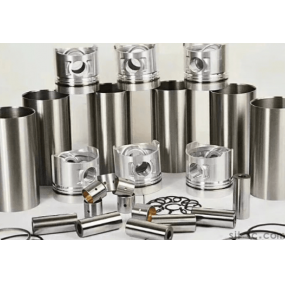
For example, engine components such as pistons and cylinder heads require precise dimensions. If a piston diameter is outside the required tolerance range, it may cause poor sealing, reduced engine power, or increased wear.
High precision helps manufacturers produce safer, more reliable, and longer-lasting products.
Improving Assembly and Fit-up Quality
Many industrial products are made from multiple CNC-machined parts. These components must fit together accurately during assembly.
For example, a complex mechanical system may contain dozens or hundreds of precision-machined parts. If one part has incorrect dimensions, assembly may become difficult, increasing labor time and production costs.
Maintaining strict CNC precision standards allows manufacturers to achieve smoother assembly processes and reduce the risk of product failures.
4. Measurement of CNC Machining Precision
The measurement of CNC machining precision is necessary to confirm whether a machining center meets required standards. Manufacturers use advanced inspection methods to evaluate accuracy and maintain quality.
Using Coordinate Measuring Machines (CMMs)
A Coordinate Measuring Machine (CMM) is one of the most common tools for checking CNC machining accuracy. It uses precise sensors to measure the size, position, and geometry of manufactured parts.
For example, a CMM can inspect a machined metal block and measure its length, width, height, hole positions, and surface features. Some advanced CMM systems can achieve measurement accuracy close to ±0.001mm.
CMM inspection provides detailed data that helps manufacturers confirm whether parts meet engineering requirements.
Statistical Process Control (SPC)
Statistical Process Control (SPC) is a quality management method that uses production data to monitor machining stability.
For example, during the production of precision shafts, SPC can track diameter measurements from hundreds of parts. If the data shows that the diameter is gradually increasing, engineers can adjust machine settings before defective parts are produced.
SPC helps companies prevent quality problems instead of only discovering defects after production is completed.
5. Impact of Precision Standards on Manufacturing
The impact of precision standards on manufacturing can be seen across many industries. Strict precision requirements improve product performance, safety, and customer confidence.
Aerospace Industry
The aerospace industry requires extremely high machining precision because aircraft components must operate safely under demanding conditions.
For example, turbine blades in aircraft engines require accurate shapes and dimensions. Even small deviations may influence airflow, engine efficiency, and operating safety.
By following strict CNC precision standards, aerospace manufacturers can produce components that meet safety regulations and performance requirements.
Medical Device Manufacturing
Precision is also critical in medical manufacturing. Components such as implants and surgical instruments must match strict design specifications.
For example, a hip implant requires accurate dimensions to ensure proper fitting inside the patient’s body. Poor precision may lead to discomfort, reduced performance, or medical complications.
High-precision CNC machining supports the production of safer and more reliable medical products.
6. Precision-related Definitions in CNC Machining
Understanding precision-related definitions in CNC machining helps engineers communicate requirements clearly and avoid misunderstandings during production.
Tolerance
Tolerance is the acceptable range of variation from a specified dimension.
For example, if a shaft diameter is designed to be 20mm with a tolerance of ±0.03mm, the actual shaft diameter can be between 19.97mm and 20.03mm.
Tolerance defines the precision level required for each feature of a machined part. Tighter tolerances usually require more advanced equipment, careful process control, and more detailed inspection.
Roundness
Roundness describes how closely a circular part matches a perfect circle.
For example, bearings require excellent roundness because uneven circular surfaces can increase friction and reduce service life. High roundness allows rotating parts to operate smoothly.
Surface Roughness
Surface roughness refers to the small irregularities on a machined surface. A smoother surface can reduce friction, improve appearance, and increase part durability.
Different industries have different surface finish requirements depending on how the part will be used.
7. EMAR’s Compliance with High-Precision CNC Machining Standards
Meeting CNC precision requirements requires advanced equipment, experienced technicians, and strict quality control systems. EMAR focuses on providing reliable precision machining solutions by following high-precision CNC machining standards throughout the production process.
EMAR’s CNC machining centers are managed with careful calibration procedures and precision inspection methods to maintain stable positioning accuracy and repeatability. This approach helps ensure that machined components meet customer specifications for demanding applications.
For industries requiring strict dimensional control, such as semiconductor equipment, optical devices, and advanced mechanical components, EMAR applies professional machining processes and inspection methods to support consistent quality.
Reliable Precision Machining Services
EMAR provides precision machining services for both custom small-batch projects and larger production requirements. By combining CNC technology, measurement equipment, and quality management practices, EMAR helps customers achieve dependable machining results.
When manufacturers need components with strict tolerances and stable performance, choosing a machining partner that understands CNC numerical control machining center precision execution standards and definitions can reduce risks and improve production efficiency.
Conclusion
CNC machining precision standards are the foundation of modern manufacturing quality. Understanding positioning accuracy, repeatability accuracy, measurement methods, and key definitions such as tolerance and roundness helps companies make better decisions about machining processes.
From aerospace components to medical devices and automotive parts, precision directly influences product performance, safety, and reliability. By following strict CNC machining standards and applying advanced quality control methods, manufacturers can deliver parts that meet increasingly demanding industrial requirements.