Spanish
 Arabic
 French
 Portuguese
 Belarusian
 Japanese
 Russian
 Malay
Malay Icelandic
 Bulgarian
 Azerbaijani
 Estonian
 Irish
Irish Polish
 Persian
 Boolean
 Danish
 German
 Filipino
 Finnish
 Korean
 Dutch
Dutch Galician
 Catalan
 Czech
Czech Croatian
 Latin
Latin Latvian
 Romanian
 Maltese
 Macedonian
 Norwegian
 Swedish
 Serbian
 Slovak
 Slovenian
 Swahili
 Thai
Thai Turkish
 Welsh
Welsh Urdu
Urdu Ukrainian
 Greek
Greek Hungarian
 Italian
 Yiddish
 Indonesian
 Vietnamese
 Haitian Creole
 Spanish Basque

HTML
Inventory of Common Industry Terms in the Field of Machining to See if There Is Anything You Don't Know
Machining is a professional field with many technical terms. For beginners, engineers, buyers, and even experienced professionals, unfamiliar words can sometimes create communication problems. A misunderstanding of a machining term may lead to wrong process selection, incorrect drawings, unsuitable tools, or production delays.
This Inventory of common industry terms in the field of machining to see if there is anything you don't know helps explain important machining vocabulary in simple English. Understanding the meanings of machining industry terms is not only useful for learning but also improves communication between customers, engineers, and manufacturers.
In modern manufacturing, clear technical communication supports accurate process planning, better quality control, and efficient production. Companies like EMAR understand the importance of machining language and apply this knowledge throughout their machining operations to provide reliable manufacturing solutions.
Why Understanding Machining Industry Terms Is Important
Machining involves many processes, machines, tools, and quality requirements. Without a clear understanding of the terms, it can be difficult to choose the correct machining method or discuss a project with a supplier.
- Better communication: Engineers and customers can describe requirements more accurately.
- Correct process planning: Knowing technical terms helps select suitable machines, tools, and parameters.
- Higher machining quality: Clear understanding reduces mistakes during production.
- Faster problem solving: Teams can quickly identify and solve manufacturing issues.
For example, when a customer requests a part with a specific tolerance, surface finish, and machining method, professionals who understand these terms can immediately develop a suitable production plan.
Meanings of Machining Industry Terms
Machine Tools and Equipment Terms
CNC (Computer Numerical Control)
Explanation: CNC refers to a computer-based control system that directs the movement of machine tools. Instead of manually operating the machine, operators use programmed instructions to control cutting movements.
For example, in a CNC milling machine, a computer program controls the movement of the milling cutter to produce complex parts such as automotive components, medical parts, and precision mechanical structures.
Importance: CNC technology has changed modern machining by improving accuracy, automation, and production efficiency. Understanding CNC is essential because most advanced machining operations today rely on computer-controlled equipment.
Lathe
Explanation: A lathe is a machine that rotates a workpiece while a cutting tool removes material from the surface. It is commonly used to create round or cylindrical parts.
For example, when producing a metal shaft, bolt, or cylindrical mechanical component, a lathe can reduce the material diameter and create a smooth surface.
Importance: Lathes are basic but essential machines in machining. They are widely used in industries such as automotive, aerospace, machinery, and general manufacturing.
Cutting Tool Terms and Their Importance
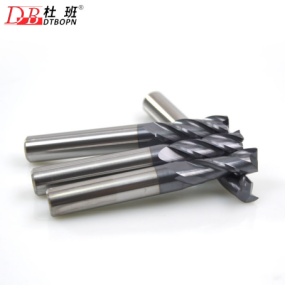
End Mill
Explanation: An end mill is a cutting tool with cutting edges on both the end and sides. It is mainly used in milling operations to create slots, pockets, contours, and complex shapes.
For example, when manufacturing a metal housing for electronic equipment, an end mill can create accurate openings and detailed shapes in aluminum or steel.
Importance: End mills are flexible tools that allow manufacturers to produce many different shapes. Understanding end mill types helps engineers choose the correct tool for each material and machining task.
Drill Bit
Explanation: A drill bit is a cutting tool used to create holes in different materials. It can process metals, plastics, wood, and other materials.
For example, in a machine frame assembly, drill bits are used to create holes for screws and bolts so different components can be connected correctly.
Importance: Drill bits are essential for creating accurate holes. The correct drill bit selection affects hole quality, production speed, and tool life.
Significance of Machining Terms in Practice
Chuck
Explanation: A chuck is a device used to hold a workpiece or tool firmly during machining. It prevents movement and keeps the part stable.
For example, a three-jaw chuck on a lathe can hold a round metal bar securely while the cutting tool shapes it into a precise shaft.
Importance: A stable workpiece is necessary for accurate machining. A properly selected chuck improves safety and dimensional accuracy.
Fixture
Explanation: A fixture is a specially designed holding device used to position and secure a workpiece during production.
For example, when producing hundreds of identical automotive parts, a fixture ensures every part is placed in the same position before machining.
Importance: Fixtures improve repeatability, reduce setup time, and help maintain consistent product quality during mass production.
Feed Rate
Explanation: Feed rate describes how quickly the cutting tool moves through the material. It is one of the most important machining parameters.
For example, aluminum may allow a faster feed rate, while hardened steel usually requires a slower feed rate to protect the tool and maintain quality.
Importance: Correct feed rate selection influences machining efficiency, surface quality, and cutting tool life.
Tolerance
Explanation: Tolerance is the acceptable difference between the designed dimension and the actual manufactured dimension.
For example, aerospace parts often require very tight tolerances because even a small size difference may affect the performance and safety of the final product.
Importance: Understanding tolerance is critical for producing parts that fit correctly and meet industry standards.
Usage of Machine Tools Terms in Machining
Milling Machine
Explanation: A milling machine uses a rotating cutting tool to remove material from a workpiece. It can create flat surfaces, grooves, holes, and complex 3D shapes.
For example, when manufacturing a plastic injection mold, a milling machine can create detailed mold cavities with high accuracy.
Importance: Milling machines are among the most widely used machining tools because they can handle many different manufacturing tasks.
Spindle
Explanation: The spindle is the rotating part of a machine that holds and drives a cutting tool or workpiece.
For example, in a CNC Machining center, the spindle rotates the cutting tool at high speed to remove material from a metal block.
Importance: Spindle speed, stability, and accuracy directly affect machining performance and final product quality.
Importance of Cutting Tool Terms
Ball-End Mill
Explanation: A ball-end mill has a rounded cutting end and is mainly used for producing curved surfaces and 3D shapes.
For example, in automotive mold manufacturing, a ball-end mill can create smooth curved surfaces required for vehicle panels and complex designs.
Importance: Ball-end mills are important for precision contour machining and high-quality surface finishes.
Thread Tool
Explanation: Thread tools, including taps and dies, are used to create screw threads. Taps create internal threads, while dies create external threads.
For example, during mechanical assembly, threaded holes and bolts allow different components to connect securely.
Importance: Thread tools ensure reliable connections and are widely used in machinery, automotive, construction, and many other industries.
Application of Processing Technique Terms
Turning
Explanation: Turning is a machining process where the workpiece rotates while a cutting tool removes material.
For example, producing a metal rod for a machine component often requires turning to achieve the correct diameter and surface finish.
Importance: Turning is one of the most fundamental machining processes for producing cylindrical parts.
Grinding
Explanation: Grinding uses an abrasive wheel to remove small amounts of material and achieve very high precision and smooth surfaces.
For example, precision mechanical parts and optical components often require grinding to reach strict accuracy requirements.
Importance: Grinding is essential when normal cutting processes cannot achieve the required surface quality or precision.
How EMAR Applies Machining Terms in Real Production
EMAR understands that machining success depends not only on advanced equipment but also on accurate technical communication. The company's machining team has strong knowledge of machining terminology and applies these concepts throughout production planning, processing, and quality inspection.
For example, when manufacturing high-precision components, EMAR engineers use correct terms related to CNC machining, cutting tools, tolerances, and processing techniques. This helps the team select suitable equipment, optimize machining parameters, and deliver reliable parts.
Benefits for customers include:
- Clear communication during project discussions.
- More accurate machining process planning.
- Better product quality and consistency.
- Professional technical support when selecting machining solutions.
When customers are unsure about which machining method, tool, or process is suitable for their project, EMAR can provide technical guidance based on practical machining experience.
By combining technical knowledge with manufacturing capability, EMAR helps customers turn designs into high-quality machined products efficiently.
Conclusion
Learning machining terminology is an important step for anyone involved in manufacturing. Terms related to machines, tools, parameters, and processing methods are not just technical words; they directly influence communication, production efficiency, and product quality.
This Inventory of common industry terms in the field of machining to see if there is anything you don't know provides a practical overview of important concepts. Understanding the significance of machining terms in practice, the usage of machine tools terms in machining, the importance of cutting tool terms, and the application of processing technique terms can help businesses make better manufacturing decisions.
With professional knowledge and practical machining experience, EMAR continues to apply these concepts to provide customers with accurate, efficient, and dependable machining solutions.