Spanish
 Arabic
 French
 Portuguese
 Belarusian
 Japanese
 Russian
 Malay
Malay Icelandic
 Bulgarian
 Azerbaijani
 Estonian
 Irish
Irish Polish
 Persian
 Boolean
 Danish
 German
 Filipino
 Finnish
 Korean
 Dutch
Dutch Galician
 Catalan
 Czech
Czech Croatian
 Latin
Latin Latvian
 Romanian
 Maltese
 Macedonian
 Norwegian
 Swedish
 Serbian
 Slovak
 Slovenian
 Swahili
 Thai
Thai Turkish
 Welsh
Welsh Urdu
Urdu Ukrainian
 Greek
Greek Hungarian
 Italian
 Yiddish
 Indonesian
 Vietnamese
 Haitian Creole
 Spanish Basque

HTML
Analysis of Two Common Forms of CNC Lathe Processing
CNC lathe processing is an important manufacturing method used to produce accurate mechanical parts for many industries. Understanding the common processing forms helps manufacturers, engineers, and buyers choose the right machining method for different part designs. The two most widely used forms are turning operation in CNC lathe and drilling operation in CNC lathe.
These two operations have different working principles, applications, advantages, and limitations. Choosing the correct process can improve production efficiency, reduce machining costs, and ensure that finished parts meet quality requirements. This article provides an in-depth Analysis of two common forms of CNC lathe processing to help readers better understand how these operations work in real manufacturing environments.
Turning Operation in CNC Lathe
How Turning Works in CNC Lathe Processing
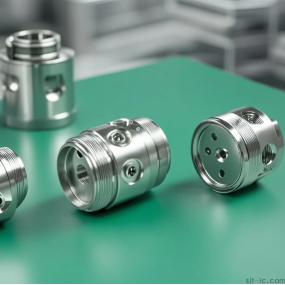
Turning is one of the most basic and widely used CNC lathe operations. During a turning operation in CNC lathe, the workpiece rotates on the spindle while a cutting tool moves along the surface of the material to remove unwanted metal.
The cutting tool can move parallel to the rotation axis or move across the diameter of the workpiece. By controlling the tool movement through CNC programming, manufacturers can create different shapes and sizes with high accuracy.
For example, when manufacturing a cylindrical shaft, the CNC lathe rotates the metal bar while the cutting tool removes material from the outside diameter until the shaft reaches the required size. The same process can also create features such as:
- Tapered surfaces
- Shoulders between different diameters
- Grooves and steps
- Smooth outer surfaces
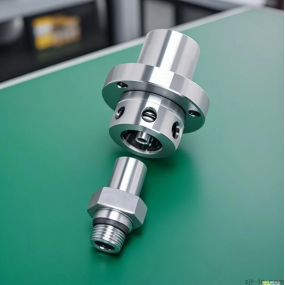
Turning is especially important for producing parts with rotational symmetry, such as shafts, bushings, and rollers. It allows precise control over diameter, length, and surface quality.
Advantages of Turning in CNC Lathe
One of the main advantages of turning in CNC lathe is its high precision. CNC systems can accurately control tool movement, cutting speed, and feed rate, allowing manufacturers to produce parts with very tight tolerances.
For example, aerospace components such as turbine shafts require extremely accurate dimensions because even small errors can affect assembly and performance. CNC turning helps produce these parts with reliable consistency.
Another important advantage is excellent surface finish. By adjusting machining parameters, manufacturers can achieve smoother surfaces and reduce the need for additional polishing or finishing processes.
The main benefits of CNC turning include:
- High dimensional accuracy
- Stable production quality
- Good surface finish
- Ability to produce complex cylindrical features
- Suitable for both small and large production volumes
Applications of Turning in Manufacturing
Turning is widely used in industries that require precision cylindrical parts. In the automotive industry, CNC turning is used to manufacture components such as crankshafts, camshafts, and piston parts.
In machinery manufacturing, turning is commonly used for producing shafts, spindles, and bushings. For example, a conveyor system shaft must have accurate dimensions so that it can rotate smoothly and align correctly with other machine components.
Other common applications include:
- Medical equipment components
- Aerospace mechanical parts
- Industrial machine components
- Hydraulic system parts
Drilling Operation in CNC Lathe
How Drilling Works in CNC Lathe Processing
Drilling is another common CNC lathe operation used to create holes in workpieces. During a drilling operation in CNC lathe, a drill tool is installed in the tool holder and moves into the workpiece to remove material and form a hole.
The CNC system controls important drilling factors, including:
- Hole position
- Hole diameter
- Drilling depth
- Feed speed
- Spindle rotation speed
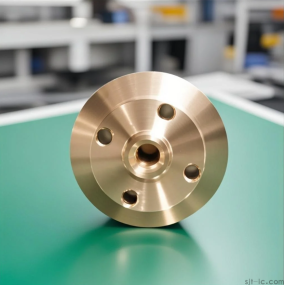
For example, when machining a flange, drilling can create accurate bolt holes that allow the part to be assembled with other components. The CNC program ensures that every hole is placed correctly.
Drilling is essential because many mechanical parts require holes for assembly, fluid channels, electrical wiring, or fastening purposes.
Advantages of Drilling in CNC Lathe
The biggest advantage of CNC drilling is its ability to create accurate holes quickly and consistently. The CNC system controls the drill movement, reducing human error and improving production efficiency.
For example, when manufacturing components that require many identical holes, CNC drilling ensures that every hole has the same diameter and position.
Another benefit is material flexibility. CNC drilling can process different materials, including aluminum, stainless steel, carbon steel, and various alloys, when the correct tools and parameters are selected.
The main advantages of CNC drilling include:
- Fast hole production
- Accurate hole location and size
- Consistent quality during mass production
- Ability to process various materials
- Reduced manual operation requirements
Applications of Drilling in CNC Lathe
The applications of drilling in CNC lathe cover many manufacturing fields. In the automotive industry, drilling is used to create coolant passages in engine blocks and lubrication channels in transmission parts.
In the construction industry, drilling creates holes in metal structures for bolts and connection systems. In electronics manufacturing, precise drilling is required for component installation and connector production.
Typical drilling applications include:
- Automotive engine components
- Electronic equipment parts
- Industrial machine assemblies
- Metal structural components
For example, a drilled coolant hole inside an engine component must have the correct diameter and depth. If the hole size is incorrect, the cooling performance of the engine may be affected.
Comparison Between Turning and Drilling in CNC Lathe
Function and Shape Creation
The main difference in the comparison between turning and drilling in CNC lathe is their purpose. Turning mainly changes the external shape and dimensions of a workpiece, while drilling creates internal holes.
For example, turning can transform a round metal bar into a finished shaft with different diameters and grooves. Drilling cannot create these outer shapes but can add holes needed for assembly or operation.
| Processing Method | Main Function | Typical Parts |
|---|---|---|
| Turning | Creates and modifies external cylindrical surfaces | Shafts, bushings, rollers |
| Drilling | Creates accurate holes inside parts | Flanges, engine parts, connectors |
Tooling and Setup Differences
Turning uses single-point cutting tools designed to remove material from the outside surface of the rotating workpiece. Different turning tools are selected depending on whether the operation involves rough cutting, finishing, grooving, or taper machining.
Drilling uses specialized drill bits designed to penetrate the material and create holes. Proper alignment and feed control are especially important because incorrect setup can cause inaccurate holes or tool damage.
Both operations require professional process planning. The correct tool selection, cutting parameters, and CNC programming directly affect machining quality and production efficiency.
EMAR's Expertise in CNC Lathe Processing
Advanced CNC Equipment and Processing Technology
For manufacturers looking for reliable CNC Machining solutions, EMAR provides professional CNC lathe processing services with advanced equipment and manufacturing experience.
EMAR's CNC lathes are designed to perform both turning and drilling operations with high precision. Modern machine systems support accurate tool movement, efficient tool changes, and stable processing performance for different materials and part designs.
With advanced CNC technology, EMAR can help customers produce components that require precise outer dimensions, accurate holes, and consistent surface quality.
Experienced Machinists and Engineering Support
Successful CNC lathe processing requires more than advanced machines. Skilled machinists and engineers are also essential for achieving reliable results.
EMAR's technical team has experience in optimizing turning and drilling parameters according to part requirements. Engineers can evaluate material selection, tooling methods, cutting conditions, and quality standards to develop suitable machining solutions.
This professional approach helps customers receive high-quality CNC lathe parts with improved accuracy, efficiency, and production stability.
Conclusion
The Analysis of two common forms of CNC lathe processing shows that turning and drilling play different but equally important roles in modern manufacturing. Turning is ideal for creating precise cylindrical surfaces and rotational parts, while drilling is essential for producing accurate holes required for assembly and function.
Understanding the differences, advantages, and applications of these processes helps manufacturers select the correct machining method for their products. With professional equipment and experienced engineering support, companies like EMAR can provide reliable CNC lathe processing solutions for various industrial needs.