Spanish
 Arabic
 French
 Portuguese
 Belarusian
 Japanese
 Russian
 Malay
Malay Icelandic
 Bulgarian
 Azerbaijani
 Estonian
 Irish
Irish Polish
 Persian
 Boolean
 Danish
 German
 Filipino
 Finnish
 Korean
 Dutch
Dutch Galician
 Catalan
 Czech
Czech Croatian
 Latin
Latin Latvian
 Romanian
 Maltese
 Macedonian
 Norwegian
 Swedish
 Serbian
 Slovak
 Slovenian
 Swahili
 Thai
Thai Turkish
 Welsh
Welsh Urdu
Urdu Ukrainian
 Greek
Greek Hungarian
 Italian
 Yiddish
 Indonesian
 Vietnamese
 Haitian Creole
 Spanish Basque

HTML
Shenzhen Machining and You Talk About Numerical Control Milling Machine Processing Precautions
In Shenzhen's highly competitive machining industry, precision, efficiency, and product quality are extremely important. CNC (Computer Numerical Control) milling machine processing is widely used to manufacture mechanical parts, electronic components, automotive parts, and many other products. However, even advanced CNC equipment cannot guarantee perfect results without proper operation methods.
Shenzhen machining and you talk about numerical control milling machine processing precautions means understanding every important step before, during, and after CNC milling. These precautions help manufacturers avoid machining errors, reduce production costs, protect operators, and ensure that finished parts meet customer requirements.
For companies looking for reliable CNC milling services in Shenzhen, professional experience is essential. Companies like EMAR focus on precision machining processes and quality management, helping customers achieve stable and accurate CNC milling results through careful planning and strict production control.
Why CNC Milling Processing Precautions Are Important in Shenzhen Machining
Shenzhen is known for its strong manufacturing supply chain and fast production capability. Many industries require CNC milled parts with tight tolerances and complex structures. A small mistake during CNC milling can cause problems such as incorrect dimensions, poor surface quality, damaged tools, or delayed delivery.
Following correct CNC milling precautions can provide several benefits:
- Improve machining accuracy and product consistency.
- Reduce material waste caused by defective parts.
- Extend the service life of cutting tools and machines.
- Protect operators and create a safer production environment.
- Improve production efficiency and delivery reliability.
Pre-processing Precautions in CNC Milling
1. Check Part Drawings and CNC Programs Carefully
One of the most important pre-processing precautions in CNC milling is checking the part drawing and machining program before production starts.
The part drawing should clearly show all important information, including dimensions, tolerances, surface requirements, and geometric features. If a drawing has unclear dimensions or missing information, the CNC operator may misunderstand the machining requirements.
For example, when producing a custom mechanical component, a missing tolerance requirement on a hole position may cause the finished part to fail during assembly.
The CNC program also needs careful verification. The program controls the movement of the milling machine, including cutting paths, tool positions, and machining speeds. Incorrect coordinate values or wrong cutting paths can damage the workpiece or even cause machine collisions.
A complete drawing and program check can prevent expensive mistakes, reduce rework, and save production time.
2. Choose and Install the Correct Cutting Tools
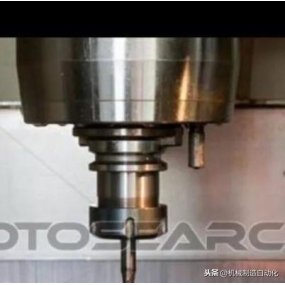
Tool selection directly affects CNC milling quality. Different materials and machining operations require different tools.
For example, aluminum parts often require tools designed for fast cutting and good chip removal, while harder alloy steel materials may need carbide tools with higher wear resistance.
After selecting the correct tool, proper installation is also necessary. A loose or unbalanced tool can create vibration during machining. This vibration may cause:
- Poor surface finish.
- Incorrect part dimensions.
- Faster tool damage.
- Reduced machining stability.
Professional CNC Machining companies carefully check tool installation before production to ensure stable cutting performance.
Operation-stage Precautions in CNC Milling
1. Secure the Workpiece Properly
A stable workpiece is the foundation of accurate CNC milling. During machining, cutting forces can move an improperly fixed part, causing dimensional errors or safety risks.
Operators should select suitable fixtures, such as clamps, vises, or special holding devices, according to the shape and size of the workpiece.
For example, when milling a flat surface on a metal block, the block must be firmly fixed. If it moves slightly during cutting, the surface may become uneven and fail quality inspection.
Proper workpiece fixing improves machining accuracy and prevents accidents caused by moving parts.
2. Monitor Cutting Parameters During Machining
Another important operation-stage precautions in CNC milling is controlling cutting parameters, including cutting speed, feed rate, and cutting depth.
These settings must match the material, tool type, and machining purpose.
For example, when cutting aluminum, an excessively high cutting speed may generate too much heat. This can shorten tool life and reduce surface quality. On the other hand, a very low feed rate may increase machining time and reduce efficiency.
Continuous monitoring helps maintain stable production, improve part quality, and reduce unnecessary tool replacement.
Post-processing Precautions in CNC Milling
1. Clean and Inspect Finished Parts
After CNC milling is complete, parts should be cleaned before inspection. Chips, coolant, and dust can affect measurement accuracy.
Suitable cleaning methods may include air cleaning, solvent cleaning, or other professional cleaning methods depending on the material and application.
After cleaning, technicians should inspect:
- Part dimensions.
- Surface roughness.
- Edge conditions.
- Possible defects such as cracks or burrs.
For example, a small burr on a precision component may prevent correct assembly with other parts. Early inspection helps identify problems before products move to the next production stage.
2. Maintain the CNC Milling Machine Regularly
Machine maintenance is another key part of post-processing precautions in CNC milling. A CNC milling machine needs regular cleaning, lubrication, and inspection to maintain accuracy.
Important maintenance tasks include checking:
- Spindle condition.
- Guideway wear.
- Ball screw performance.
- Lubrication system operation.
For example, insufficient lubrication of guideways can increase friction and gradually reduce machine accuracy. Regular maintenance helps prevent unexpected downtime and extends machine service life.
Tool-related Precautions in CNC Milling
1. Monitor Tool Wear
Cutting tools gradually wear during CNC milling. A worn tool may create poor surface finishes, inaccurate dimensions, and unstable machining results.
Operators should regularly check tool cutting edges and replace or repair tools when necessary.
For example, if a milling cutter becomes dull, it may leave visible marks on the workpiece surface. Replacing the tool at the right time helps maintain consistent product quality.
2. Store Tools Correctly
Proper tool storage is often overlooked, but it affects tool performance. Tools should be stored in a clean and dry environment to prevent rust and damage.
Sharp tools should be organized carefully instead of being placed randomly. Poor storage can cause cutting edges to become damaged before use.
Safety Precautions in CNC Milling in Shenzhen
1. Provide Professional Operator Training
Safety precautions in CNC milling in Shenzhen start with skilled operators. CNC machines are powerful equipment, and operators must understand machine controls, emergency stops, tool handling, and safety procedures.
For example, if a tool breaks during machining, a trained operator can stop the machine quickly and prevent additional damage.
Well-trained operators improve both workplace safety and production efficiency.
2. Use Proper Machine Protection Systems
CNC milling machines should include safety features such as protective doors, chip guards, and emergency stop buttons.
These protections help prevent injuries caused by flying chips, coolant splashes, or contact with moving machine parts.
A safe working environment protects employees and supports stable manufacturing operations.
EMAR's Expertise in CNC Milling Machine Processing in Shenzhen
Professional CNC Milling Knowledge and Technical Capability
EMAR has experience in CNC milling machine processing in Shenzhen and understands the importance of controlling every machining detail. From program review and tool selection to machining parameter adjustment, experienced engineers help ensure accurate production.
This technical capability allows EMAR to handle different machining requirements, including complex structures, precision components, and customized parts.
Quality-focused CNC Milling Process
Quality control is an important part of EMAR's CNC milling service. By applying strict inspection procedures throughout pre-processing, machining, and post-processing stages, EMAR helps customers reduce quality risks.
For customers who need reliable CNC milled parts in Shenzhen, choosing a machining partner with strong process management can improve product consistency, shorten production cycles, and reduce unnecessary costs.
Conclusion
Understanding CNC milling precautions is essential for achieving high-quality machining results. From pre-processing precautions in CNC milling and tool selection to operation-stage precautions in CNC milling, inspection, maintenance, and safety management, every step affects the final product.
In Shenzhen machining, professional CNC milling companies combine advanced equipment, skilled technicians, and strict quality systems to deliver reliable results. By following proper processing precautions, manufacturers can improve efficiency, reduce defects, and create precision parts that meet modern industry requirements.