
Nuts are small but important mechanical components used in many industries. They work together with bolts to fasten parts securely and maintain stable connections in machines, vehicles, equipment, and industrial systems. Because a poorly manufactured nut can cause loose connections, vibration problems, or even equipment failure, precise nut production is essential.
Many manufacturers want to understand the CNC Machining Nut Processing Method? Nut Processing Detailed Process because they need reliable nuts with accurate dimensions, strong threads, and consistent quality. CNC machining provides an effective solution by combining computer-controlled operations with high machining accuracy.
Compared with traditional nut-making methods, CNC machining offers better precision, repeatability, and flexibility. It can produce different nut designs in small or large quantities while maintaining stable quality. Professional CNC machining companies, such as EMAR, use advanced equipment and strict production controls to help customers manufacture high-quality CNC machined nuts for different applications.
The first step in nut manufacturing is choosing the correct material. The material directly affects the nut's strength, durability, corrosion resistance, machining performance, and cost.
Common materials used for CNC machined nuts include:
The correct CNC nut material selection depends on the working environment, load requirements, temperature conditions, expected service life, and production budget. Choosing the wrong material may increase costs or reduce product performance.
Before machining begins, engineers need a detailed nut drawing or 3D model. The design defines important specifications, including:
CAD (Computer-Aided Design) software is commonly used to create accurate 2D drawings and 3D models. A clear design helps CNC programmers create the correct machining instructions and prevents production mistakes.
The CNC nut machining process usually includes several steps, such as material preparation, turning, thread machining, shaping, and inspection. Each step must be carefully controlled to achieve accurate and reliable nuts.
The machining process starts with raw material preparation. The material is usually supplied as a metal bar or rod. The workpiece is fixed into a CNC lathe, where it rotates at a controlled speed while cutting tools remove material.
Rough turning is the first cutting operation. Its purpose is to quickly remove extra material and create the basic outer shape of the nut.
During rough turning, CNC operators adjust important cutting parameters, including:
A suitable combination of these parameters improves machining efficiency while reducing tool wear.
After rough turning, finish turning improves the nut's final size and surface quality. The cutting depth is reduced, and the machine uses more accurate settings to achieve tighter tolerances.
This step is important because a smooth and accurate outer surface improves the appearance, assembly performance, and overall reliability of the finished nut.
Threads are one of the most important features of a nut. The correct thread design ensures that the nut can properly connect with the matching bolt.
Common thread options include:
Coarse threads are often easier to assemble and more resistant to damage, while fine threads can provide better adjustment accuracy and higher load distribution in some applications.
There are two common methods used for thread cutting for CNC-made nuts:
During CNC threading, the machine controls the movement of the cutting tool according to the rotation of the workpiece. The tool follows a precise path to create the correct thread pitch and depth.
Accurate thread machining is critical because even a small error can cause poor fitting between the nut and bolt. Proper CNC programming and inspection help ensure smooth assembly and reliable fastening.
Quality control is one of the most important parts of CNC nut production. Even with advanced CNC machines, inspection is necessary to confirm that every nut meets design requirements.
During machining, operators check important dimensions at different stages. Early inspection helps identify problems before large numbers of defective parts are produced.
Common measuring tools include:
Regular inspection improves production stability and reduces material waste.
After machining is completed, each batch of nuts should receive a final quality inspection. The inspection usually includes:
Strong quality control in CNC nut processing ensures that finished nuts can perform safely in real working conditions.
Many customers worry that CNC machining may increase manufacturing costs. However, proper process planning can make CNC nut production highly cost-effective.
Choosing the correct cutting speed, feed rate, and cutting depth helps balance production speed and machining quality.
Optimized machining parameters can:
Experienced CNC manufacturers analyze machining conditions carefully to achieve stable production and reduce unnecessary expenses.
The production quantity has a major effect on the final cost of CNC nuts.
The cost-effectiveness of CNC nut production depends on selecting the right machining strategy, equipment, material, and production quantity.
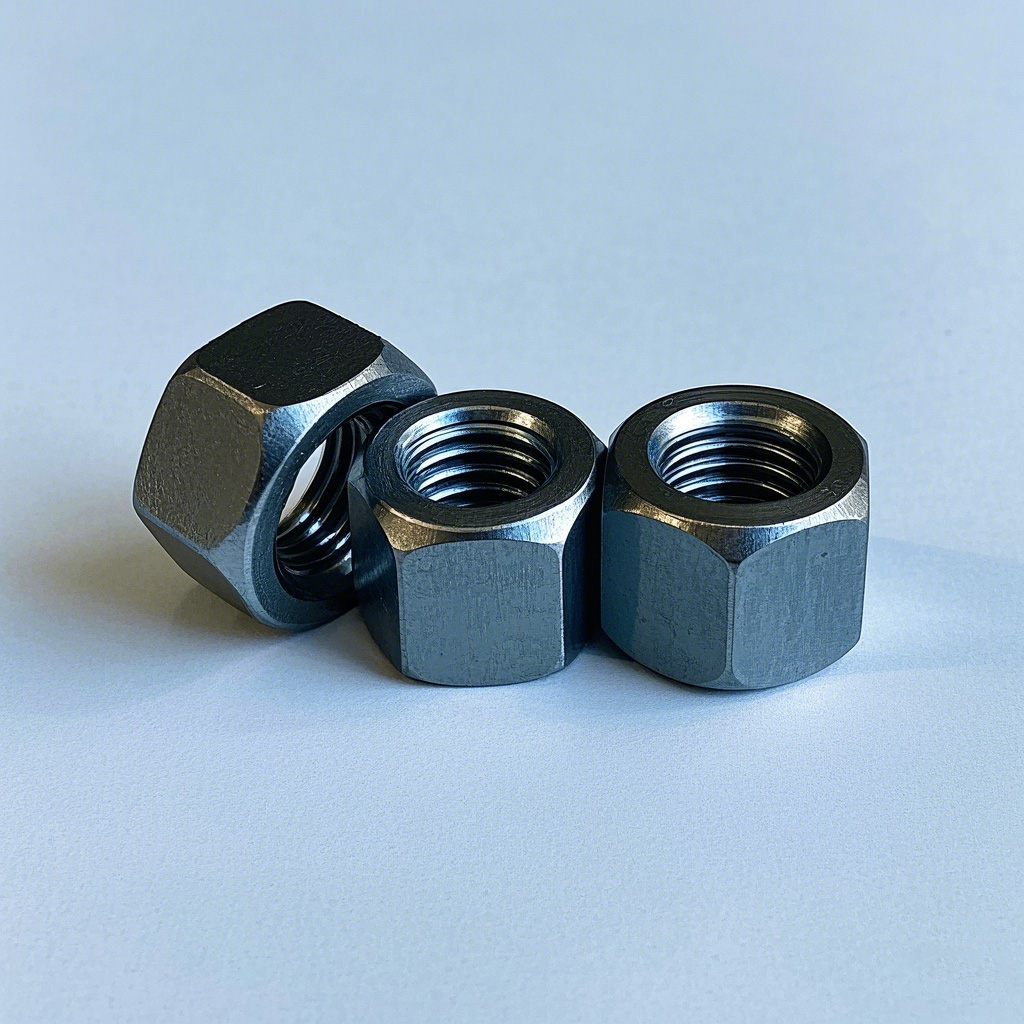
Hex nuts are among the most common types of nuts. Their six-sided shape allows tools to grip them easily during installation and removal.
Manufacturing hex nuts requires accurate creation of the hexagonal outer shape. Depending on the design, CNC machining may use:
Accurate hex dimensions are important because they affect tool engagement and assembly performance.
Lock nuts are designed to prevent loosening caused by vibration or movement. They require additional features compared with standard nuts.
Common lock nut designs include:
During CNC processing, these additional features must be carefully controlled to maintain both locking performance and proper installation.
The complete CNC nut manufacturing process includes material selection, design preparation, turning, thread cutting, inspection, and cost optimization. Every step affects the final quality and performance of the nut.
Understanding the CNC Machining Nut Processing Method? Nut Processing Detailed Process helps manufacturers make better decisions about materials, machining methods, quality requirements, and production costs.
With professional CNC machining experience, advanced equipment, and strict quality management, EMAR supports customers in producing precision nuts for different industries. Whether the requirement is standard nuts, customized designs, small batches, or large-scale production, a well-planned CNC machining process ensures reliable results.