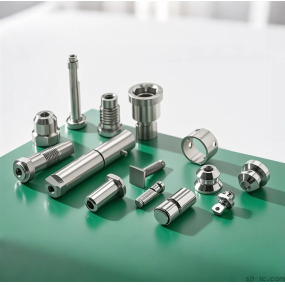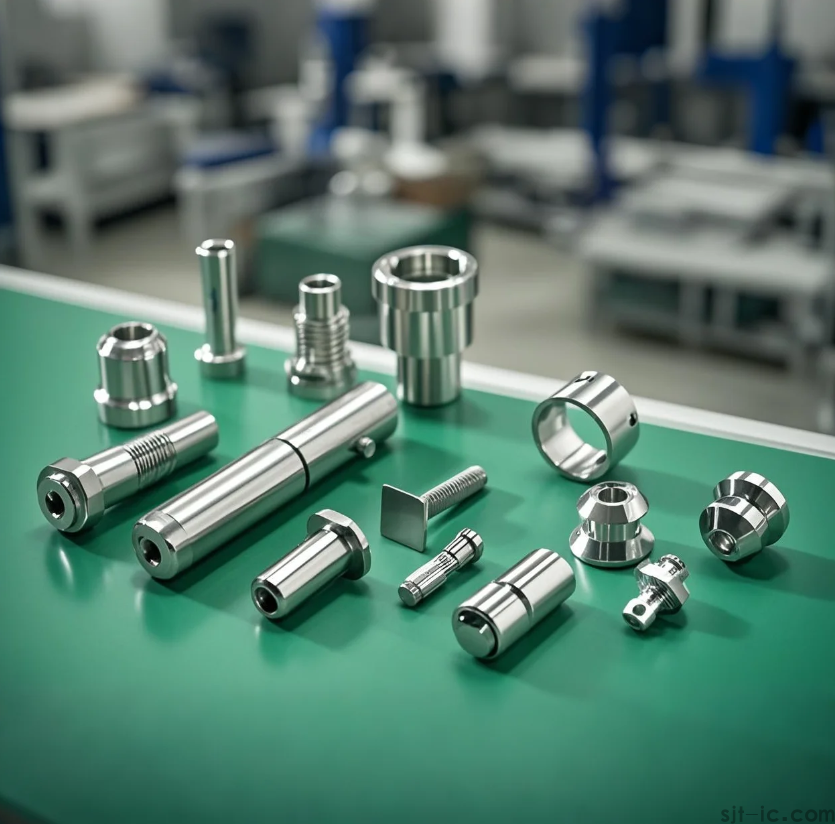
When a standard part cannot meet a product’s needs, businesses often require a custom solution. CNC Machining Parts Customization provides a reliable way to create parts with exact dimensions, complex shapes, and specific performance requirements. From prototypes to large production runs, CNC machining helps engineers and manufacturers turn ideas into functional components.
Many customers face common challenges when ordering customized CNC parts. They may have a design concept but do not know how to prepare technical drawings, choose the right material, control costs, or maintain accuracy during production. A professional CNC machining partner can help solve these problems through engineering support, advanced equipment, and strict quality control.
CNC machining uses computer-controlled machines to remove material from a workpiece and create precise parts. Compared with traditional manual machining, CNC technology offers better accuracy, repeatability, and flexibility.
One of the biggest advantages of CNC machining is its ability to achieve high precision. Modern CNC machines can produce parts with very tight tolerances, which is important for industries such as aerospace, medical equipment, automotive systems, and industrial machinery.
For customized components, even a small size difference can affect assembly and performance. CNC machining reduces human error and helps maintain consistent quality from the first part to the last part.
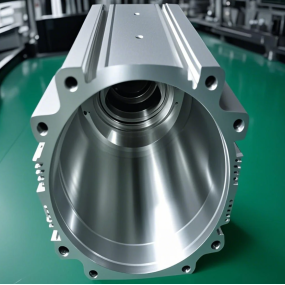
Many customized parts have complex structures, curved surfaces, deep holes, or detailed features that are difficult to make with conventional methods. CNC machining can handle these designs by using multi-axis machines and advanced programming.
Designing for CNC parts customization requires engineers to consider machining methods during the design stage. Features such as tool access, wall thickness, corner radius, and machining direction should be planned carefully to improve production efficiency and avoid unnecessary costs.
CNC machining is suitable for many production needs, including one-piece prototypes, small batches, and large-volume manufacturing. Once the CNC program is created, the same design can be reproduced quickly with stable quality.
This flexibility allows companies to test new products, improve existing designs, and increase production without investing in expensive molds or special tooling.
The customization process usually starts with an idea, sketch, sample part, or 3D model. However, an idea alone is not enough for manufacturing. It must be converted into clear technical specifications.
Important design information includes:
Experienced CNC manufacturers can review drawings and provide suggestions to improve manufacturability. For example, changing an unnecessary sharp corner into a suitable radius may reduce machining difficulty and improve tool life.
Material selection in customized CNC machining directly affects part performance, production cost, and service life. The correct material depends on how the part will be used.
Material decisions should consider strength, durability, operating temperature, corrosion resistance, and budget. A professional machining supplier can help customers balance performance requirements and manufacturing costs.
After the design and material are confirmed, the manufacturing process is planned. Different machining operations are selected according to the part structure.
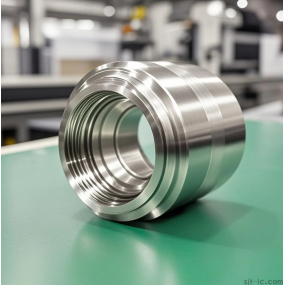
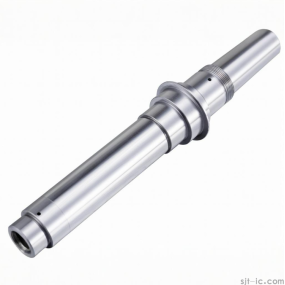
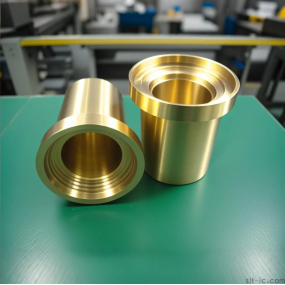
Turning is mainly used for round parts, shafts, and cylindrical components. During turning, the workpiece rotates while a cutting tool removes material.
Tool selection, cutting speed, feed rate, and depth of cut depend on the material and required accuracy. For example, harder materials usually require slower cutting speeds and stronger cutting tools.
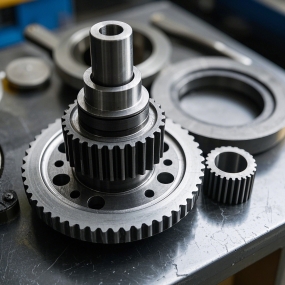
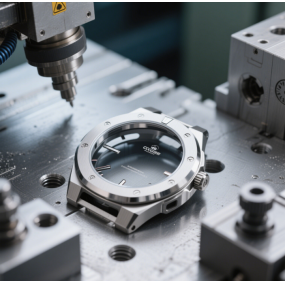
Milling operations for customized parts are widely used for creating flat surfaces, slots, pockets, holes, and complex shapes. CNC milling machines can move cutting tools along multiple axes to produce detailed geometries.
Manufacturers select suitable end mills, drills, and cutters based on the material and design. Cutting speed, feed rate, and cutting depth must be adjusted carefully to prevent tool wear, vibration, and poor surface quality.
Drilling creates accurate holes for assembly and functional requirements. Proper drill selection and machining parameters help achieve correct hole diameter and surface quality.
For extremely hard materials or very small and complex features, EDM (Electrical Discharge Machining) may be used. EDM removes material through controlled electrical sparks and can create shapes that are difficult for traditional cutting tools to produce.
Complex parts require careful planning because multiple machining steps can introduce errors. Machine calibration, fixture design, tool inspection, and process monitoring are important for maintaining accuracy.
Professional CNC machining companies use advanced equipment and inspection systems to check critical dimensions during production instead of waiting until the final stage.
Handling heat-related issues in CNC part customization is important when machining metals that are sensitive to temperature changes. Cutting generates heat, which can cause thermal expansion, distortion, or changes in surface quality.
Manufacturers control these problems by using proper cutting speeds, suitable coolants, optimized tool paths, and correct machining sequences. Materials such as titanium and certain stainless steels require especially careful process control.
Customized parts often support important product launches or repair projects, so delivery time matters. Delays can happen because of design changes, material availability, or complex machining requirements.
A reliable CNC partner improves delivery performance through efficient production planning, clear communication, and professional project management.
After CNC machining, additional processes may be required to improve appearance, durability, or functionality.
The correct post-processing method depends on the material and the final application of the part.
Quality control in customized CNC machining parts is essential to ensure every component meets customer expectations. A complete quality system covers the entire production process.
Companies such as EMAR provide CNC machining parts customization services with professional engineering support, precision machining capabilities, and strict inspection procedures. By combining advanced CNC equipment with experienced technicians, EMAR helps customers develop reliable parts for different applications.
A successful custom machining project depends on more than machine capability. The right supplier should understand your design goals, provide manufacturing advice, control quality, and deliver parts on time.
When selecting a CNC machining partner, consider:
CNC machining makes customized parts easier to produce with high accuracy, flexible designs, and reliable quality. With proper design preparation, suitable materials, optimized machining processes, and strict quality management, businesses can create parts that meet both technical requirements and market demands.