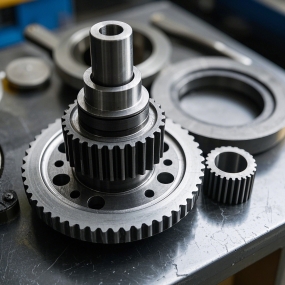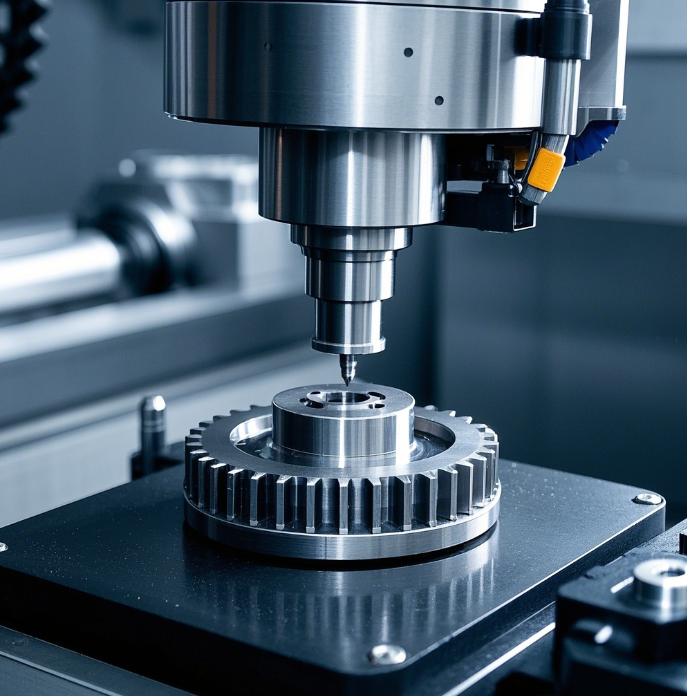
Industrial machinery depends on gears that can deliver smooth, accurate, and reliable power transmission. A small error in gear manufacturing can create major problems, including vibration, noise, faster wear, and unexpected equipment downtime. This is why Precision CNC Gear Machining Services for Industrial Applications are essential for companies that need high-performance gears for manufacturing equipment, power systems, automation machines, and other industrial applications.
With advanced CNC technology, professional machining companies can produce gears with accurate tooth profiles, consistent dimensions, and excellent surface quality. EMAR provides precision CNC gear machining solutions designed to meet different industrial requirements, helping customers achieve reliable performance, longer gear life, and better production efficiency.
Precision is the foundation of efficient and dependable industrial gear operation. Gears transfer power through the contact between their teeth, so even a small mistake in tooth shape, size, or alignment can affect the entire mechanical system.
When gear teeth are not accurately machined, the load may not be distributed evenly across the tooth surface. This can lead to several problems:
For example, in manufacturing plants, precision gears used in conveyor systems help maintain smooth material movement and stable production speeds. In power generation equipment, accurately machined gears inside turbine systems support consistent energy output by maintaining precise speed control and reliable torque transmission.
High-precision CNC Machining ensures that every gear tooth meets the required geometry and tolerance. This allows industrial machines to operate smoothly even under heavy loads and continuous working conditions.
Choosing the correct material is a key part of producing durable industrial gears. The best material depends on factors such as load capacity, operating environment, required service life, and cost. Proper material selection for industrial gear CNC helps manufacturers balance performance and budget requirements.
Alloy steels are among the most common materials used in precision CNC gear machining. Materials such as 4140 and 8620 steel are widely selected because they provide excellent strength, toughness, and wear resistance.
These materials are suitable for industrial environments where gears experience high loads, repeated impact, and continuous operation. Heat-treatment processes, including carburizing, hardening, and tempering, can further improve their mechanical properties. After treatment, alloy steel gears can withstand high stress while maintaining reliable performance over long operating periods.
Case-hardening steels are another popular choice for industrial gears. These materials develop a very hard outer surface while keeping a tough inner core. The hardened surface provides strong resistance against wear and surface fatigue, while the softer core helps absorb impact loads.
This combination makes case-hardening steels ideal for gears used in demanding applications such as industrial reducers, heavy machinery, and automated production systems.
Some industrial gear systems require lightweight or corrosion-resistant materials. Non-ferrous metals such as aluminum and bronze can provide advantages in specific applications.
Selecting the right material helps ensure that CNC-machined gears can handle their working conditions while maintaining cost efficiency.
The production of high-quality industrial gears requires carefully controlled machining operations. The main machining processes in industrial gear precision include gear hobbing, gear shaping, and finishing treatments.
Gear hobbing is one of the most widely used CNC gear manufacturing processes. During hobbing, a specialized cutting tool called a hob rotates and cuts gear teeth into a gear blank through a continuous helical cutting motion.
The accuracy of gear hobbing depends on several important factors:
By controlling these factors, manufacturers can create precise tooth profiles with consistent performance.
Gear shaping is an alternative machining method, especially useful for gears with internal teeth or designs that are difficult to produce through hobbing.
This process uses a reciprocating cutter to create gear teeth. Gear shaping provides flexibility when producing complex gear geometries and special designs required for unique industrial machines.
After initial machining, finishing processes improve gear accuracy and performance. Common finishing methods include:
These processes are especially important for industrial gears that must operate quietly and reliably under demanding conditions.
Reliable gear performance depends on strict quality control throughout the manufacturing process. The quality control of industrial gear CNC machining ensures that every gear meets design requirements before being delivered to customers.
During CNC machining, manufacturers use specialized measuring equipment to monitor gear accuracy. Common inspection tools include:
Real-time CNC monitoring systems can identify machining deviations quickly. If the tool path or cutting conditions move away from the programmed requirements, adjustments can be made immediately to prevent quality problems.
Before shipment, precision industrial gears may undergo additional testing, including:
Following recognized standards, such as ISO 1328 gear accuracy requirements, helps ensure that manufactured gears provide stable and predictable performance.
High precision does not always mean high cost. Effective planning and manufacturing strategies can help companies achieve cost-effectiveness in industrial gear production without sacrificing quality.
Several factors influence the total cost of CNC gear machining:
Companies can reduce costs by optimizing gear designs before production. Simplifying unnecessary features, selecting materials based on performance needs, and producing gears in batches can improve manufacturing efficiency.
Proper tool management is also important. Using high-quality cutting tools with longer service life reduces replacement costs and improves machining consistency. Efficient CNC programming and resource planning further improve production value.
An experienced CNC machining partner like EMAR can help customers select practical manufacturing solutions that balance precision, performance, and budget requirements.
Different industrial machines often require unique gear designs. Standard gears may not always meet specific requirements for size, speed ratio, load capacity, or installation conditions. This is where customization in industrial gear CNC services becomes valuable.
Modern CAD/CAM software allows engineers to design customized gears with:
CNC machining can transform these digital designs into accurate physical components with excellent repeatability. This makes customized gears suitable for specialized manufacturing equipment, automation systems, and retrofitting projects for older industrial machines.
For example, a factory upgrading an existing production line may require custom gears that match older equipment dimensions while improving operating performance. Precision CNC machining makes these solutions possible without replacing the entire system.
Industrial gear performance depends on more than just machining a gear shape. It requires correct material selection, advanced CNC processes, strict inspection, and engineering knowledge. A professional machining provider can help customers avoid common problems such as inaccurate dimensions, premature wear, and unnecessary production costs.
EMAR combines CNC machining experience, quality management, and customization capability to provide reliable Precision CNC Gear Machining Services for Industrial Applications. From material evaluation and machining process planning to final inspection, professional support helps ensure that every gear meets the performance needs of modern industrial equipment.
With the right precision machining partner, businesses can achieve smoother machine operation, longer component life, and improved production efficiency.