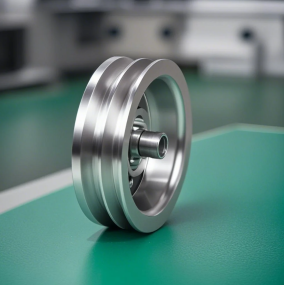
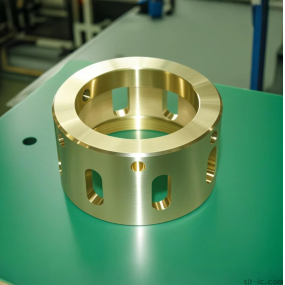
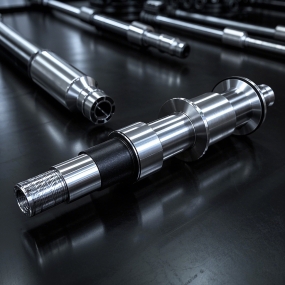
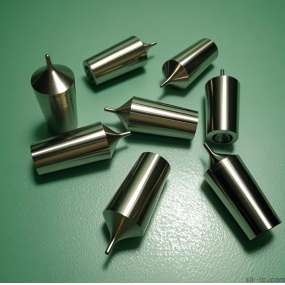
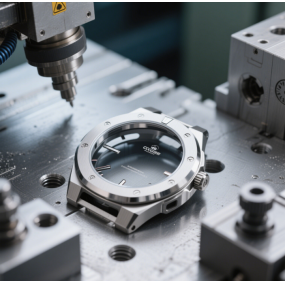
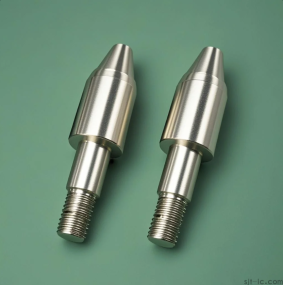
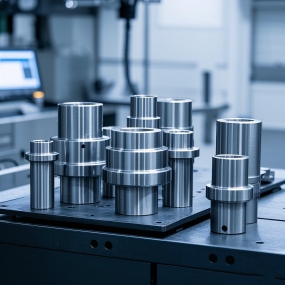
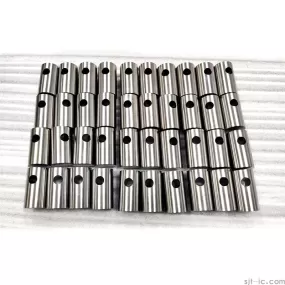
Precision CNC Turning Parts are widely used in industries that require high accuracy, reliable performance, and consistent quality. From medical equipment and aerospace components to automotive systems and industrial machines, these parts help products work safely and efficiently.
For many buyers, choosing the right CNC turning partner can be challenging. They need to understand how precision turning works, which materials are suitable, how manufacturers control quality, and how to balance accuracy with production costs. This guide explains the key points you need to know before ordering precision CNC turning parts.
Precision CNC turning parts are components produced by a computer-controlled turning machine. During the process, a cutting tool removes material from a rotating workpiece to create the required shape, size, and surface finish.
Unlike standard machining, precision CNC turning focuses on very tight tolerances and repeatable results. This makes it suitable for parts that must fit perfectly with other components, such as shafts, connectors, pins, bushings, and complex cylindrical parts.
A professional manufacturer uses advanced CNC equipment, skilled operators, and strict inspection methods to ensure every part meets customer drawings and technical requirements.
Understanding the steps in precision CNC turning parts manufacturing helps customers know what happens from design to final delivery. A typical manufacturing process includes the following stages:
Design and Drawing Review: Engineers check the 2D drawings, 3D models, tolerances, materials, and surface requirements. Any possible production problems are identified before machining begins.
Material Preparation: The selected raw material is cut into suitable sizes for CNC turning. Proper material preparation helps reduce waste and improve machining efficiency.
CNC Programming: Technicians create machining programs that control cutting speed, tool movement, and machining operations.
Turning Operation: CNC machines remove material step by step until the part reaches the required shape and dimensions.
Surface Treatment and Finishing: Depending on customer needs, parts may receive polishing, coating, heat treatment, or other finishing processes.
Inspection and Delivery: Finished parts are measured and tested before shipment to confirm they meet quality standards.
The significance of precision in CNC turning parts cannot be ignored. Even a small size error can cause assembly problems, equipment failure, or reduced product performance.
High precision provides several important benefits:
Better Product Performance: Accurate dimensions allow parts to work smoothly with other components.
Higher Reliability: Precision parts reduce wear, vibration, and unexpected failures.
Lower Assembly Costs: Parts with consistent quality require fewer adjustments during assembly.
Improved Production Efficiency: Stable machining quality helps companies reduce delays and material waste.
For industries such as aerospace, medical devices, and electronics, precision is especially important because these fields often require strict tolerance control and dependable long-term operation.
Selecting the correct material is one of the most important decisions in CNC turning. The material choices for precision CNC turning parts depend on factors such as strength, corrosion resistance, temperature requirements, weight, and budget.
Common materials include:
Stainless Steel: Offers excellent corrosion resistance and strength, making it suitable for medical equipment, food processing machines, and industrial applications.
Aluminum: Lightweight and easy to machine, aluminum is often used for aerospace parts, electronic housings, and prototypes.
Brass: Provides good machinability and electrical conductivity, making it useful for connectors and precision fittings.
Titanium: Known for its high strength-to-weight ratio and excellent durability, titanium is commonly used in demanding applications.
Engineering Plastics: Materials such as POM and nylon can be selected when lightweight and wear resistance are needed.
An experienced CNC manufacturer can help customers choose the best material based on part function, production volume, and cost requirements.
Reliable quality control is essential because precision parts must meet strict requirements. Effective quality control for precision CNC turning parts includes multiple inspection steps throughout production.
Incoming Material Inspection: Raw materials are checked to confirm they match required specifications.
Machine Accuracy Checks: CNC equipment is regularly maintained and calibrated to keep machining accuracy stable.
Dimensional Inspection: Measuring tools such as calipers, micrometers, and coordinate measuring machines (CMM) are used to verify part sizes.
Surface Quality Inspection: Surface finish and appearance are checked to ensure parts meet customer expectations.
Final Quality Reports: Inspection records provide customers with confidence and traceability.
Manufacturers like EMAR focus on strict production management, advanced CNC equipment, and detailed inspection procedures to provide stable and accurate precision CNC turning parts for different industries.
The applications of precision CNC turning parts cover many industries because these components provide accuracy, strength, and reliable performance.
Automotive Industry: Used for engine components, transmission parts, sensors, and precision shafts.
Aerospace Industry: Used for lightweight and high-strength components that require strict tolerances.
Medical Equipment: Used in surgical instruments, diagnostic equipment, and medical devices where accuracy is critical.
Electronics Industry: Used for connectors, housings, and small precision components.
Industrial Machinery: Used for machine parts that require long service life and stable operation.
Choosing the right supplier can directly affect product quality, delivery time, and overall cost. When evaluating a CNC turning manufacturer, consider the following points:
Manufacturing Capability: Check whether the supplier has suitable CNC machines, technical experience, and production capacity.
Quality Management: A reliable supplier should have clear inspection processes and quality control systems.
Material Experience: The manufacturer should understand how different materials behave during machining.
Customization Ability: The supplier should be able to produce parts according to drawings, samples, and specific requirements.
Communication and Support: Good technical communication helps prevent mistakes and improves project efficiency.
With experience in CNC Machining and precision manufacturing, EMAR supports customers with customized precision CNC turning parts solutions. The company focuses on accurate production, professional engineering support, and consistent quality to help customers meet their project goals.
Precision CNC Turning Parts play an important role in modern manufacturing because they provide accurate dimensions, reliable performance, and excellent repeatability. Understanding the manufacturing process, material selection, precision requirements, and quality control methods helps customers make better purchasing decisions.
By working with an experienced CNC machining partner, businesses can achieve high-quality parts while controlling production costs and improving product reliability. A professional supplier with strong technical capabilities can make the entire machining process easier, from initial design review to final delivery.