Spanish
 Arabic
 French
 Portuguese
 Belarusian
 Japanese
 Russian
 Malay
Malay Icelandic
 Bulgarian
 Azerbaijani
 Estonian
 Irish
Irish Polish
 Persian
 Boolean
 Danish
 German
 Filipino
 Finnish
 Korean
 Dutch
Dutch Galician
 Catalan
 Czech
Czech Croatian
 Latin
Latin Latvian
 Romanian
 Maltese
 Macedonian
 Norwegian
 Swedish
 Serbian
 Slovak
 Slovenian
 Swahili
 Thai
Thai Turkish
 Welsh
Welsh Urdu
Urdu Ukrainian
 Greek
Greek Hungarian
 Italian
 Yiddish
 Indonesian
 Vietnamese
 Haitian Creole
 Spanish Basque

Hey there, fellow engineers and procurement pros! 👋 Ever hit a wall when you need just 50, or 100, or maybe 500 pieces of a super precise part for your prototype or new product launch? You know, that moment when big factories give you the cold shoulder because your order isn't in the thousands, but your project's success absolutely depends on getting those perfect parts? Yeah, we've been there. It feels like you're stuck between "mass production" and "good enough." But what if there's a sweet spot specifically designed for this exact headache? Let's talk about small batch precision machining customization – it might just be the solution you're searching for.
What Exactly is Small Batch Precision Machining Customization?
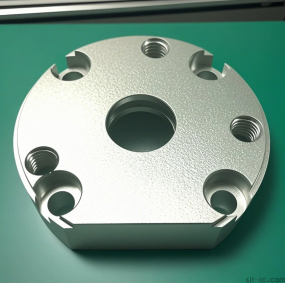
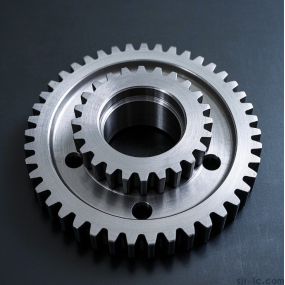
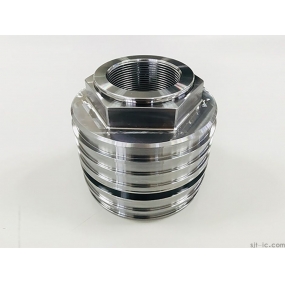
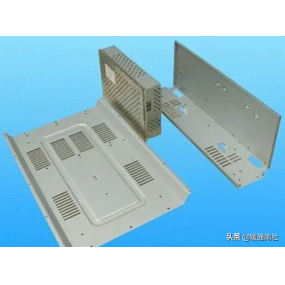
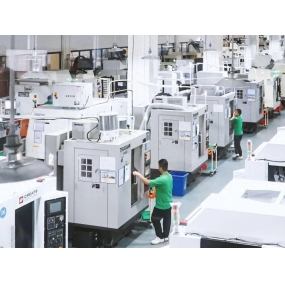
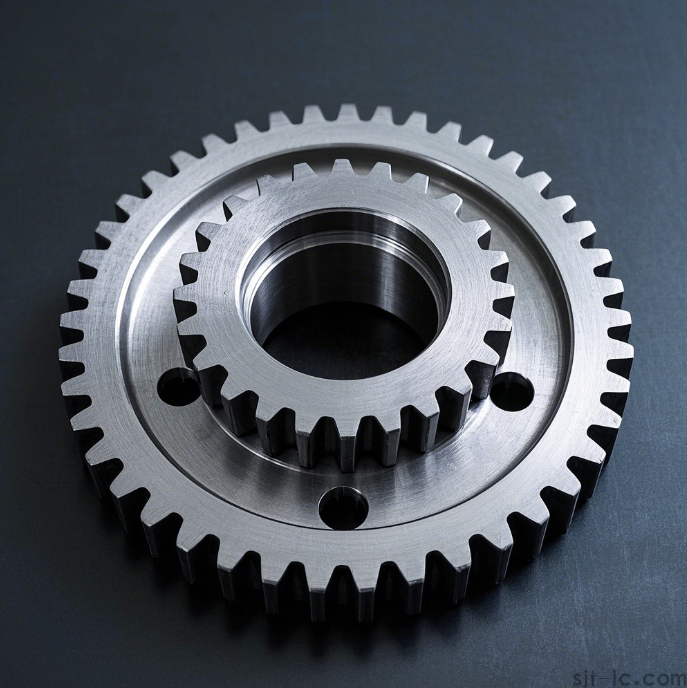
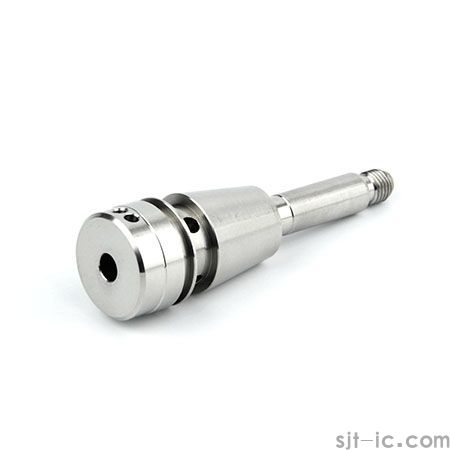
In simple terms, it's a manufacturing service that focuses on making highly accurate, custom-designed mechanical parts, but in smaller quantities. Think of it as bespoke tailoring for metal and plastic. Instead of setting up giant, dedicated production lines for millions of identical pieces, specialized shops use advanced CNC machines and skilled technicians to produce smaller runs – from a single piece to a few hundred – with incredible attention to detail and tight tolerances. The core idea is flexibility and precision over sheer volume.
Why Would You Even Need This? The Real-World Scenarios.
It's not just about "not needing a lot." This service is crucial in several key phases:
🔬 Research & Development (R&D): You're testing a new design. You need 20 units of version A, 15 of version B after some tweaks. Small batch is your only realistic option.
🚀 Prototyping & Market Testing: Before committing six figures to tooling for mass production, you build 100-500 units to validate the market, function, and assembly. It's a critical, low-risk step.
⚙️ Niche Products & Legacy Support: Manufacturing replacement parts for older machinery where demand is low but essential. Or producing specialized components for limited-edition products.
💡 The Bottom Line: It bridges the gap between a one-off prototype and full-scale production. It's for when "good enough" from a 3D printer won't cut it, but a mold cost would break the project budget.
Okay, But How Does It Actually Work? The Process, Demystified.
It's more streamlined than you might think, though it requires close collaboration. Here's a typical flow:
1. Design & Quote: You send your CAD files (like STEP or IGES). A good shop will review them for manufacturability – they might suggest tiny changes that save you money and time without affecting function. Then, you get a detailed quote, not just a per-part price, but often including setup and material costs.
2. Material & Setup: Once you approve, they source the right material block (aluminum, stainless steel, brass, engineered plastics). The magic happens here: a programmer creates toolpaths, and a machinist sets up the CNC machine. This setup is a fixed cost, spread over your small batch.
3. Machining & Quality Checks: The CNC machine gets to work, but it's not "set and forget." Skilled operators monitor it. After machining, parts often go through a deburring process (smoothing sharp edges) and then are measured with tools like calipers, micrometers, or even CMMs (Coordinate Measuring Machines) to ensure they match your drawing's tolerances.
4. Delivery & Feedback: You receive your parts, usually with an inspection report. This is where the partnership shines – feedback on this batch can inform the next one or a future mass production run.
The Not-So-Obvious Advantages (And a Little Reality Check)
The obvious perk is lower upfront cost and risk. No huge investment in hard tooling. But there's more:
✨ Speed to Market: You can iterate designs rapidly. Find a flaw in batch one? Adjust the CAD file and have a revised batch in weeks, not months.
✨ Material Flexibility: Want to test the part in aluminum first, then stainless steel? Easy. You're not locked into a single material choice for 10,000 pieces.
✨ Higher Complexity for Free (Well, Almost): CNC Machining excels at complex geometries. That intricate feature that would be a nightmare in a mold? For a small batch, it's often just a matter of programming.
...That said... It's not all roses. The cost per part is naturally higher than in mass production. And while lead times are faster than building molds, they're not "instant" – quality takes time. The key is finding a partner who is transparent about these trade-offs.

Choosing the Right Partner: It's More Than Just Price.
When your project's quality hinges on these parts, the cheapest quote can be the most expensive mistake. Here's what we often tell people to look for:
✅ Communication & Engineering Support: Do they ask smart questions about your design? Do they offer manufacturability advice? This is huge.
✅ Quality Control Transparency: How do they check parts? Can they provide inspection reports? A shop that's proud of its quality will show you.
✅ Equipment & Materials: Modern CNC machines can hold tighter tolerances. Do they have the right machines for your material (e.g., good for tough alloys)?
✅ Proven Track Record: Can they show examples (without breaching confidentiality) of similar small-batch, precision work? Case studies or testimonials are gold.
In my view, the best partnerships feel like an extension of your own engineering team. They save you from pitfalls you didn't know were there.
So, if you're staring at a CAD model and wondering how to turn it into a handful of flawless, real-world parts without the mass-production hassle... you're already asking the right question. The path of small batch precision customization is well-trodden by savvy teams who value agility and quality. The next step is finding the right hands to bring your design to life. 🛠️
Ready to see if your specific project is a good fit for this approach? A quick conversation about your drawings and needs can usually point the way.