Spanish
 Arabic
 French
 Portuguese
 Belarusian
 Japanese
 Russian
 Malay
Malay Icelandic
 Bulgarian
 Azerbaijani
 Estonian
 Irish
Irish Polish
 Persian
 Boolean
 Danish
 German
 Filipino
 Finnish
 Korean
 Dutch
Dutch Galician
 Catalan
 Czech
Czech Croatian
 Latin
Latin Latvian
 Romanian
 Maltese
 Macedonian
 Norwegian
 Swedish
 Serbian
 Slovak
 Slovenian
 Swahili
 Thai
Thai Turkish
 Welsh
Welsh Urdu
Urdu Ukrainian
 Greek
Greek Hungarian
 Italian
 Yiddish
 Indonesian
 Vietnamese
 Haitian Creole
 Spanish Basque

HTML
How to improve the efficiency and quality of titanium alloy CNC Machining?
Titanium alloy is one of the most valuable materials used in industries such as aerospace, medical equipment, automotive, and high-performance engineering. It has excellent strength, corrosion resistance, and lightweight properties. However, titanium alloy CNC machining is not easy because the material has low thermal conductivity, high strength, and a tendency to cause tool wear.
Many manufacturers face challenges such as short tool life, slow machining speed, poor surface finish, and unstable part accuracy. Understanding How to improve the efficiency and quality of titanium alloy CNC machining? helps companies reduce production costs while producing reliable and high-precision parts.
The key factors include choosing suitable cutting tools, optimizing machining parameters, using proper coolant methods, improving workpiece setup, and applying strict quality control. With the right machining strategy, titanium alloy parts can be produced faster, more accurately, and more consistently.
Choose the Right Tools for Titanium Alloy CNC Machining
Tool selection is one of the most important steps in improving titanium alloy machining performance. Since titanium alloy creates high cutting temperatures and strong cutting forces, ordinary tools may wear quickly or fail during production.
Tool Material Considerations
When considering tool selection for titanium alloy CNC, carbide cutting tools are commonly preferred because they provide a good balance between hardness, heat resistance, and wear resistance.
Carbide tools with advanced coatings such as titanium nitride (TiN) or titanium aluminum nitride (TiAlN) can further improve performance. These coatings reduce friction between the tool and the workpiece, lower heat generation, and extend tool life.
For example, when CNC turning a titanium alloy shaft, a TiAlN-coated carbide tool can handle high cutting temperatures better than an uncoated tool. This reduces the frequency of tool replacement and helps maintain a smoother surface finish.
Why it matters: The correct tool material improves machining efficiency by reducing downtime caused by tool changes. It also improves part quality because a stable cutting edge produces more accurate and consistent results.
Optimize Tool Geometry
Tool shape also has a major impact on titanium alloy machining results. Cutting tools with suitable rake angles and edge designs can reduce cutting resistance.
Positive rake angle tools are often useful because they reduce cutting forces and help prevent work hardening. Titanium alloy has a strong tendency to become harder after being cut, which can increase tool wear if the cutting process is not optimized.
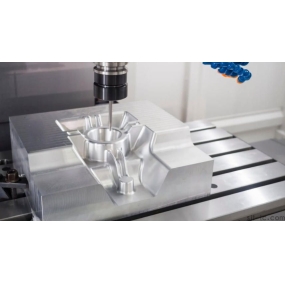
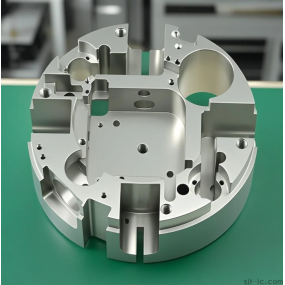
For example, during CNC milling of a titanium alloy aerospace component, a milling cutter with optimized geometry can remove material more smoothly, reduce vibration, and improve surface quality.
Why it matters: Proper tool geometry improves chip formation, reduces heat buildup, and helps achieve better machining accuracy.
Optimize Cutting Parameters in Titanium Alloy Machining
Correct machining parameters are essential for balancing productivity and quality. If the cutting conditions are too aggressive, tools may wear quickly and the workpiece surface may become damaged.
Control Cutting Speed Carefully
Cutting parameters in titanium alloy machining require careful adjustment because titanium alloy does not transfer heat away from the cutting area easily. Most of the heat stays near the cutting edge, causing faster tool wear.
Compared with easier-to-machine metals, titanium alloy usually requires a lower cutting speed. For carbide tools, cutting speeds around 50–100 m/min may be suitable depending on the machining operation, tool diameter, and titanium alloy grade.
For example, when machining a titanium alloy plate, reducing the cutting speed can prevent excessive heat generation and protect the tool edge. Although the machine may run slightly slower, the overall production efficiency can improve because fewer tools need replacement.
Why it matters: The correct cutting speed improves tool life, maintains surface quality, and prevents heat-related damage.
Balance Feed Rate and Depth of Cut
Feed rate and depth of cut must be selected according to the machining stage. Rough machining and finishing machining usually require different settings.
- Rough machining: A larger depth of cut can be used to remove material quickly while maintaining stable cutting conditions.
- Finishing machining: A smaller depth of cut and controlled feed rate help achieve better surface finish and dimensional accuracy.
For example, when milling a titanium alloy component, a manufacturer may first use deeper cuts to remove excess material and then reduce the cutting depth during finishing operations to achieve the final precision requirements.
Why it matters: Proper feed rate and depth of cut improve material removal efficiency without sacrificing part quality.
Improve Coolant Use in Titanium Alloy CNC Machining
Heat management is a major challenge when machining titanium alloy. Because titanium has low thermal conductivity, heat remains concentrated around the cutting zone. Proper coolant use can significantly improve machining stability.
Select the Proper Coolant Type
Coolant use in titanium alloy CNC should focus on reducing heat and protecting the cutting tool. Water-soluble coolants are widely used because they provide effective cooling and help remove heat from the cutting area.
For example, during CNC turning of a titanium alloy component, a suitable water-soluble coolant can keep the tool temperature under control, reduce wear, and maintain accurate dimensions.
Why it matters: The correct coolant improves tool life, surface finish, and dimensional stability.
Use Effective Coolant Application Methods
The way coolant is delivered is also important. Flood cooling can provide large amounts of coolant to the cutting area, while through-tool coolant systems can deliver coolant directly to the cutting edge.
For deep-hole drilling in titanium alloy parts, through-tool coolant can be especially useful because it keeps the drill tip cool and helps remove chips from the hole.
Why it matters: Proper coolant delivery improves cooling performance and prevents chip-related machining problems.
Improve Workpiece Setup for Titanium Alloy Machining
A stable workpiece setup is necessary for achieving accurate titanium alloy CNC machining results. Even with excellent tools and cutting parameters, poor clamping or incorrect alignment can cause part defects.
Use Secure Workpiece Clamping
Workpiece setup for titanium alloy machining requires careful fixture design because titanium alloy parts can deform under excessive pressure.
The clamping force should be strong enough to prevent movement but gentle enough to avoid distortion. For thin-walled titanium alloy parts, specially designed fixtures can hold the workpiece securely without damaging its shape.
For example, when machining a thin aerospace titanium component, a custom fixture can provide stable support and reduce vibration during cutting.
Why it matters: Proper clamping prevents movement during machining and helps maintain dimensional accuracy.
Ensure Correct Alignment and Centering
Accurate positioning is another important part of workpiece preparation. In CNC turning, the workpiece must be centered correctly in the chuck. In milling operations, the part must be aligned properly on the machine table.
If alignment is incorrect, the final part may have uneven dimensions or poor surface quality. For example, an incorrectly centered titanium alloy shaft may produce an inaccurate diameter after turning.
Why it matters: Proper alignment ensures stable machining operations and improves final part accuracy.
Strengthen Quality Control in Titanium Alloy CNC Machining
Quality control is essential for titanium alloy parts, especially those used in aerospace and medical applications where reliability is critical.
Perform In-Process Inspection
Quality control in titanium alloy CNC should begin during machining, not only after production is complete.
In-process inspection allows manufacturers to identify problems early. For example, after rough turning a titanium alloy shaft, operators can measure the diameter with a micrometer. If the size is outside the required tolerance, machining adjustments can be made immediately.
Why it matters: Early inspection reduces scrap rates, avoids unnecessary rework, and keeps production stable.
Complete Final Inspection
Final inspection confirms that titanium alloy parts meet customer requirements. Common inspection methods include:
- Coordinate measuring machine (CMM) inspection for dimensional accuracy.
- Surface roughness testing for finish quality.
- Non-destructive testing (NDT) for detecting internal defects.
For example, titanium alloy parts used in aerospace applications may require ultrasonic testing to check for hidden cracks or internal problems.
Why it matters: A complete inspection process ensures that finished parts are safe, reliable, and ready for demanding applications.
EMAR's Expertise in Titanium Alloy CNC Machining
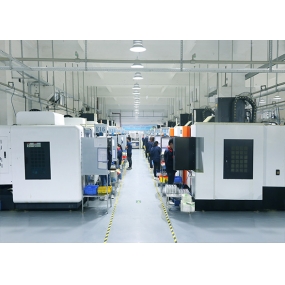
Improving titanium alloy CNC machining requires experience in every stage of the process, from material understanding and tool selection to machining control and inspection. EMAR has professional experience in precision CNC machining and provides reliable solutions for challenging materials such as titanium alloy.
With skilled engineers and experienced operators, EMAR can optimize important machining factors including tool selection, cutting parameters, coolant methods, workpiece setup, and quality inspection procedures.
For example, when producing high-precision titanium alloy components for aerospace or medical applications, EMAR can develop suitable machining strategies to achieve both high efficiency and strict quality requirements.
Reliable Quality-Assured Machining Services
EMAR focuses on maintaining stable quality throughout the production process. Through careful process control and inspection procedures, EMAR helps customers receive titanium alloy parts with excellent accuracy, surface quality, and reliability.
For companies looking for dependable titanium alloy CNC machining services, choosing an experienced machining partner can reduce production risks and improve overall manufacturing performance.
Conclusion
Understanding How to improve the efficiency and quality of titanium alloy CNC machining? requires attention to multiple factors. The right tools, optimized cutting parameters, effective coolant use, stable workpiece setup, and strict quality control all contribute to better machining results.
By applying these methods, manufacturers can reduce tool wear, improve production efficiency, maintain part accuracy, and produce high-quality titanium alloy components for demanding industries.
HTML
How to improve the efficiency and quality of titanium alloy CNC machining?
Titanium alloy is one of the most valuable materials used in industries such as aerospace, medical equipment, automotive, and high-performance engineering. It has excellent strength, corrosion resistance, and lightweight properties. However, titanium alloy CNC machining is not easy because the material has low thermal conductivity, high strength, and a tendency to cause tool wear.
Many manufacturers face challenges such as short tool life, slow machining speed, poor surface finish, and unstable part accuracy. Understanding How to improve the efficiency and quality of titanium alloy CNC machining? helps companies reduce production costs while producing reliable and high-precision parts.
The key factors include choosing suitable cutting tools, optimizing machining parameters, using proper coolant methods, improving workpiece setup, and applying strict quality control. With the right machining strategy, titanium alloy parts can be produced faster, more accurately, and more consistently.
Choose the Right Tools for Titanium Alloy CNC Machining
Tool selection is one of the most important steps in improving titanium alloy machining performance. Since titanium alloy creates high cutting temperatures and strong cutting forces, ordinary tools may wear quickly or fail during production.
Tool Material Considerations
When considering tool selection for titanium alloy CNC, carbide cutting tools are commonly preferred because they provide a good balance between hardness, heat resistance, and wear resistance.
Carbide tools with advanced coatings such as titanium nitride (TiN) or titanium aluminum nitride (TiAlN) can further improve performance. These coatings reduce friction between the tool and the workpiece, lower heat generation, and extend tool life.
For example, when CNC turning a titanium alloy shaft, a TiAlN-coated carbide tool can handle high cutting temperatures better than an uncoated tool. This reduces the frequency of tool replacement and helps maintain a smoother surface finish.
Why it matters: The correct tool material improves machining efficiency by reducing downtime caused by tool changes. It also improves part quality because a stable cutting edge produces more accurate and consistent results.
Optimize Tool Geometry
Tool shape also has a major impact on titanium alloy machining results. Cutting tools with suitable rake angles and edge designs can reduce cutting resistance.
Positive rake angle tools are often useful because they reduce cutting forces and help prevent work hardening. Titanium alloy has a strong tendency to become harder after being cut, which can increase tool wear if the cutting process is not optimized.
For example, during CNC milling of a titanium alloy aerospace component, a milling cutter with optimized geometry can remove material more smoothly, reduce vibration, and improve surface quality.
Why it matters: Proper tool geometry improves chip formation, reduces heat buildup, and helps achieve better machining accuracy.
Optimize Cutting Parameters in Titanium Alloy Machining
Correct machining parameters are essential for balancing productivity and quality. If the cutting conditions are too aggressive, tools may wear quickly and the workpiece surface may become damaged.
Control Cutting Speed Carefully
Cutting parameters in titanium alloy machining require careful adjustment because titanium alloy does not transfer heat away from the cutting area easily. Most of the heat stays near the cutting edge, causing faster tool wear.
Compared with easier-to-machine metals, titanium alloy usually requires a lower cutting speed. For carbide tools, cutting speeds around 50–100 m/min may be suitable depending on the machining operation, tool diameter, and titanium alloy grade.
For example, when machining a titanium alloy plate, reducing the cutting speed can prevent excessive heat generation and protect the tool edge. Although the machine may run slightly slower, the overall production efficiency can improve because fewer tools need replacement.
Why it matters: The correct cutting speed improves tool life, maintains surface quality, and prevents heat-related damage.
Balance Feed Rate and Depth of Cut
Feed rate and depth of cut must be selected according to the machining stage. Rough machining and finishing machining usually require different settings.
- Rough machining: A larger depth of cut can be used to remove material quickly while maintaining stable cutting conditions.
- Finishing machining: A smaller depth of cut and controlled feed rate help achieve better surface finish and dimensional accuracy.
For example, when milling a titanium alloy component, a manufacturer may first use deeper cuts to remove excess material and then reduce the cutting depth during finishing operations to achieve the final precision requirements.
Why it matters: Proper feed rate and depth of cut improve material removal efficiency without sacrificing part quality.
Improve Coolant Use in Titanium Alloy CNC Machining
Heat management is a major challenge when machining titanium alloy. Because titanium has low thermal conductivity, heat remains concentrated around the cutting zone. Proper coolant use can significantly improve machining stability.
Select the Proper Coolant Type
Coolant use in titanium alloy CNC should focus on reducing heat and protecting the cutting tool. Water-soluble coolants are widely used because they provide effective cooling and help remove heat from the cutting area.
For example, during CNC turning of a titanium alloy component, a suitable water-soluble coolant can keep the tool temperature under control, reduce wear, and maintain accurate dimensions.
Why it matters: The correct coolant improves tool life, surface finish, and dimensional stability.
Use Effective Coolant Application Methods
The way coolant is delivered is also important. Flood cooling can provide large amounts of coolant to the cutting area, while through-tool coolant systems can deliver coolant directly to the cutting edge.
For deep-hole drilling in titanium alloy parts, through-tool coolant can be especially useful because it keeps the drill tip cool and helps remove chips from the hole.
Why it matters: Proper coolant delivery improves cooling performance and prevents chip-related machining problems.
Improve Workpiece Setup for Titanium Alloy Machining
A stable workpiece setup is necessary for achieving accurate titanium alloy CNC machining results. Even with excellent tools and cutting parameters, poor clamping or incorrect alignment can cause part defects.
Use Secure Workpiece Clamping
Workpiece setup for titanium alloy machining requires careful fixture design because titanium alloy parts can deform under excessive pressure.
The clamping force should be strong enough to prevent movement but gentle enough to avoid distortion. For thin-walled titanium alloy parts, specially designed fixtures can hold the workpiece securely without damaging its shape.
For example, when machining a thin aerospace titanium component, a custom fixture can provide stable support and reduce vibration during cutting.
Why it matters: Proper clamping prevents movement during machining and helps maintain dimensional accuracy.
Ensure Correct Alignment and Centering
Accurate positioning is another important part of workpiece preparation. In CNC turning, the workpiece must be centered correctly in the chuck. In milling operations, the part must be aligned properly on the machine table.
If alignment is incorrect, the final part may have uneven dimensions or poor surface quality. For example, an incorrectly centered titanium alloy shaft may produce an inaccurate diameter after turning.
Why it matters: Proper alignment ensures stable machining operations and improves final part accuracy.
Strengthen Quality Control in Titanium Alloy CNC Machining
Quality control is essential for titanium alloy parts, especially those used in aerospace and medical applications where reliability is critical.
Perform In-Process Inspection
Quality control in titanium alloy CNC should begin during machining, not only after production is complete.
In-process inspection allows manufacturers to identify problems early. For example, after rough turning a titanium alloy shaft, operators can measure the diameter with a micrometer. If the size is outside the required tolerance, machining adjustments can be made immediately.
Why it matters: Early inspection reduces scrap rates, avoids unnecessary rework, and keeps production stable.
Complete Final Inspection
Final inspection confirms that titanium alloy parts meet customer requirements. Common inspection methods include:
- Coordinate measuring machine (CMM) inspection for dimensional accuracy.
- Surface roughness testing for finish quality.
- Non-destructive testing (NDT) for detecting internal defects.
For example, titanium alloy parts used in aerospace applications may require ultrasonic testing to check for hidden cracks or internal problems.
Why it matters: A complete inspection process ensures that finished parts are safe, reliable, and ready for demanding applications.
EMAR's Expertise in Titanium Alloy CNC Machining
Improving titanium alloy CNC machining requires experience in every stage of the process, from material understanding and tool selection to machining control and inspection. EMAR has professional experience in precision CNC machining and provides reliable solutions for challenging materials such as titanium alloy.
With skilled engineers and experienced operators, EMAR can optimize important machining factors including tool selection, cutting parameters, coolant methods, workpiece setup, and quality inspection procedures.
For example, when producing high-precision titanium alloy components for aerospace or medical applications, EMAR can develop suitable machining strategies to achieve both high efficiency and strict quality requirements.
Reliable Quality-Assured Machining Services
EMAR focuses on maintaining stable quality throughout the production process. Through careful process control and inspection procedures, EMAR helps customers receive titanium alloy parts with excellent accuracy, surface quality, and reliability.
For companies looking for dependable titanium alloy CNC machining services, choosing an experienced machining partner can reduce production risks and improve overall manufacturing performance.
Conclusion
Understanding How to improve the efficiency and quality of titanium alloy CNC machining? requires attention to multiple factors. The right tools, optimized cutting parameters, effective coolant use, stable workpiece setup, and strict quality control all contribute to better machining results.
By applying these methods, manufacturers can reduce tool wear, improve production efficiency, maintain part accuracy, and produce high-quality titanium alloy components for demanding industries.