HTML
CNC Tungsten Steel Product Machining: Precision Manufacturing for High-Performance Industrial Parts
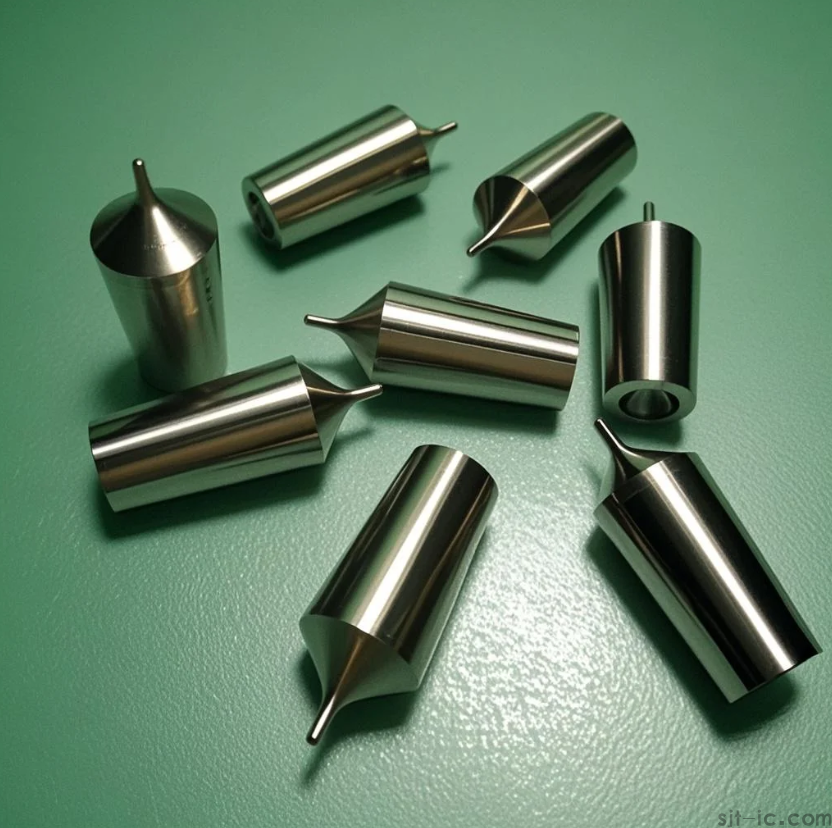
CNC Tungsten Steel Product Machining is one of the most demanding processes in modern manufacturing. Tungsten steel (also known as tungsten carbide steel) is extremely hard, wear-resistant, and heat-resistant, which makes it ideal for cutting tools, molds, dies, and high-performance industrial components. However, these same properties also make it difficult to machine.
For many manufacturers, the biggest challenges are tool wear, cracking risk, and maintaining tight tolerances. This article explains real-world solutions and helps you understand how to achieve stable, high-precision results in tungsten steel machining.
Why Tungsten Steel Is Difficult but Valuable
Tungsten steel is widely used in aerospace, automotive, electronics, and mold manufacturing. Its hardness can exceed most cutting tools, which leads to fast tool wear and unstable machining if the process is not well controlled.
Despite these challenges, industries choose it because it offers:
- Excellent wear resistance for long service life
- High temperature stability under heavy loads
- Strong structural integrity for precision parts
This is why CNC Tungsten Steel Product Machining requires advanced technology and experienced engineering support.
Steps in CNC Machining of Tungsten Steel Products
The steps in CNC machining of tungsten steel products must be carefully controlled to avoid tool damage and material failure.
- Material preparation: Inspect raw tungsten steel blanks for internal cracks or inconsistencies.
- Rough machining: Use low-speed, high-rigidity machines to remove excess material gradually.
- Semi-finishing: Improve dimensional accuracy while reducing surface stress.
- Finishing: Apply ultra-precision machining to achieve final tolerances and surface quality.
- Post-processing: Heat treatment or surface coating may be applied depending on application.
Each step must be optimized to prevent micro-cracks and ensure long-term durability.
Tooling for CNC Tungsten Steel Product Machining
Tooling for CNC tungsten steel product machining is one of the most critical factors in production success. Standard steel tools cannot withstand tungsten steel’s hardness.
Common tooling solutions include:
- Diamond-coated cutting tools for extreme hardness resistance
- CBN (Cubic Boron Nitride) tools for stable high-temperature cutting
- Carbide tools for rough machining stages
Proper tool selection reduces cost, improves stability, and extends tool life significantly.
Precision Requirements for CNC-Machined Tungsten Steel Products
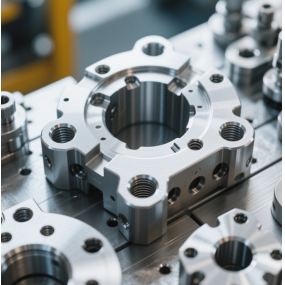
Precision requirements for CNC-machined tungsten steel products are extremely strict, especially in industries like aerospace and mold making.
Typical requirements include:
- Tolerances within micrometer level for critical dimensions
- Surface roughness control for wear-sensitive parts
- Geometric accuracy for multi-axis components
Even small deviations can lead to product failure, making advanced CNC systems essential.
Quality Control in CNC Tungsten Steel Product Machining
Quality control in CNC tungsten steel product machining ensures every part meets engineering standards before delivery.
Effective quality control includes:
- In-process inspection using high-precision measuring equipment
- CMM (Coordinate Measuring Machine) verification
- Surface hardness and wear resistance testing
- Final dimensional inspection before shipment
Strict quality control reduces defect rates and improves long-term product reliability.
Advantages of CNC in Tungsten Steel Product Manufacturing
The advantages of CNC in tungsten steel product manufacturing are significant compared to manual or conventional machining methods.
- High repeatability for mass production consistency
- Improved accuracy for complex geometries
- Reduced human error in high-hardness machining
- Better efficiency with automated control systems
These advantages make CNC technology the only practical solution for modern tungsten steel parts.
Engineering Support from EMAR
As a professional CNC machining service provider, EMAR specializes in high-hardness materials, including tungsten steel. With advanced CNC equipment, experienced engineers, and strict quality systems, EMAR helps customers solve difficult machining challenges efficiently.
Whether you need prototype development or mass production, EMAR focuses on stability, precision, and cost optimization in every CNC Tungsten Steel Product Machining project.
Conclusion
CNC tungsten steel machining is a highly technical process that requires the right combination of tooling, precision control, and quality management. By understanding the correct process and working with an experienced manufacturer, companies can achieve reliable and high-performance results.
With strong engineering capability and industrial experience, EMAR continues to support global clients in producing high-quality tungsten steel components with confidence.
 English
 » »
» »
 Spanish
 Arabic
 French
 Portuguese
 Belarusian
 Japanese
 Russian
 Malay
Malay Icelandic
 Bulgarian
 Azerbaijani
 Estonian
 Irish
Irish Polish
 Persian
 Boolean
 Danish
 German
 Filipino
 Finnish
 Korean
 Dutch
Dutch Galician
 Catalan
 Czech
Czech Croatian
 Latin
Latin Latvian
 Romanian
 Maltese
 Macedonian
 Norwegian
 Swedish
 Serbian
 Slovak
 Slovenian
 Swahili
 Thai
Thai Turkish
 Welsh
Welsh Urdu
Urdu Ukrainian
 Greek
Greek Hungarian
 Italian
 Yiddish
 Indonesian
 Vietnamese
 Haitian Creole
 Spanish Basque