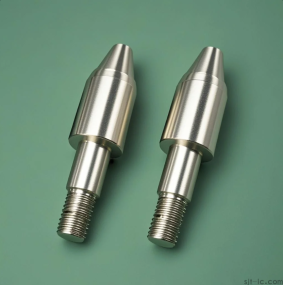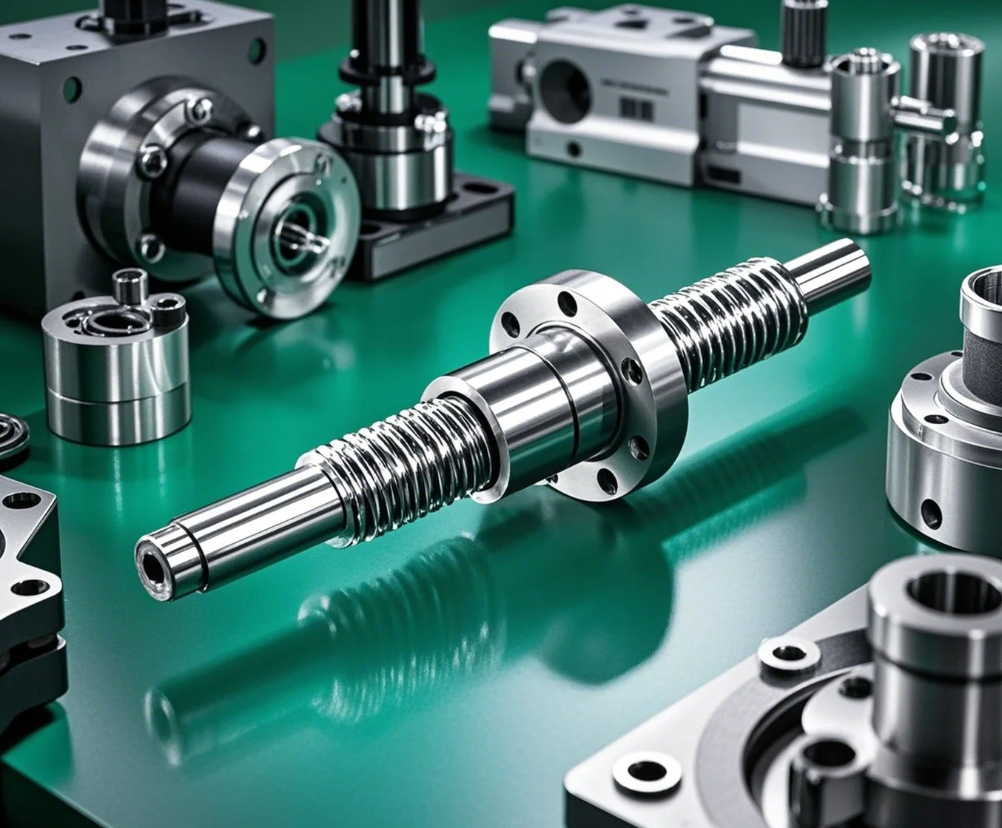
CNC Lead Screw Machining is an important manufacturing process for producing lead screws with high accuracy, smooth movement, and reliable performance. Lead screws are widely used in automation equipment, medical devices, industrial machines, robotics, and precision positioning systems. Because these applications require accurate linear motion, manufacturers must control material selection, machining processes, precision levels, surface quality, and final inspection.
Many customers have concerns when choosing a lead screw manufacturer. Common questions include: Which material is suitable for my application? How can thread accuracy be guaranteed? Which machining method provides the best efficiency? How can dimensional stability be maintained after heat treatment? A professional CNC Machining partner can solve these problems through advanced equipment, strict process control, and complete quality inspection systems.
With years of experience in precision manufacturing, EMAR provides customized CNC machining solutions for lead screws, helping customers achieve stable quality, accurate dimensions, and cost-effective production for different industrial applications.
Traditional machining methods may struggle to maintain consistent thread accuracy, especially for complex lead screw designs or high-volume production. CNC machining uses computer-controlled equipment to precisely control cutting paths, speeds, and machining parameters. This allows manufacturers to produce lead screws with consistent thread profiles and repeatable quality.
The main advantages of CNC Lead Screw Machining include:
For industries that require precise positioning and smooth transmission, CNC machining provides a reliable way to manufacture lead screws that meet strict performance requirements.
The material selection for CNC lead screw machining directly affects strength, wear resistance, corrosion resistance, service life, and machining cost. Different applications require different material properties.
Carbon steel is one of the most commonly used materials for lead screw production because it provides good strength, toughness, and cost efficiency. It is suitable for general industrial equipment where the operating environment is not highly corrosive.
Carbon steel lead screws are commonly used in machine tools, automation systems, and industrial transmission equipment.
Stainless steel is preferred for applications requiring strong corrosion resistance and long-term reliability. It is widely used in medical equipment, food processing machines, laboratory equipment, and outdoor systems.
Although stainless steel is more difficult to machine than carbon steel, advanced CNC equipment and optimized cutting parameters can achieve excellent surface quality and dimensional accuracy.
The machining operations in lead screw CNC determine the thread quality, production efficiency, and final performance of the screw. Different thread manufacturing methods are selected according to accuracy requirements, production volume, and material characteristics.
Thread rolling is a forming process that creates threads by pressing the material instead of removing it. Special dies apply pressure to reshape the outer surface of the workpiece.
Principle: The material flows under pressure and forms the thread profile without cutting chips.
Advantages:
Suitable equipment: Thread rolling machines or CNC rolling systems.
Thread rolling is mainly suitable for standard threads, trapezoidal threads, and applications requiring high strength and long service life.
Thread cutting uses cutting tools to remove material and create the required thread shape. It is a flexible method widely used for customized lead screws.
Principle: A CNC lathe or milling machine controls tool movement to cut the thread profile accurately.
Advantages:
Suitable equipment: CNC turning centers, CNC lathes, and precision threading machines.
Thread cutting can produce trapezoidal threads, ACME threads, metric threads, and other customized thread forms.
Whirl milling is an efficient method for machining long lead screws with high precision. The cutting tool rotates around the workpiece while moving along the screw axis.
Principle: Multiple cutting edges remove material gradually to create the thread profile.
Advantages:
Suitable equipment: CNC whirl milling machines and specialized thread milling equipment.
Whirl milling is often used for precision lead screws requiring long lengths, stable geometry, and efficient production.
The precision control in CNC lead screw manufacturing is critical because even small errors can affect positioning accuracy. Professional manufacturers must control lead error, profile accuracy, and surface roughness throughout the machining process.
Lead error refers to the difference between the actual screw movement distance and the theoretical movement distance. CNC systems can use compensation technology to correct these errors.
Laser interferometry is commonly used to measure lead accuracy. This advanced measurement method detects positioning errors along the screw length and provides data for CNC compensation.
Typical precision grades require different lead error limits. For example:
Thread profile accuracy affects contact performance, friction, and load distribution. Important factors include thread angle error, pitch accuracy, and flank shape.
For precision lead screws, allowable thread angle errors are usually tightly controlled. Many high-precision applications require angle deviations within several arc minutes to maintain smooth operation.
A smooth thread surface reduces friction and improves service life. Grinding is often used after machining to improve surface quality.
Common grinding methods use suitable grinding wheels such as aluminum oxide wheels for steel materials and specialized abrasive wheels for hardened surfaces.
Precision grinding can achieve surface roughness values around Ra 0.2–0.8 μm depending on material, process conditions, and application requirements.
The post-machining in CNC lead screw process improves mechanical performance, dimensional stability, and service life after the main machining operation.
Heat treatment changes the internal structure of metals to improve hardness, strength, and wear resistance.
Proper heat treatment control is important because excessive heat can cause deformation and affect thread accuracy. Precision manufacturers often perform stress relief before final finishing to maintain dimensional stability.
Proper lubrication reduces friction, prevents wear, and improves operating life.
Common lubrication methods include:
Sealing methods protect lead screws from dust, moisture, and contaminants. Common solutions include protective covers, bellows, sealing rings, and closed housing designs.
The quality control in CNC lead screw machining process ensures that every lead screw meets performance and reliability requirements.
Precision inspection equipment is used to verify critical dimensions, including diameter, pitch, thread profile, and straightness.
Coordinate Measuring Machines (CMM) are widely used because they can measure complex geometries with high accuracy.
For thread inspection, pitch diameter tolerance is especially important. Precision lead screws may require pitch diameter control within micron-level tolerances depending on the accuracy grade and application.
Dynamic testing evaluates lead screw performance under real working conditions. Typical tests include:
A qualified lead screw should maintain stable operation, with temperature rise and vibration values remaining within the customer's specified limits. Low vibration and controlled temperature increase indicate good machining quality and assembly performance.
For lead screws used in harsh environments, corrosion testing is important. Salt spray testing evaluates resistance against moisture and salt exposure.
Depending on the coating and material requirements, testing periods may range from dozens to hundreds of hours. High-quality lead screws should show minimal corrosion, with acceptable corrosion areas controlled according to industry standards and customer requirements.
Producing high-quality lead screws requires more than CNC equipment. It requires experience in material selection, machining process design, precision measurement, surface finishing, and quality control.
EMAR provides professional CNC Lead Screw Machining services with advanced manufacturing equipment and strict inspection procedures. From prototype development to batch production, EMAR helps customers select suitable materials, optimize machining processes, and achieve stable lead screw performance.
Whether your project requires carbon steel lead screws, stainless steel precision screws, customized thread designs, or high-accuracy positioning components, a reliable CNC machining partner can help reduce production risks and improve product reliability.