Spanish
 Arabic
 French
 Portuguese
 Belarusian
 Japanese
 Russian
 Malay
Malay Icelandic
 Bulgarian
 Azerbaijani
 Estonian
 Irish
Irish Polish
 Persian
 Boolean
 Danish
 German
 Filipino
 Finnish
 Korean
 Dutch
Dutch Galician
 Catalan
 Czech
Czech Croatian
 Latin
Latin Latvian
 Romanian
 Maltese
 Macedonian
 Norwegian
 Swedish
 Serbian
 Slovak
 Slovenian
 Swahili
 Thai
Thai Turkish
 Welsh
Welsh Urdu
Urdu Ukrainian
 Greek
Greek Hungarian
 Italian
 Yiddish
 Indonesian
 Vietnamese
 Haitian Creole
 Spanish Basque

HTML
CNC Precision Copper Parts Custom Machining: A Practical Guide for Better Quality and Lower Cost
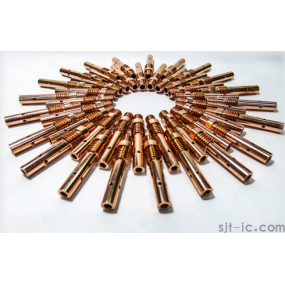
CNC Precision Copper Parts Custom Machining is widely used in electronics, automotive systems, medical devices, and high-performance industrial equipment. Copper is a special material because it has excellent electrical and thermal conductivity, but it is also soft and difficult to machine with high accuracy. This is why many engineers and buyers struggle to find stable quality, reasonable cost, and reliable suppliers.
This article explains the key problems users face and how to solve them in simple English. It also helps you understand how professional machining services, such as those provided by EMAR, can support your copper parts production needs.
Why CNC Machining Copper Parts Is Challenging
Copper is different from steel or aluminum. During machining, it tends to stick to tools, deform under pressure, and generate heat quickly. These issues often lead to surface scratches, size errors, and short tool life.
For this reason, CNC Precision Copper Parts Custom Machining requires careful planning, proper tooling, and experienced operators. Without the right setup, production costs can increase and part quality can become unstable.
Main difficulties include:
- Tool wear caused by soft and sticky copper material
- Heat buildup during high-speed cutting
- Dimensional instability in thin-walled parts
- Surface oxidation affecting final appearance
Advantages of Custom Machining for Precision Copper Parts
One of the biggest advantages of custom machining for precision copper parts is flexibility. Every project can be designed based on exact technical requirements instead of using standard shapes.
This is especially important in industries like electronics and energy systems, where even a small size deviation can affect performance.
- High accuracy for complex geometries
- Better electrical and thermal performance due to precise shaping
- Reduced material waste
- Ability to produce both prototypes and mass production parts
With professional support from companies like EMAR, customers can also optimize designs for manufacturability, reducing long-term production costs.
Process Steps in CNC Precision Copper Parts Custom Machining
Understanding the process steps in CNC precision copper parts custom machining helps buyers control quality and avoid production risks.
- Design and Engineering Review
Engineers review CAD drawings and confirm tolerances, surface requirements, and material grade. - Material Selection
High-purity copper or copper alloys are selected based on electrical and mechanical needs. - Programming CNC Machines
Tool paths are carefully designed to reduce heat and avoid material deformation. - Machining Process
Precision cutting, milling, drilling, or turning is performed under controlled conditions. - Surface Finishing
Polishing, deburring, or coating is applied to improve appearance and performance. - Final Inspection
Every part is measured to ensure it meets required tolerances.
Tooling Selection for Custom Machining Copper Parts
Choosing the right tools is one of the most important steps in tooling selection for custom-machining copper parts. Copper is soft, so the tool must be sharp and wear-resistant.
Recommended tooling practices include:
- Use carbide tools for long life and stable cutting
- Apply polished cutting edges to reduce sticking
- Use proper coolant to control heat
- Avoid overly aggressive cutting speeds
Good tooling not only improves surface quality but also reduces machine downtime and production cost.
Quality Control in CNC Precision Copper Parts Custom Machining
Reliable quality control in CNC precision copper parts custom machining ensures that every part meets engineering standards before delivery.
High-end suppliers like EMAR use strict inspection systems throughout the entire production process instead of checking only the final product.
Common quality control methods:
- Coordinate Measuring Machine (CMM) inspection
- Surface roughness testing
- Visual inspection under magnification
- Dimensional tolerance verification
This multi-step inspection approach reduces defect rates and ensures consistency in batch production.
Cost-Effectiveness in CNC Precision Copper Parts Custom Machining
Many customers are concerned about price. However, cost-effectiveness in CNC precision copper parts custom machining is not only about the lowest unit price. It is about total value.
A cheaper supplier may produce inconsistent parts, leading to rework or system failure. A professional supplier can reduce waste, improve yield, and shorten delivery time.
Factors that influence cost:
- Design complexity
- Material grade and purity
- Batch size and production volume
- Surface finishing requirements
By working with experienced manufacturers like EMAR, customers often achieve better long-term savings even if initial pricing is slightly higher.
Why Choose a Professional Partner Like EMAR
In CNC Precision Copper Parts Custom Machining, experience matters. EMAR focuses on precision machining solutions for copper and other metal materials, supporting industries that require strict tolerances and stable performance.
What makes EMAR different is not just machines, but engineering support. From early design review to final inspection, the goal is to reduce risk and improve efficiency for customers.
- Strong engineering support for design optimization
- Advanced CNC equipment for high precision parts
- Strict quality control system
- Flexible production from prototypes to mass production
Conclusion
CNC Precision Copper Parts Custom Machining is a complex but highly valuable manufacturing process. Success depends on good design, correct tooling, strict quality control, and experienced machining partners.
By understanding the full process and focusing on key factors such as tooling, cost control, and inspection, businesses can achieve stable performance and lower production risks. Working with a professional supplier like EMAR helps ensure your copper parts meet both technical and commercial goals.