Spanish
 Arabic
 French
 Portuguese
 Belarusian
 Japanese
 Russian
 Malay
Malay Icelandic
 Bulgarian
 Azerbaijani
 Estonian
 Irish
Irish Polish
 Persian
 Boolean
 Danish
 German
 Filipino
 Finnish
 Korean
 Dutch
Dutch Galician
 Catalan
 Czech
Czech Croatian
 Latin
Latin Latvian
 Romanian
 Maltese
 Macedonian
 Norwegian
 Swedish
 Serbian
 Slovak
 Slovenian
 Swahili
 Thai
Thai Turkish
 Welsh
Welsh Urdu
Urdu Ukrainian
 Greek
Greek Hungarian
 Italian
 Yiddish
 Indonesian
 Vietnamese
 Haitian Creole
 Spanish Basque

Feeling overwhelmed trying to get a prototype or a small production run made? You're not alone. Many engineers and procurement managers hit a wall when they need high-quality CNC parts but don't need thousands of them. The big guys often have high minimum orders, leaving you wondering: where are the specialized, dependable small-batch partners? Let's break down this exact problem and find a real solution.
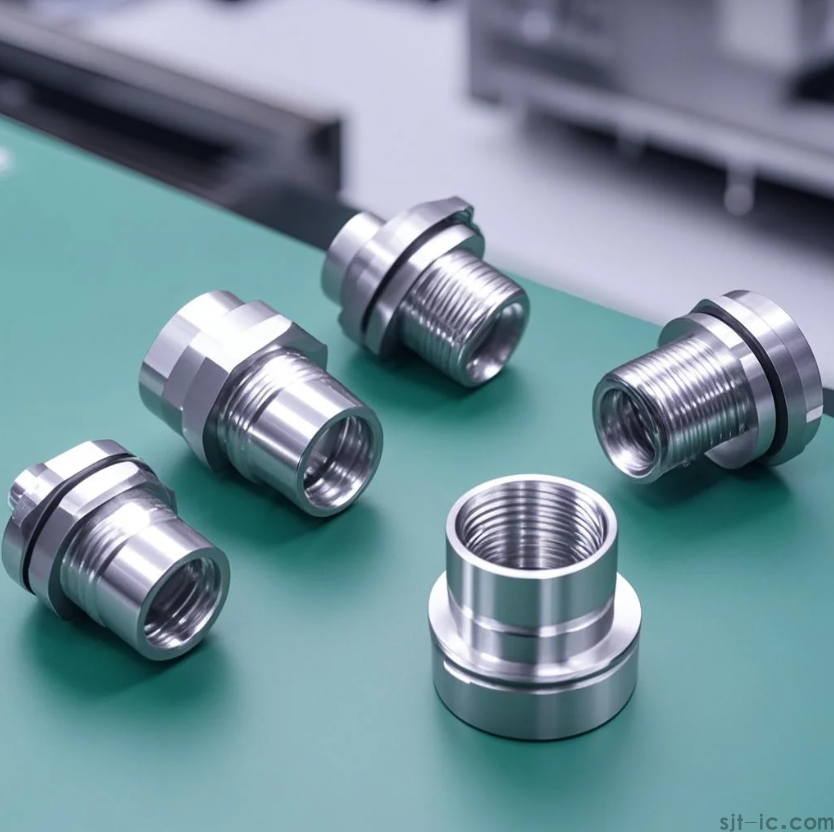
Why Is Finding a Good Small-Batch CNC Shop So Tough?
It seems like every machine shop advertises "prototyping" and "low-volume" services. But when you dig deeper, the issues start piling up. Some shops treat your 50-piece order as a nuisance, pushing it to the back of the queue. Others might not have the right quality control processes for smaller jobs, leading to inconsistent parts. The real pain point isn't just finding *a* manufacturer; it's finding one that gives your small order the same attention and precision as a large one. This gap in the market is where the real opportunity lies for both buyers and dedicated shops.
What Makes a CNC Shop Ideal for Small Batch Work?
The answer revolves around flexibility, communication, and mindset. A great small-batch CNC Machining manufacturer isn't just a scaled-down big factory. They often have a different operational DNA.
Here’s what you should look for:
- 🔄 Quick-Change Tooling & Setup: Their profit comes from fast turnaround, not long production cycles. Efficient setup is their superpower.
- 📞 Direct & Responsive Communication: You should be able to talk directly to a project engineer or machinist. Endless email chains with a sales rep are a red flag.
- 🔍 In-House Quality Lab (Even a Basic One): They should measure first articles rigorously. A shop that says "trust us" without data might be a risk.
- 🧠 A "Problem-Solving" Attitude: The best shops see your prototype as a collaboration. They might suggest design for manufacturability (DFM) tweaks that save you cost and time.
From my experience visiting dozens of shops, the ones that excel in small batches are usually owner-operated. The person quoting your job is the same person overseeing the machine. That alignment of responsibility perhaps suggests a higher level of accountability.

Key Questions to Ask Before Placing Your Order
Don't just send out your CAD file and hope for the best. Arm yourself with these questions:
- "What is your typical lead time for a first article on a 3-5 piece order?" (This tests their real capacity).
- "Can you provide a written DFM feedback report?" (This tests their expertise and willingness to engage).
- "What quality documentation can you provide with the parts?" (First Article Inspection reports, material certifications, etc.).
- "What happens if a part fails your in-house inspection?" (This tests their process integrity).
Asking these questions filters out the order-takers from the true manufacturing partners. However, it's worth mentioning that a shop being hesitant on documentation isn't always a deal-breaker for the simplest jobs, but for anything critical, it's non-negotiable.
The Realistic Trade-Offs: Cost vs. Speed vs. Precision
We all want it fast, cheap, and perfect. In manufacturing, you typically pick two. With small-batch CNC machining, this triangle gets even sharper.
- 🚀 Need it super fast? Expect to pay a premium for expedited scheduling and possibly higher material cost from local suppliers.
- 💰 Need the lowest cost? The shop might group your job with others, which increases lead time. Material choice (like using a common aluminum grade) also plays a huge role.
- 🎯 Need extreme precision and complex finishes? This requires more machine time, skilled labor, and inspection steps, impacting both cost and speed.
A transparent manufacturer will walk you through these trade-offs instead of just giving a single quote. Their job is to help you balance these priorities based on your project's actual needs, not just sell machine time.

My Personal Take: Building the Relationship is the Secret
After years in this field, I've realized the technical specs are only half the battle. Finding a reliable small-batch CNC partner is closer to hiring a key team member than buying a commodity.
Start with a small, non-critical test order. Evaluate not just the parts, but the *process*: How clear was the communication? Were the updates proactive? Did the final parts match the quoted specs and cost?
A successful first order builds trust. This trust then becomes your most valuable asset. It leads to priority scheduling, more collaborative problem-solving, and sometimes even better pricing on future projects. You're not just buying parts; you're investing in a reliable supply chain capability.
So, the core question of "how to find" them transforms into "how to build with them." That mindset shift, in my view, is what separates successful projects from frustrating ones.
Ready to turn your design into precision parts? The right partner is out there. If you're looking for a dedicated team that treats your small-batch order as a priority, with clear communication and rigorous quality checks, it might be time to start a conversation. 👉 [Connect with our technical team today for a free DFM analysis on your project].