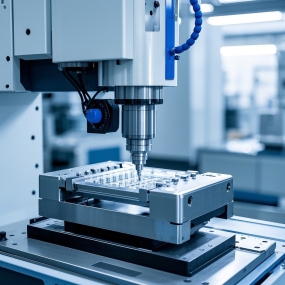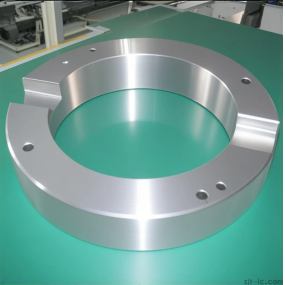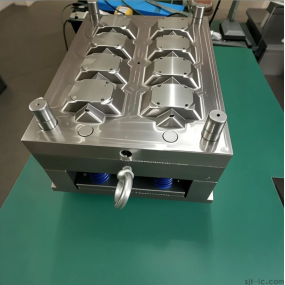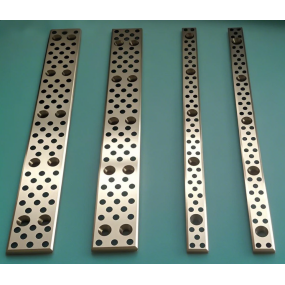

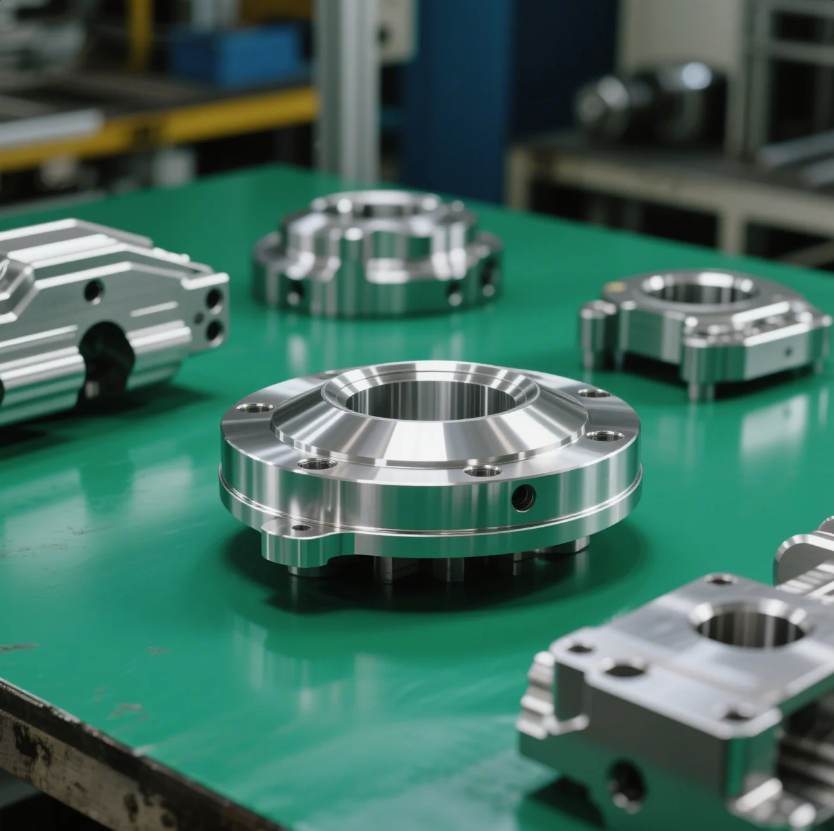
The automotive industry requires parts that are highly accurate, strong, and reliable. Even a small machining error can affect vehicle performance, safety, and assembly efficiency. This is why CNC Machining for Automotive Parts has become an essential manufacturing method for producing complex automotive components.
CNC machining uses computer-controlled machines to remove material and create parts according to precise digital designs. It helps manufacturers achieve tight tolerances, repeatable quality, and stable production capacity. For companies looking for reliable automotive components, CNC machining provides solutions to common concerns such as precision control, material selection, production cost, and quality assurance.
Modern vehicles contain thousands of components that must work together perfectly. Engine systems, transmission systems, chassis structures, and electric vehicle systems all require parts with accurate dimensions and consistent performance.
CNC machining is important because it can meet both high-precision requirements and large-scale production demands. Unlike traditional machining methods, CNC equipment follows programmed instructions, reducing human errors and improving production stability.
For automotive manufacturers, the key challenges are usually:
Professional CNC machining manufacturers solve these challenges through advanced equipment, experienced engineers, optimized production processes, and strict quality management systems. Companies such as EMAR use advanced CNC machining technologies and quality control methods to support automotive customers with customized precision parts.
One of the biggest advantages of CNC in auto parts manufacturing is its ability to achieve extremely accurate machining results. Automotive systems contain many connected components, and each part must match the design specifications.
CNC machines can maintain tight tolerances during repeated production. This ensures that parts from different production batches can be assembled without additional adjustment. For example, precision-machined engine components and transmission parts can maintain stable performance because their dimensions remain consistent.
Automotive production requires millions of parts every year. CNC machines can operate automatically for long periods with limited manual intervention. Automated tool changes, computer programming, and optimized machining paths improve production efficiency.
This high-efficiency operation helps manufacturers reduce production time and maintain consistent output, making CNC machining suitable for both prototype development and large-volume automotive manufacturing.
Modern vehicles, especially electric vehicles, require parts with complex shapes and lightweight structures. Multi-axis CNC machining centers can produce complicated geometries that are difficult to achieve with conventional machining methods.
This flexibility allows automotive engineers to develop innovative designs while maintaining accuracy and reliability.
Many automotive components require the precision, strength, and repeatability provided by CNC machining. The following are common auto parts suitable for CNC manufacturing.
Cylinder heads and engine blocks are critical engine parts that require precise machining of combustion chambers, mounting surfaces, and internal passages.
CNC machining is a good choice because it can achieve accurate dimensions and smooth surface finishes. Precise machining helps improve engine efficiency, reduce vibration, and ensure proper installation of internal components.
Transmission cases require accurate machining because they support gears, shafts, and other moving components. Any dimensional error may cause noise, wear, or reduced transmission performance.
CNC machining provides the necessary accuracy for bearing holes, mounting surfaces, and complex internal structures, helping transmissions operate smoothly.
Steering knuckles and axles are safety-related components that need excellent mechanical strength and dimensional accuracy.
CNC machining allows manufacturers to create strong and precise parts that can handle high loads and maintain reliable vehicle control. Accurate machining also improves the compatibility between suspension components.
Electric vehicles create new demands for lightweight and high-strength components. CNC machining is widely used for parts such as battery trays and motor casings.
Battery trays require accurate dimensions to protect battery modules and maintain vehicle safety. Motor casings need precise machining to support electric motors and provide effective heat management.
The selection of materials directly affects part performance, machining difficulty, and production cost. Common materials for CNC auto parts include aluminum alloys, alloy steels, and ductile iron.
Aluminum alloys such as A356 and 6061 are widely used in automotive CNC machining because they are lightweight, corrosion-resistant, and have good strength-to-weight ratios.
A356 aluminum alloy is commonly used for cast automotive components because it provides good casting performance and mechanical strength. 6061 aluminum alloy offers good machinability and is often used for structural parts and electric vehicle components.
However, aluminum has a low elastic modulus compared with steel. This means it can deform more easily during machining. Manufacturers must carefully control cutting forces, fixture methods, and machining parameters to avoid dimensional errors.
Alloy steels such as 42CrMo and 20CrMnTi are used for parts requiring high strength, wear resistance, and impact resistance.
42CrMo steel provides excellent mechanical properties after heat treatment and is suitable for heavy-load components. 20CrMnTi steel has good toughness and surface hardness, making it suitable for gears and transmission-related parts.
Because high-strength steels are harder to machine, they require durable cutting tools, optimized cutting speeds, and proper cooling methods to reduce tool wear.
Ductile iron offers high strength, good vibration absorption, and excellent durability. It is often used for engine blocks, housings, and structural automotive components.
During machining, ductile iron requires suitable cutting tools and stable machining conditions because its hardness can increase tool wear.
The machining process of CNC auto parts includes several important steps. Each stage affects final accuracy, surface quality, and production efficiency.
The process starts with preparing the raw material blank. Depending on the part design, blanks may come from casting, forging, or cutting processes.
Stress relief treatment is often performed before machining. Its purpose is to reduce internal stress inside the material and prevent deformation during later machining operations.
Rough machining removes most of the excess material quickly. High-speed milling machines and strong cutting tools are commonly used at this stage.
Manufacturers usually reserve machining allowance for finishing operations. This protects final dimensions and allows precision adjustment later.
Finishing operations focus on achieving final dimensions and surface quality. Multi-axis machining centers and precision boring tools are often used for complex automotive parts.
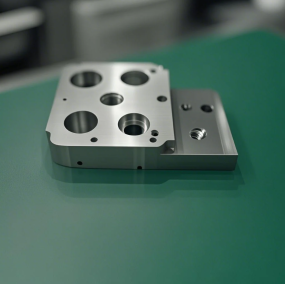
Many automotive parts require holes for bolts, oil channels, cooling systems, and assembly connections.
CNC drilling and tapping equipment ensures accurate hole position, size, and thread quality. Deep-hole machining requires special tools and effective chip removal methods.
After machining, small burrs and metal chips must be removed. Deburring improves safety, assembly performance, and surface quality.
Cleaning processes remove oil, particles, and machining residue before inspection and delivery.
Advanced CNC production lines use online measurement systems to monitor machining results. If a tool wears or a dimension changes, the system can adjust machining parameters automatically.
This process improves consistency and reduces waste during mass production.
Strict inspection is necessary because automotive parts directly affect vehicle safety and performance. Effective quality control in CNC auto parts production includes multiple inspection stages.
Before mass production begins, manufacturers inspect the first completed part. Engineers check important dimensions, surface quality, and machining accuracy to confirm that the process is correct.
During production, regular sampling inspections help detect problems early. Manufacturers monitor key dimensions, tool conditions, and machining stability.
Before shipment, finished parts receive final inspection. Important measurements are checked again to ensure they meet customer requirements.
Precision testing equipment such as coordinate measuring machines (CMMs) is widely used because it can measure complex geometries with high accuracy.
Professional automotive CNC manufacturers also follow quality management systems such as IATF 16949, the international standard designed specifically for automotive suppliers. This helps ensure reliable processes, traceability, and continuous improvement.
High-quality automotive parts do not always require high production costs. Professional manufacturers improve cost-effectiveness through better planning and process optimization.
Experienced CNC machining suppliers, including EMAR, focus on balancing precision, efficiency, and cost control. By combining advanced CNC equipment, engineering knowledge, and strict quality management, they help automotive companies receive reliable parts for different vehicle applications.
CNC Machining for Automotive Parts plays a key role in modern vehicle manufacturing. Its high precision, automation capability, material flexibility, and strict quality control make it suitable for producing critical automotive components.
From engine blocks and transmission cases to electric vehicle battery trays and motor casings, CNC machining helps manufacturers achieve accurate, durable, and cost-effective solutions. Choosing an experienced CNC machining partner ensures that automotive parts meet demanding performance standards while supporting efficient large-scale production.